
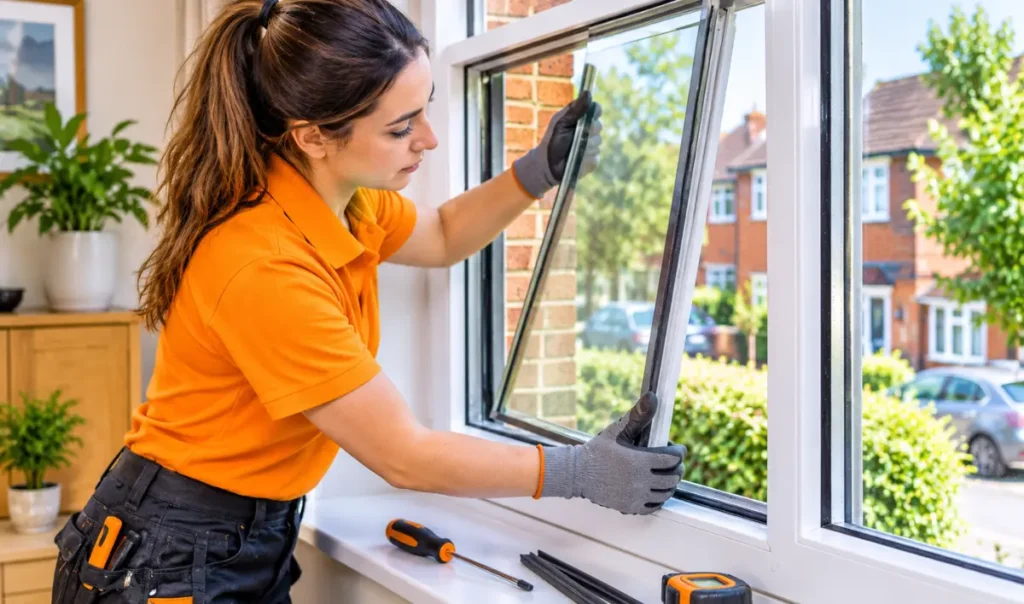
Loose glass in a double glazed window is almost always caused by a worn gasket, slipped packers or beads that have lost their grip, and it can usually be put right without a new unit. It should not be left for long, though, because glass that moves puts stress on its own edges and lets moisture reach the seal.
Most people first notice it as a noise. A faint rattle in the wind, a tick when a lorry passes, or a small click when the window is pressed. Others spot it by sight, with a gap that has appeared along the bottom edge or a pane that no longer sits square.
This guide explains what actually holds a pane in place, the five usual reasons it starts to move, a simple way to work out where the movement is coming from, what is safe to try yourself, and what a proper repair involves.
What Is Usually Making the Glass Move
A gasket that has hardened or shrunk and no longer grips the glass
Packers under or around the unit that have slipped, compressed or were never fitted properly
Glazing beads that have worked loose or were never fully clipped home
A unit that is slightly too thin for the frame it sits in
Decorative bars inside the unit that rattle when the glass is touched
In most cases the fix is a refit, repack or new gasket rather than a new window
What Actually Holds the Glass in a Modern UPVC Window
A sealed unit is heavy, and it is held far more carefully than most people realise. It does not sit loose in a groove, and it is not glued in. It is supported, positioned and then clamped in place by a handful of small parts working together.
Packers carry the weight
At the bottom edge, small plastic blocks take the weight of the glass so it never rests directly on the frame. Thinner packers around the sides and top stop the unit drifting sideways and keep an even gap all the way round. If these move, compress or go missing, the pane has room to shift and the frame starts taking load it was never designed to carry.
Beads clamp the unit in place
On most modern windows the beads are the slim strips that snap into the frame on the inside, holding the glass against the opposite side of the rebate. They are meant to be a firm fit. When one has not fully clicked home, or has popped slightly at a corner, the clamping pressure drops and the glass loses its support on that side.
Gaskets fill the gap and keep the grip
A flexible rubber or plastic gasket sits between the glass and the frame on both faces of the pane. Under compression it takes up the small gap, stops air passing through and stops the glass touching hard plastic. A gasket that has stiffened or shrunk can no longer fill that space, and the pane gains just enough play to rattle.
If your problem is draughts rather than noise, the cause is often elsewhere, which is covered in when draughts have nothing to do with the glass.
Why the Glass Starts to Move
Movement rarely has a single cause. A gasket that is slightly tired is held together by packers that are still doing their job, until a change in weather, a slammed door or a small knock tips the balance. These are the usual culprits, roughly in order of how often they turn up.
Gaskets that have hardened or shrunk
Rubber and flexible plastic change with age. Sun on a south facing window, repeated cold nights and years of expansion and contraction make a gasket stiffer and a little shorter. It stops springing back against the glass, and a thin gap opens that was not there when the window was new.
A hardened gasket often shows itself as a faint line of light along one edge, or a bead that feels slightly loose when pressed from the inside. It is not a fault with the glass at all, which is good news for the cost.
Packers that have slipped or never been fitted well
Packers can move if a window has been taken apart before, for instance after a previous repair, a replaced unit or a rushed installation. Too few packers, or packers set in the wrong places, leave the unit supported unevenly. Over time the glass settles, a corner drops and the sash may begin to catch as well.
A window that looks fine when new can start to sit very slightly low a long way down the line. If a pane seems to have sunk, or the gap along the top has grown wider than the one underneath, packers are a strong suspect.
Beads that have worked loose
Beads are held by friction and clips, not screws. Wind pressure, repeated opening and closing, temperature swings and the odd knock can ease a bead out by a millimetre or two at the corners. Once a corner has lifted, it no longer clamps the glass, and the movement spreads along that side.
Beads can also be left slightly proud when a unit has been replaced and the finishing was rushed. A bead that never sat firmly is the likeliest to be the first to move.
Decorative bars rattling inside the unit
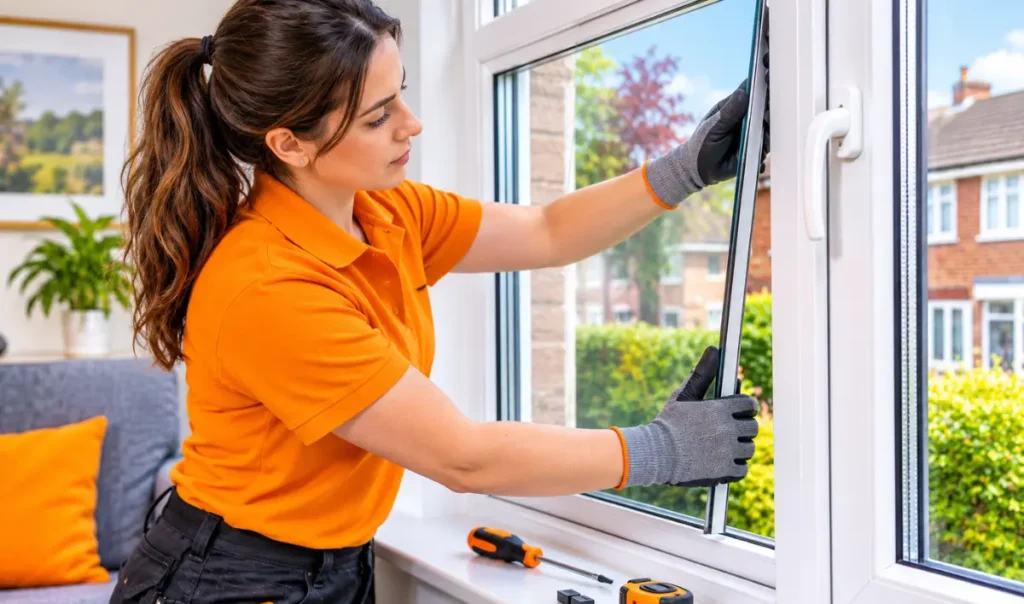
Some windows have bars between the panes to give a Georgian or small pane look. In certain constructions these bars are fixed with small clips or tape at intervals, and a bar that has worked free can tap against the glass when the pane is touched or vibrates. It is a noise that seems to come from inside the glass, because it does.
The difference matters. A bar rattle will not be cured by tightening or replacing beads, because the part that moves is sealed inside the unit. If the noise sounds like a light tap from between the panes rather than a rattle at the edge, this is the thing to rule in.
A unit that was never the right fit
Glass slightly too thin for the frame rebate has more room than it should, no matter how good the gaskets and packers are. This is more common after a replacement that was measured loosely. Thickness and fit are covered in more depth elsewhere, so the short version is that the correct unit depends on measuring the actual rebate, not guessing.
A Simple Way to Find Out Where the Movement Is Coming From
You do not need to remove anything to learn a lot. A few minutes with the window closed and locked will usually tell you whether the problem sits at the edge or inside the glass.
Safe checks to do from inside the room
Press gently with the flat of your hand around the edge of the pane, a section at a time, and note where it gives or clicks.
Look along each bead for a gap between the bead and the glass, or a bead that is not flush with the frame at the corners.
Compare the gap between the glass and the frame along the top with the gap along the bottom. A noticeably larger gap at the top suggests the pane has dropped.
Tap the middle of the glass lightly. A tap that seems to come from inside the unit points to decorative bars. A rattle at the edge points to gaskets, packers or beads.
Notice whether the noise only appears in wind, on a cold morning, or when the window is touched. Wind noise leans towards gaskets and beads. Noise on touch leans towards packers.
Write down what you find, because it helps a glazier decide quickly what to bring on the first visit. It also helps to measure the depth of the frame rebate if you suspect the unit is too thin, which is explained in how unit thickness affects fit.
What not to do while checking
Do not prise at beads with a screwdriver, and do not push hard on the middle of the glass. Sealed units can crack under uneven pressure, and a bead levered out without the right tool can scar the frame or split the bead itself.
Is It Safe to Leave?
A gently rattling pane is not an emergency, but it is not harmless either. Glass that moves is under a kind of repeated stress, and a small fault left alone tends to get bigger.
What happens to the glass and the seal
A unit that is not held firmly can rub or knock against the frame. Over time the edges are more likely to chip or crack, and the seal around the unit takes constant tiny movements. Once the seal is compromised, moisture gets in and the pane begins to mist, at which point a loose glass problem has turned into a failed seal problem. If you can see that happening, the misted window repair service is the next thing to look at.
What it does to draughts, noise and security
A pane with room to move lets air through the gap, which is felt as cold air and heard as a whistle or rattle. If the beads sit on the outside of the frame, which can be the case on older installations, loose beads also weaken the security of the window, because the glass can be pressed or lifted out more easily than a properly clamped unit.
If you notice a small crack at the edge of the glass, or a corner that has chipped, treat it as a separate issue. Cracked glass needs replacing rather than adjusting, and glass refitting and pane replacement is the route for that.
When it is worth acting sooner
Move the repair up the list if the window is on an upper floor, if it faces the prevailing wind, if the glass is large, or if the movement has noticeably increased over a few weeks. Larger panes carry more weight and catch more wind, so a small fault can become a bigger one faster.
What a Proper Fix Involves
Most of the time, fixing loose glass is a refit, not a replacement. The glazier removes the beads carefully, checks the unit, corrects the packers, fits a fresh gasket where needed and puts the beads back firmly. That is a short job when the unit itself is sound.
Repacking the unit
The glazier lifts the unit slightly, places or replaces the load bearing packers at the bottom and adds side and top packers to restore an even gap. The aim is for the glass to sit square and carry its weight on the packers rather than the frame.
Replacing the gasket
A worn gasket should be replaced along its full run rather than patched in sections. A repair at one point often shows that the rest of the length is also tired, and a patched run tends to leave a weak spot that opens up again. Fitting a new continuous gasket restores the grip around the whole pane.
Reseating or replacing the beads
Beads are pressed or tapped back into place, working from the shorter sides first and finishing with the longer ones. Beads that are cracked, warped or no longer holding are replaced rather than reused. A bead that clicks home with an even line all the way round is a good sign the job has been done properly.
When the unit itself needs replacing
If the glass has cracked, if the seal has already failed, or if the unit is the wrong thickness for the frame, a new sealed unit is the fix. The advantage is that the frame can usually stay in place, and a replacement unit measured to the real rebate solves the fit problem at the same time. Whether a blown window needs replacing or can be repaired explains how that decision is made.
Mistakes That Make Loose Glass Worse
Running silicone around the glass to hold it still. A properly glazed unit is held by its packers, beads and gaskets, and sealant used as a glue hides the movement without fixing it
Wedging card, matchsticks or folded paper into the gap, which compresses over time and can push the glass unevenly
Prising beads off with a flat screwdriver and no support under the unit
Assuming the whole window needs replacing when only a gasket or a set of packers has failed
Ignoring a rattle until the first storm, when wind loading is highest and the fault is hardest to deal with in a hurry
Treating a rattle between the panes as a bead problem, when decorative bars are the real cause
Questions Southampton Homeowners Ask About Loose Glass
Why is the glass in my double glazed window loose?
The most common reasons are a gasket that has hardened and shrunk, packers that have slipped or compressed, or beads that have worked loose. Occasionally the unit is slightly too thin for the frame, or decorative bars inside the glass have come free. A glazier can tell which by pressing and inspecting the pane edge by edge.
Can loose glass in a double glazed window be fixed without replacing the unit?
Usually yes. If the unit is not cracked and the seal has not failed, the glass can be repacked, the gasket replaced and the beads reseated, leaving the existing unit and frame untouched. A new unit is only needed when the glass is damaged, the seal has failed or the fit was wrong from the start.
Is a rattling window dangerous?
It is rarely dangerous straight away, but it should not be ignored. Moving glass can chip at the edge, break the seal and let in draughts, and in some cases it weakens the security of the window. A small repair now is almost always cheaper than dealing with a damaged unit later.
Why does my window only rattle when it is windy?
Wind pushes and pulls on the glass, and a pane with even a small amount of free play will show it. It usually points to a worn gasket or a bead that is no longer clamping firmly. Windows facing open ground or the prevailing wind tend to show it first.
Why can I hear a tap from inside the glass when I touch it?
That sound usually comes from decorative bars between the panes that have come free of their clips. Because the bars sit inside the sealed unit, tightening the frame will not cure it. A glazier can confirm the cause and advise whether the unit should be replaced.
Small Movement Deserves a Quick Look
Loose glass is one of those faults that starts as a nuisance and quietly becomes a bigger job if it is left. The reassuring part is that the cause is usually a cheap, small part, and the repair is often a short visit rather than a new window.
If a pane in your home has started to rattle, shift or sit unevenly, the team at Glaze Repair Southampton can check where the movement is coming from and tell you plainly whether it needs repacking, a new gasket or a replacement unit.