Fire or firework damage to UPVC windows is often less serious than it looks at first glance, because most of what you see on a frame after a bonfire or a stray rocket is soot, smoke film or surface marking rather than structural harm. The real problems are quieter: a frame that has softened and shifted, a pane that has picked up a hairline crack from uneven heat, or a sealed glass unit that starts to fog a few days later. Knowing which of those you are looking at decides whether you need a cloth, a glazier or an insurer.
Here is what matters most for a Southampton home in the first few minutes of checking:
Soot and smoke film wipe off the surface of UPVC, but a frame that feels soft, looks wavy or has pulled away from the glass has taken real heat damage.
Glass that has been heated unevenly can crack hours later, so a pane that looks fine at night may not look fine in the morning.
A fogged or hazy sealed unit after a fire nearby usually means the edge seal let go under heat, and that unit will need replacing rather than cleaning.
An unspent firework in or near a letterbox is a fire service matter, never a repair matter.
Photograph everything before you clean anything, because an insurer or the police may ask to see the original state.
The rest of this guide walks through how to tell the difference, what is safe to do yourself, and how a glazier decides between repairing a frame and swapping a unit.
Why Southampton Gardens Put Windows So Close to the Flames
Most of the older housing around Shirley, Portswood, Freemantle and Bitterne is built in tight terraces and compact semis, with rear gardens that are narrow and often end at a shared fence. A bonfire that feels comfortably far from the house on a wide lawn is a very different thing in a garden barely longer than a parked car, and the back windows and patio door are usually the nearest surfaces to it.
Flats change the picture again. In the city centre and around the waterside, a balcony door or ground floor window can sit a few steps from a communal area where neighbours let off fireworks, and the debris that lands there has nowhere to go but onto the frames. Further out, in estates around Hedge End, Totton and Chandler’s Ford, the gardens are wider but the patio doors are bigger, which means more glass facing the heat.
The common thread is distance. Radiant heat from a fire does not need a flame to touch the window. A big bonfire can warm a frame and a pane from several steps away, and it does so unevenly, which is exactly what glass dislikes.
Telling Surface Soot From Real Heat Damage on a Frame
Start with your eyes and your fingertips rather than a cleaning spray. The frame can tell you a lot in about a minute.
What soot and smoke film look like
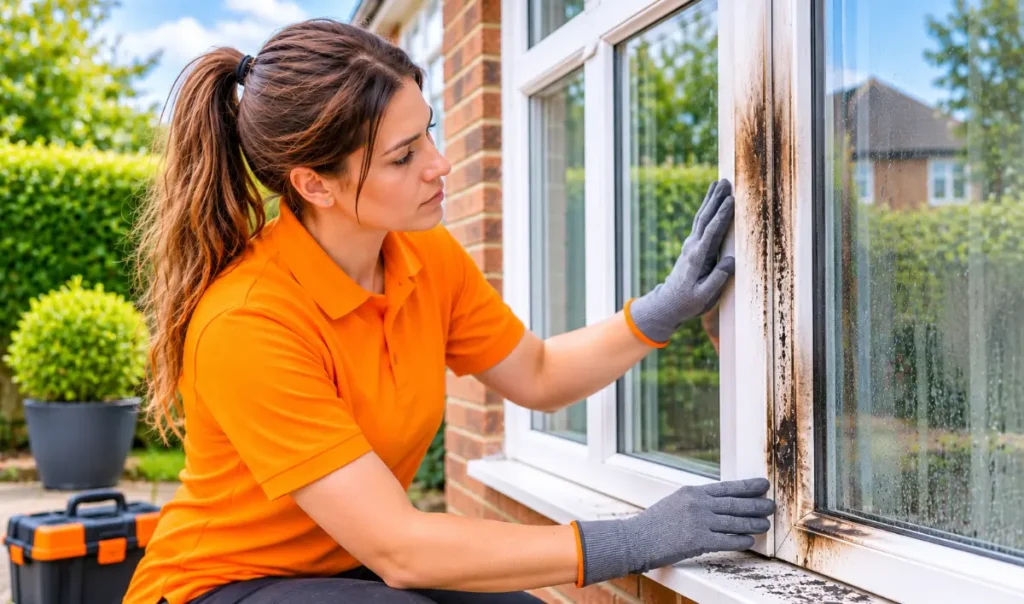
Soot sits on top of the surface. It looks grey or black, smears when touched and often leaves a clear line where the smoke stopped. If the frame underneath still looks flat and glossy once you picture the soot gone, you are very likely dealing with a cosmetic mark.
Smoke film from a bonfire can also leave a dull, slightly greasy haze across the glass and frame. It is irritating but harmless, and it tends to be heaviest on the side of the window that faced the fire.
What a softened or warped frame looks like
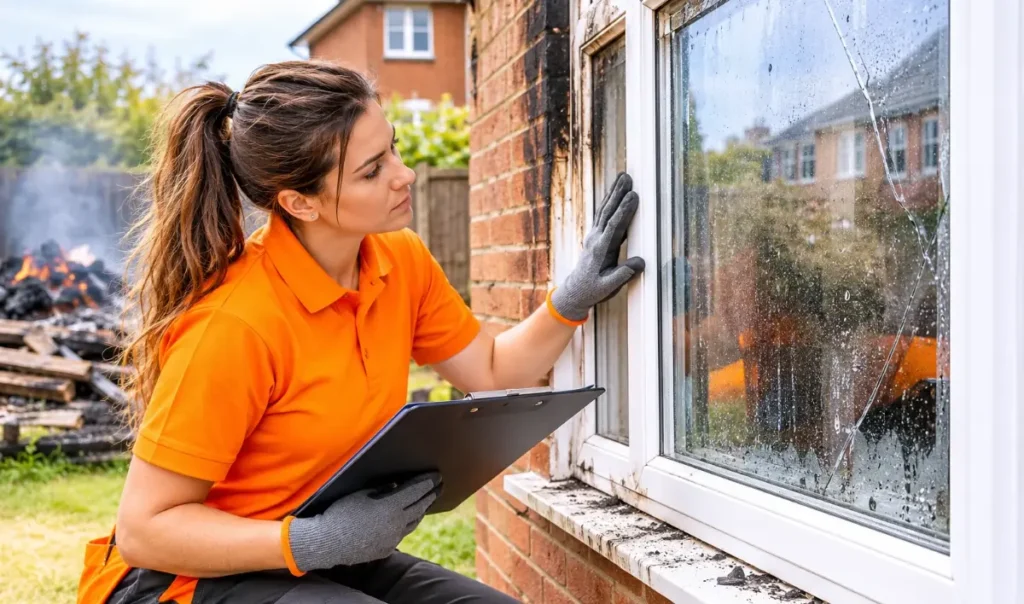
UPVC begins to lose its shape at a far lower temperature than glass or brick, which is why a frame can suffer when nothing around it looks damaged. Signs of real heat damage include a surface that looks rippled or slightly wavy, a glossy patch that has turned matt or puckered, a bubbled texture, or a frame that has bowed away from the glass.
Press gently along the edge of the frame and compare it with a part that was further from the fire. A frame that gives or feels different under light pressure has been softened, and softened UPVC rarely returns to its original shape.
What a heat stressed pane looks like
Glass fails differently. A pane that has been heated on one side and left cool at the edges can develop a thin crack that starts at the edge and runs inward, often curving as it goes. The mechanics are the same ones behind windows that crack with nothing striking them, which we explain in our guide to why a window can crack when nothing hit it. The difference here is that the heat source is a fire rather than strong sun, and the temperature gap is usually much sharper.
If a pane has no crack yet but sat close to a large fire, keep an eye on it over the next day. Cracks from heat can appear late, once the glass has cooled and the stress finally gives way.
When the Gap Between the Panes Takes the Hit
A double glazed unit is two sheets of glass held apart by a spacer bar and sealed around the edge. That edge seal is the weakest part of the whole window when heat arrives, because it is made of flexible sealant rather than glass.
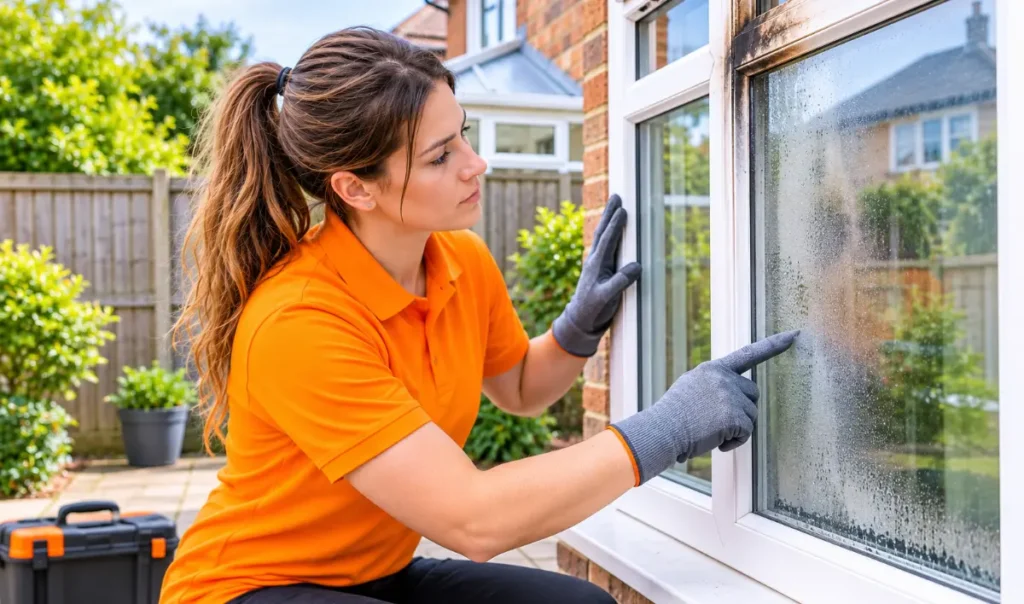
When a unit has been warmed beyond what the seal can tolerate, the sealant can soften, shrink or pull away from the glass. Nothing looks wrong at first. A few days or weeks later, moisture finds its way into the gap and the unit starts to look cloudy or fogged between the panes, where no cloth can reach.
That is the point where cleaning stops being an option. A failed seal on a unit that was heat affected is repaired by replacing the sealed unit, and the existing frame can often stay if it has not been damaged. Our team handles exactly that kind of job through the misted window repair service in Southampton, and it is worth treating any fogging that follows a nearby fire as heat related until proven otherwise.
Fireworks That Hit the House Instead of the Sky
Fireworks cause a different kind of trouble from bonfires. Instead of slow radiant heat you get fast, concentrated impact and sparks, and the damage tends to be sharper and more local.
Rocket sticks, casings and debris
A rocket that veers off course, or a casing that comes down on a sill, can chip glass, mark a frame or leave a scorch spot the size of a coin. Small chips on the outer pane of a sealed unit are worth watching, because a chip that sits near the edge can grow into a crack as temperatures change through the colder months.
Scorch marks on sills, cills and door panels
Sparks landing on a UPVC sill or a door panel can leave a pitted, burnt looking patch. If the mark is shallow and the surface around it is smooth, it is cosmetic. If the plastic has visibly melted into a crater, that section has lost material and will not be restored by cleaning.
Fireworks through the letterbox
This is the one that needs a clear head. A firework pushed through a letterbox can ignite inside the hallway, and an unspent one is dangerous to handle. If there is smoke, fire or a device you cannot identify as finished, get everyone out, call the fire service and leave the repair question for later.
Once the area is declared safe, the damage to look for is a scorched door interior, a warped letterbox plate, a cracked glass panel beside the door and any smoke residue that has settled on the inside of the frame. Draughts and rattling around the letterbox itself are a separate subject, which we cover in our guide to fixing a letterbox that lets in wind and noise.
The First Ten Minutes: Safety Before Glass
It is tempting to jump straight to inspecting the damage. Resist that, because glass and plastic that have just been exposed to heat behave unpredictably.
If anything is still burning or smouldering, call the fire service first and keep clear of the window.
Do not touch a pane or frame that feels hot. Let it cool naturally, and never throw cold water over hot glass, because a sudden temperature drop can crack it outright.
Keep children and pets away from any pane that looks cracked, even slightly.
Open a window in a different room if smoke has drifted indoors, and leave any cracked window alone rather than opening it.
Take photographs from a few steps back first, then close up, before you wipe or move anything.
That last step matters more than most people expect, and it is the foundation for any later conversation with an insurer.
What You Can Clean Yourself and What to Leave Alone
Once everything has cooled and you are sure nothing is still hot, a gentle clean is reasonable for surface soot and smoke film.
Use warm water with a small amount of washing up liquid and a soft cloth, working from the top of the frame downward.
Rinse the cloth often so you are not grinding soot back across the surface.
Dry with a clean microfibre cloth to avoid streaks on the glass.
There are also things worth avoiding:
Do not use scourers, wire wool or abrasive creams, which scratch UPVC and turn a clean frame into a dull one.
Do not use solvents, paint thinners or strong bleach on a frame that has been heated, because the surface may already be more vulnerable than it looks.
Do not scrape at melted plastic with a blade, since that can gouge the surface and make a neat repair harder.
If a mark survives a gentle wash, it has probably gone beyond soot, and leaving it for a professional to assess costs you nothing.
Repair or Replace: How a Glazier Decides
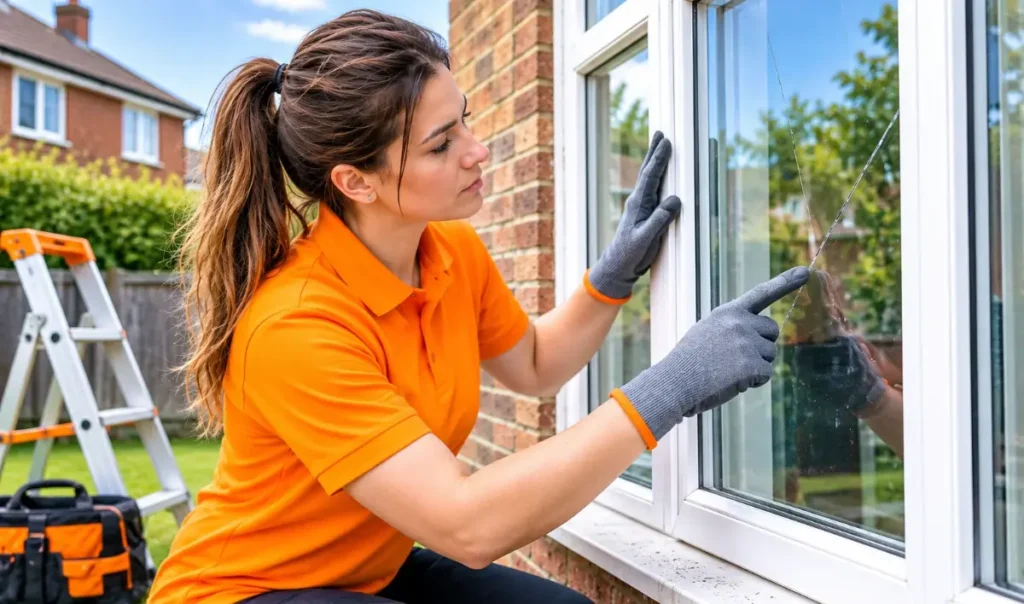
A glazier looking at heat or firework damage is really asking three questions: how far did the heat go, which part has failed, and can that part be separated from the rest of the window.
When the glass or the sealed unit is the only casualty
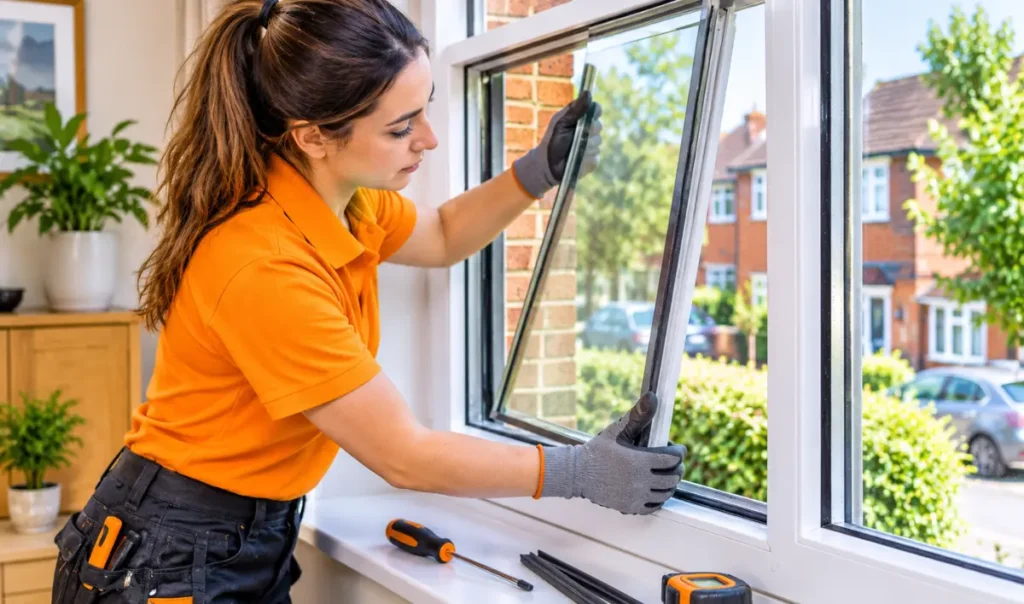
This is the most common good outcome. If the frame is flat, solid and undamaged, a cracked or fogged unit can be removed and replaced without touching the rest of the window. The cost is the new unit plus the visit, and the window keeps its existing frame, hardware and finish.
A broken pane of any kind falls under our broken window repair service in Southampton, where the first job is to make the opening safe and the second is to match the replacement properly.
When the frame itself has softened
A frame that has bowed, rippled or pulled away from the glass cannot be pressed back into shape. Light surface damage on an inconspicuous section can sometimes be tolerated, but a distorted frame usually stops the sash closing evenly, which leads to draughts, poor sealing and handles that no longer line up. In that case replacing the affected frame section or the whole window is the realistic route, and a glazier will say plainly when that is the case rather than patching something that will not hold.
When the damage is on a door
A scorched or warped door panel, a cracked glazed insert or a letterbox plate that has deformed all sit under door repair. Where the door slab itself is sound, panels, glass inserts and hardware can often be replaced individually, and our UPVC door repair service in Southampton deals with exactly those cases before anyone suggests a whole new door.
Photographs, Neighbours and the Insurer
Damage from fireworks and bonfires often sits in an awkward middle ground. Sometimes you caused it yourself, sometimes a neighbour did, and sometimes it was a stranger with a rocket and no sense of direction.
Whatever the cause, the practical steps are the same.
Photograph the damage in daylight as well as at night, from distance and up close, with something in frame for scale.
Note when you noticed the damage and, if you know it, what caused it.
If someone deliberately aimed fireworks at your home, report it to the police and ask for a crime reference number, because insurers often want one.
Keep any receipts for emergency boarding or temporary cover.
Whether your policy covers the repair depends on the wording, the cause and the excess, and we explain how glazing claims usually work in our guide on whether home insurance covers double glazing repair in Southampton. Contact your insurer before you pay for a permanent repair, so you are not caught out by a requirement to use an approved contractor or to supply evidence first.
If you are renting, tell your landlord or agent promptly, because responsibility for damaged glazing depends on the cause and the tenancy terms.
Habits That Keep Windows Safe Next Time
None of this needs expensive equipment. A few habits cut the risk sharply.
Place any bonfire as far from the house, fence and sheds as your garden allows, and be honest about whether your garden is big enough at all.
Keep launch areas for fireworks well clear of windows, doors and overhanging eaves, and check which way the wind is carrying debris.
Close windows and draw curtains on the sides facing the fire or the display, and move wheelie bins, doormats and anything flammable away from doors.
Never leave a fire unattended, and keep a hose or bucket of water within reach.
If your door is often a target for mischief, speak to the police about local patterns rather than blocking your letterbox in a way that could slow an escape route.
Organised displays are safer for the people and the property, which matters most in Southampton’s packed streets.
Frequently Asked Questions
Can UPVC be repaired after a bonfire has scorched it?
It depends on how deep the damage goes. Surface soot and light marking usually clean off, but a frame that has softened, rippled or lost material cannot be restored and the affected section normally needs replacing. A glazier can tell the difference quickly with a hands on check.
Why did my double glazed window crack hours after the fire was out?
Glass that is heated unevenly stores stress, and a crack can appear after it has cooled. The pane may look fine while the stress is still building, which is why a window that sat close to a fire deserves a second look the next morning.
Why is my window fogging up days after a firework or bonfire nearby?
Fogging between the panes means the sealed unit has lost its edge seal, and heat is one of the ways that happens. Moisture enters the gap gradually, so the cloudiness can arrive well after the event. The unit needs replacing, because the fog is inside and cannot be wiped away.
What should I do if a firework went through my letterbox?
If anything is still burning or you cannot be sure the device is spent, leave the house and call the fire service. Once it is safe, photograph the damage, report it to the police if it was deliberate and arrange an inspection of the door and any glass beside it.
Does a small scorch mark on my frame matter?
A shallow mark on a flat, solid frame is usually cosmetic. A mark that has pitted, bubbled or melted into the plastic is different, because the surface has changed and the area around it may be weakened. If you are unsure, have it looked at before the colder weather puts extra strain on it.
Final Thoughts
Firework season and garden bonfires put Southampton homes closer to open flame than most people realise, and the windows and doors take the first hit. A soot mark is a quick job. A softened frame, a heat cracked pane or a unit that slowly fogs is a different matter, and it is better to find that out now than after a hard frost makes things worse.
If you are not sure what you are looking at, our team at Glaze Repair Southampton can look at the damage, tell you plainly whether it needs a repair or a replacement and fit the right fix without pushing you into more work than you need.