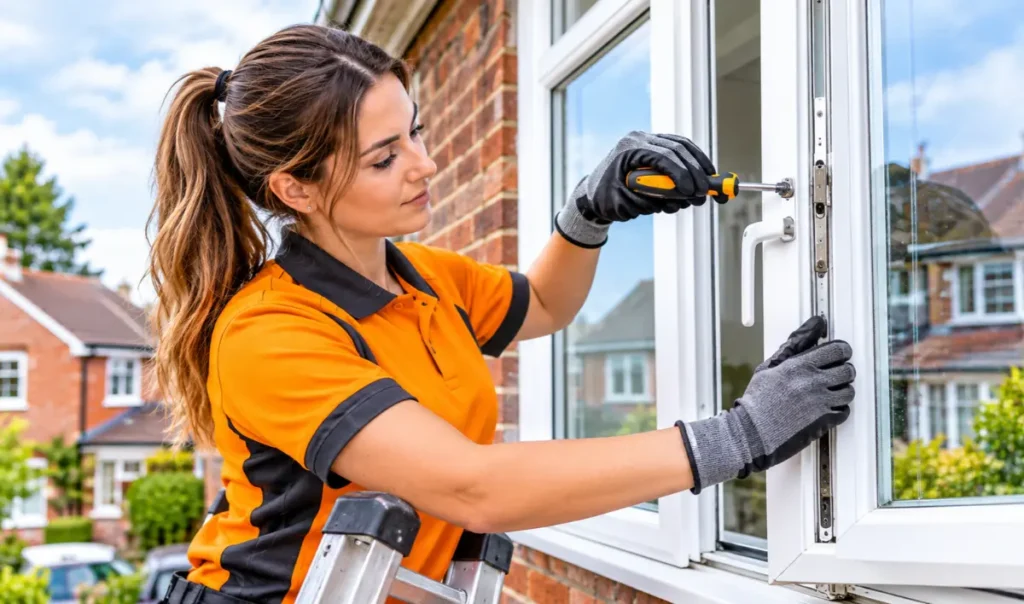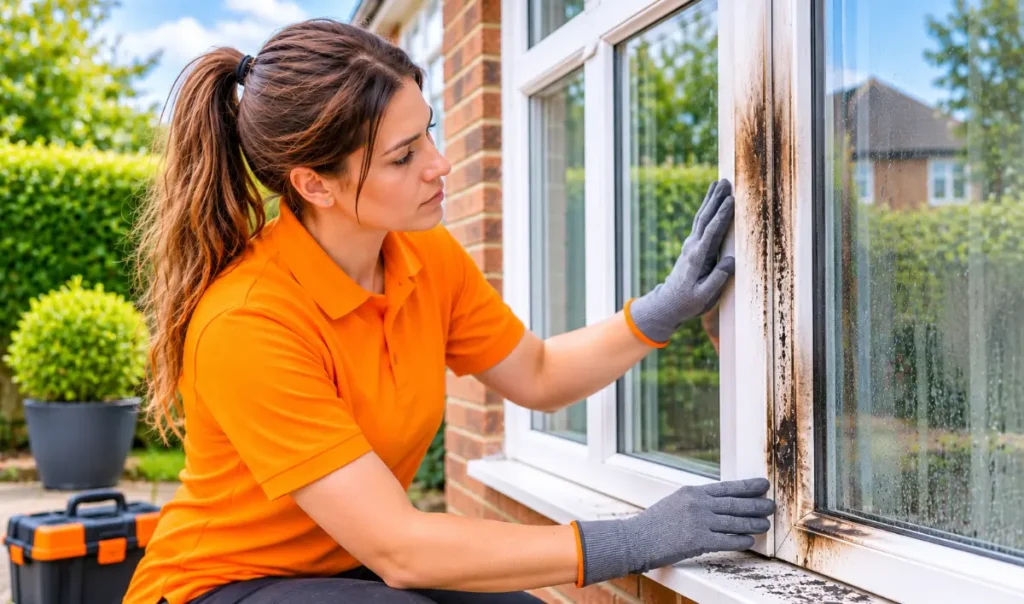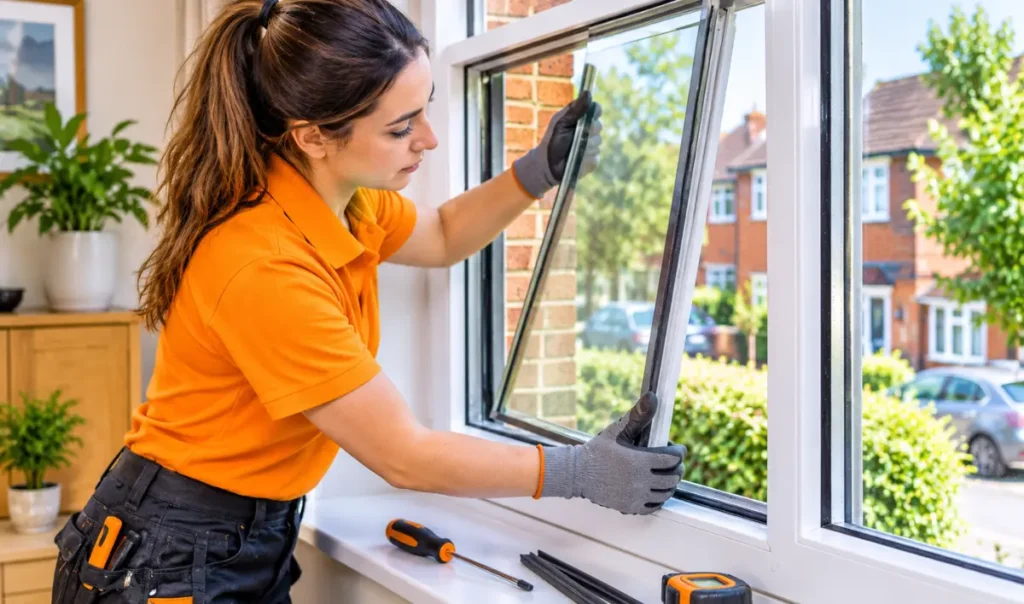

A UPVC door or window lock that turns stiffly, refuses to engage, or won’t accept the key at all on a cold morning is rarely a broken lock. Cold weather causes one of two very specific things: the multipoint locking mechanism drops fractionally out of alignment with its keeps, or moisture sitting inside the barrel freezes and blocks the key from turning. Neither usually means a new lock, and forcing it is the surest way to turn a five-minute fix into a snapped key or a full mechanism replacement.
Southampton doesn’t get the hard, prolonged frosts of northern England, but the city’s damp, changeable winters and cold overnight temperatures followed by a wet morning are exactly the conditions that cause both faults. Understanding which one you’re dealing with before you touch anything saves you a callout for something you could sort yourself or stops you from making a genuine fault worse.
Two Separate Problems, Not One
It’s worth being precise here, because the two causes need completely different responses.
The first is mechanical. A UPVC multipoint lock drives several hooks, rollers, or mushroom cams into keeps fixed along the frame, all at once, when you turn the handle or key. Every one of those points has to land inside a keep with only a few millimetres of tolerance. Cold air causes minute contraction in the metal gearbox and the keep fixings themselves, tightening that tolerance just enough that a hook catches the edge of its keep instead of sliding cleanly in.
The second is entirely different. Rain, condensation, or even just humid air can leave a trace of moisture sitting inside the cylinder barrel. Once the temperature drops below freezing, usually overnight, that moisture turns to ice inside the pins and springs, physically blocking the key from turning at all.
A mechanism that’s mildly misaligned will usually still take the key but resist turning, or need the handle lifted or pushed at an odd angle to engage. A frozen barrel typically won’t accept the key properly in the first place, or the key goes in but won’t rotate no matter how it’s wiggled.
Why This Shows Up Overnight, Not Gradually
Homeowners are often thrown by how sudden this feels. A door that locked perfectly the evening before can genuinely refuse the next morning, with nothing having changed on the door itself.
That’s consistent with both causes. Metal and UPVC contraction happens within hours of a temperature drop, not weeks. And barrel freezing is entirely dependent on overnight conditions, moisture that was harmless at 8pm can be solid ice by 6am if the temperature falls far enough.
This is different to the gradual wear you’d see from a keep that’s slowly corroded or a gearbox that’s aged over several winters. If the fault clears on its own once the day warms up, or comes and goes with the weather rather than steadily worsening, cold is almost certainly the trigger rather than a failing part.
How to Tell Which One You’ve Got
A quick check before calling anyone can usually narrow it down.
Does the key go into the barrel easily but not turn? That points to the mechanism side, either the gearbox tolerance or a keep that’s shifted slightly. The barrel itself is clear.
Does the key feel like it’s meeting resistance going in, or turn only a fraction before stopping hard? That’s more consistent with ice inside the barrel itself, particularly if it was raining or there was heavy condensation the evening before.
Does the door lock fine but the window on the same wall doesn’t, or vice versa? Espagnolette window locks and multipoint door locks are different mechanisms, so a fault on one doesn’t automatically mean the other is affected, which helps rule out a wider building movement issue.
Has this happened before on a similarly cold morning? A recurring pattern tied specifically to temperature drops is a strong sign this is a cold-weather fault rather than a mechanism that’s simply worn out and coincidentally chose a cold day to fail.
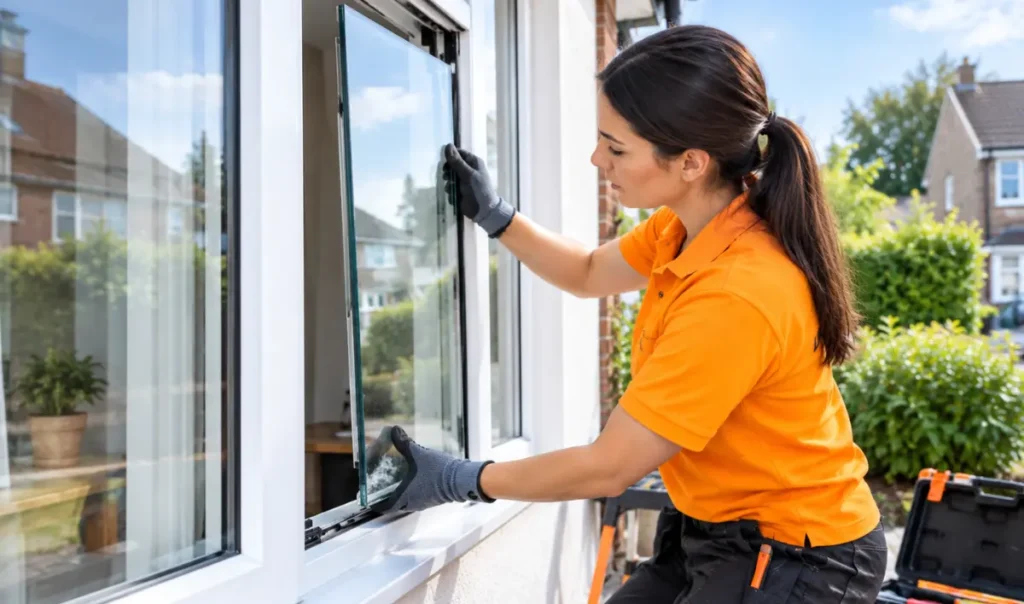
What Not to Do
A stiff lock in cold weather triggers an understandable instinct to force it, and that instinct causes more damage than the cold ever would.
Forcing a key that won’t turn is the single most common way a cold-weather lock fault turns into a snapped key inside the barrel, which is a different and more awkward repair. Similarly, pulling up hard on a handle that won’t lift fully can shear a cam or crack a gearbox that was otherwise fine.
Boiling water, a common piece of advice for frozen locks generally, is a bad idea on a UPVC door or window specifically. The sudden heat can warp the UPVC profile around the barrel or crack cold glass nearby, creating a second problem on top of the first.
WD-40 and other oil-based lubricants are also worth avoiding here, even though they’re the instinctive reach for a stiff lock. Oil attracts dust and grit over time, which thickens inside the mechanism and makes the next cold snap worse rather than better.
Safe Steps to Try First
A dry, PTFE-based or silicone spray lubricant, applied directly into the keyhole and worked through by turning the key gently a few times, is the safest first move for a barrel that’s simply stiff rather than fully iced. If the barrel is genuinely frozen, gently warming the key itself, a lighter held briefly under it, or simply holding it in a closed fist for a minute, and then inserting it slowly, often melts enough ice to let it turn without any heat near the door itself.
For a mechanism that seems misaligned rather than frozen, lifting or supporting the door handle slightly while turning the key can sometimes help the hooks find their keeps on the first attempt. If that only works intermittently, the alignment has genuinely shifted and needs a proper adjustment rather than a workaround repeated every cold morning.
If none of this shifts it within a couple of attempts, stop. Repeated forcing at this point risks the key or the gearbox, and a callout is far cheaper than either.
When It Isn’t the Cold at All
Not every stiff lock in winter is weather related, and it’s worth ruling out the alternative before assuming temperature is to blame.
A lock that’s been getting gradually harder to turn over several months, regardless of weather, points to general mechanism wear rather than a cold snap. Our breakdown of why UPVC door locks jam and what it actually costs to put right covers that steady deterioration in more depth, including the gearbox and cylinder faults that develop over years rather than overnight.
The same distinction applies to windows. If an espagnolette window lock has been stiffening gradually rather than failing specifically on cold mornings, our guide to window lock signs, causes and costs covers the wear-based version of this fault separately.
What a Proper Fix Involves
For a genuinely cold-triggered mechanism misalignment, the fix is usually a keep adjustment, physically repositioning the strike plate a millimetre or two so the hooks land centrally regardless of minor seasonal movement. This is typically a short job, often resolved within a single callout without replacing any parts.
A frozen barrel that’s caused no lasting damage generally needs nothing more than the ice clearing and a proper clean and re-lubrication afterwards, done with the correct silicone-based product rather than oil, to reduce how much moisture the barrel holds next time conditions turn cold.
Where a key has already snapped, or a gearbox has cracked from being forced, the repair shifts to a straightforward parts replacement, cylinder or gearbox, without needing to replace the whole door or window. A FENSA registered installer will always check keep alignment as standard once a lock’s been forced, since a snapped key is often a symptom of a keep that was already out of true before the cold made it obvious.
Frequently Asked Questions
Will WD-40 damage my UPVC lock?
Not immediately, but it attracts dust and grit over time, which builds up inside the mechanism and tends to make future stiffness worse. A dry silicone or PTFE spray is the better long-term choice for UPVC lock barrels.
Does a frozen lock mean the whole door needs replacing?
No. A frozen barrel is almost always resolved by gently warming the key and clearing the ice, then relubricating properly. A full door replacement is only needed if the mechanism has been physically damaged by forcing it.
Why does my lock only stick on some cold mornings and not others?
Ice formation depends on how much moisture was sitting in the barrel the night before, which varies with rain, condensation, and humidity, not just the temperature reading. A dry cold morning often causes no issue at all, while a wet evening followed by a frost usually will.
Can I stop this happening before temperatures drop again?
Keeping the barrel lubricated with a silicone-based spray every few months, and having keep alignment checked if a lock has needed forcing more than once, both reduce how often cold weather causes a problem in the first place.
Final Thoughts
A UPVC lock that stops cooperating the moment the temperature drops is responding to something specific, either a mechanism working to a tighter tolerance than usual, or moisture that’s turned to ice overnight. Neither is a sign the lock has failed, and neither needs a new door or window to put right.
Knowing the difference between the two, and resisting the urge to force a key that’s genuinely stuck, is what keeps a cold-weather inconvenience from becoming an expensive repair. If your lock has stopped playing along and a gentle check hasn’t shifted it, get in touch with our Southampton team for a straightforward assessment before the next cold morning catches you out again.