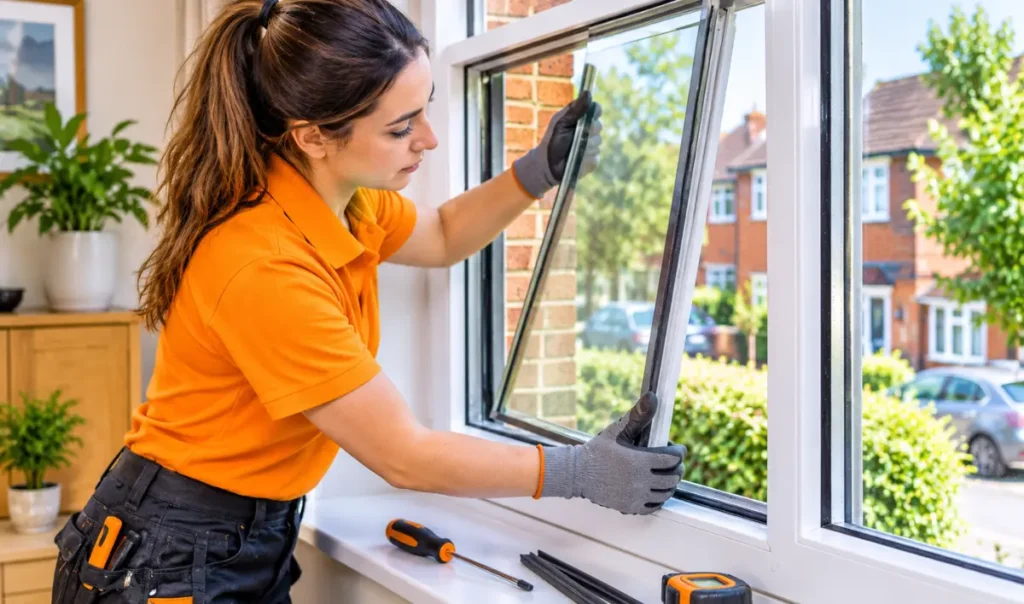

A window frozen shut after a cold night is almost always ice gluing the rubber seal to the frame, and it normally frees itself once the room warms, so gentle warmth works far better than force.
That is good news, because the usual reaction is the opposite. People grab the handle, pull harder, reach for a screwdriver or pour a kettle over the glass. Those are the moves that turn a ten minute wait into a snapped handle, a bent hinge or a cracked pane.
This guide explains why Southampton windows stick on cold mornings, how to tell frost from a real fault, how to free the sash safely, and when it is worth booking a repair instead of waiting for the next thaw.
What Is Actually Holding the Sash in Place
Here is the short version of what is happening when a UPVC window will not budge after a cold night:
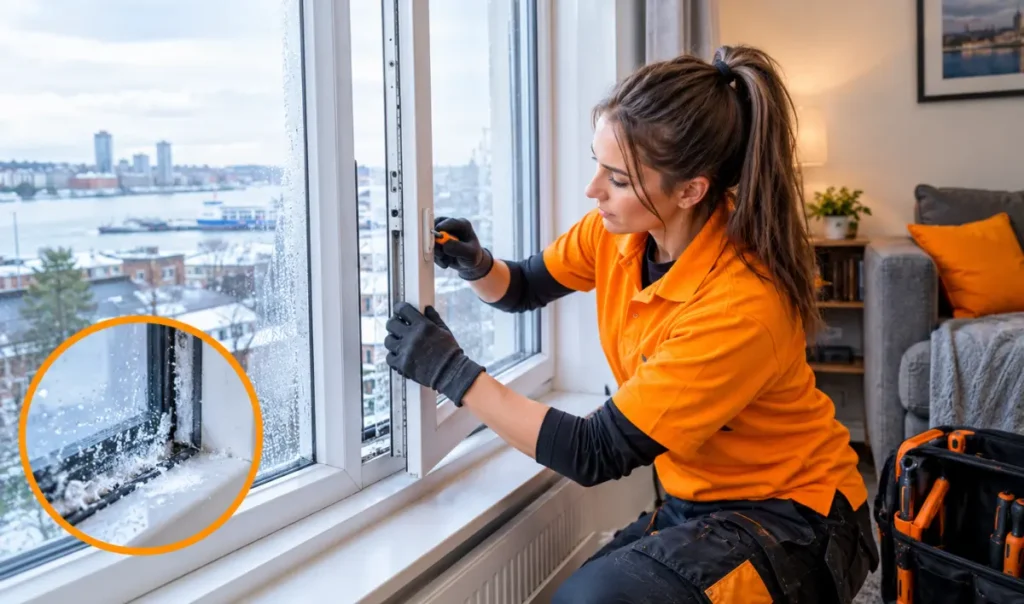
The most common cause is condensation that ran down the glass overnight, pooled along the bottom edge of the sash and froze against the rubber seal.
The tell tale sign is a window that loosens as the room warms, often within a short while of the heating coming on.
The safest first move is to warm the room and leave the window alone, rather than testing it every few minutes.
Boiling water, prising tools and hard pulls on the handle are the three things that cause genuine damage.
A window that stays stuck once the room is properly warm, or a handle that feels loose or gritty, points to a mechanical fault rather than ice.
If the window is the way out of a bedroom, treat any sticking as a repair to book rather than a quirk to put up with.
Why Ice Forms Where You Cannot See It
A closed window is not a perfectly dry place. Warm indoor air carries moisture from cooking, showers, drying laundry and simply breathing, and the glass is the coldest surface in most rooms. The moisture lands on the glass, runs downwards and collects in the narrow gap where the sash meets the frame.
On a mild night that water just sits there. On a clear, still night when the temperature dips to freezing, it turns to ice, and ice does not care that the thing it is stuck to is a rubber seal. It bonds the seal to the frame, and the sash stops moving.
Southampton makes this more likely than people expect. The city rarely sees long hard freezes, but the air is damp from the water on two sides, and a clear night after a wet day gives exactly the combination that leaves a film of water sitting on cold frames. If you want the full picture of where the moisture on your glass actually comes from, that is covered separately, because inside, outside and between the panes are three different problems.
It also explains why the same window sticks again and again while its neighbour never does. A bedroom with a sleeper breathing all night produces far more moisture than a spare room, so the bedroom window collects more water and freezes first.
Four Reasons a Window Grips Harder on a Cold Night
Ice bonding is the headline cause, but it is rarely the only thing going on. Cold affects several parts of a window at once, and understanding each one helps you work out what to do.
Ice Bonded to the Seal
The rubber gasket around the sash is designed to press firmly against the frame to keep draughts out. A film of frozen water across that contact line acts like glue. The handle may turn normally because the locking points are fine, but the sash will not swing away because the seal is stuck along its length.
Seals and Frames That Tighten in the Cold
Rubber and plastic both stiffen and shrink slightly as temperatures fall. A gasket that feels soft and springy in a warm room becomes firmer and grips harder on a freezing night. On a window that is already a touch tight, perhaps because the hinges have dropped a little, that extra grip is enough to make opening feel like a struggle.
Frozen Water in the Drainage Route
Most UPVC frames have small slots on the outside that let rainwater escape from the frame channels. If those slots are blocked by dirt, spider webs or old paint, water sits in the channel and freezes. A frozen channel can lock the sash in place and, on repeated freezing, can push moisture back towards the inside edge of the seal.
Windows facing the prevailing weather in places such as Woolston, Netley and Millbrook tend to take more driven rain, so their drainage slots matter more than most.
Hardware That Stiffens
The handle, gearbox and locking points rely on small amounts of lubricant to move smoothly. Cold thickens that lubricant, and old, dried out hardware becomes noticeably heavier to operate. If the handle feels stiff every cold morning but frees up by the afternoon, this is usually the reason. Left alone, it often ends with a handle that snaps or a mechanism that fails, which is why it is worth having the locking points serviced before they give out completely.
How to Tell Frost From a Genuine Fault
The quickest test is time. Frost related sticking comes and goes with the temperature, while a mechanical fault does not care what the weather is doing.
Ask yourself these questions:
Does the window free up once the room has warmed, even if it needed a wait?
Does it only stick after a night when the outside air was properly cold?
Is the sash itself fine, with the handle turning smoothly and nothing feeling loose?
Does the glass or frame show a thin crust of ice or a damp, frosty edge along the seal?
Four yes answers means frost is the likely culprit and the steps below should sort it. If the answers are mixed, or the window refuses to open even on a mild day, you are looking at something else, such as a failed hinge, a jammed locking point or a frame that has swollen after wet weather.
What If It Is Frozen Open Instead of Shut
It can happen the other way round. A window left on the vent or slightly ajar overnight can freeze in that position, with ice forming around the hinge side and the seal that now meets the frame at an angle. If it will not close, the same rule applies. Warm the room, wait, and do not push it into a frame it is not lined up with.
Freeing the Sash Safely, One Step at a Time
Most frozen windows can be freed in a few minutes with no tools at all. Work through these steps in order and stop as soon as the sash moves.
Step One: Warm the Room and Wait
Turn the heating up, close the door and let the room come up to temperature. This does more than anything else because the ice melts from the warm side. Resist the urge to test the window every minute, since repeated tugging on a bonded seal stresses the gasket.
Step Two: Warm the Seal Line Gently
If the room is warm and the window is still stuck, warm the seal line directly. A dry cloth warmed on a radiator and held against the frame edge works well. A hair dryer on a low setting, kept moving and held a hand’s width from the frame, is also fine. Aim at the frame and gasket, not the glass, and never hold it still in one spot because UPVC can soften and mark.
Step Three: Press, Then Ease
With the ice softened, press the flat of your hand against the sash edge near the handle and apply gentle, steady pressure inwards, then ease it open. You are breaking a weak bond rather than overcoming a lock, so it should give with a faint crackle. If it needs real effort, stop and warm it again.
Step Four: Only Then Use the Handle
Once the sash has moved a little, turn the handle and open the window fully. Using the handle to force a stuck sash is how spindles shear and gearboxes break, so keep it as the last step, not the first.
Step Five: Dry Everything Off
Wipe the sash edge, seal and sill dry, and clear any water from the bottom channel. Leaving water behind guarantees the same problem on the next cold night.
What Goes Wrong When People Force It
The mistakes below cause more repair visits than the frost itself, and every one of them is avoidable.
Boiling or very hot water is the most damaging. Glass expands unevenly when heat hits it suddenly, and that uneven stress is exactly what cracks a pane or damages the edge of a sealed unit. A crack that starts at the edge of the glass often spreads, and by that point you are looking at the need to replace a cracked pane rather than simply free a stuck window.
Prising with a screwdriver or knife tears the gasket and scars the frame. A torn seal lets draughts and water in for the rest of the cold season, and it makes the freezing problem worse, because a damaged gasket holds water.
Hammering or thumping the sash can knock the hinges out of line, and a window that drops even slightly on its hinges will grip the frame every cold night from then on.
Spraying general purpose lubricants on the seal is another trap. Some contain solvents that dry out rubber over time. If a seal needs help, a silicone based product made for window gaskets is the safer choice, applied sparingly once the surface is dry.
When the Window Is a Bedroom Escape Route
This is the part most guides skip, and it matters. A window that freezes shut in a bedroom is more than an annoyance, because in a fire a bedroom window may be the quickest way out.
Building guidance for homes sets out expectations for windows that serve as an escape route, including how far they need to open and how high the opening can sit above the floor. You can read the government’s fire safety guidance for homes to see how escape windows are treated, although the practical point is simple. If a bedroom window sticks, you want it fixed rather than managed.
A few sensible habits help:
Open bedroom windows regularly, so you know they still move freely.
Make sure everyone in the house knows how the handle and any restrictor work.
Keep the area under and around the window clear of furniture.
Treat a window that needs a struggle to open as a priority repair, whatever the cause.
This matters most in homes with children, older relatives or anyone who sleeps upstairs, such as the two storey terraces common across Shirley, Portswood and Bitterne.
Stopping It Happening Again Before the Next Cold Snap
The best fix for a frozen window is making sure it never freezes. The steps are small and cost almost nothing.
Dry the edges before bed. A quick wipe of the sash edge, the seal and the sill removes the water that would otherwise freeze overnight. It takes seconds and makes a real difference.
Let the room breathe. A trickle vent left open lets damp air escape instead of landing on the glass. Many people shut them in cold weather to save heat, which is understandable, but it usually trades a small draught for a daily puddle of condensation.
Clear the drainage slots. Use a thin plastic tool or an old toothbrush to clear the small slots on the outside of the frame, then run a little water down the channel to confirm it drains.
Treat the seals. Wipe the gaskets clean and apply a thin film of silicone based lubricant before the cold sets in. This keeps the rubber supple and stops ice gripping it so hard.
Keep an eye on the lock side too. If it is a door lock rather than a window that seizes up in the cold, there are the four real reasons a UPVC lock seizes in the cold, and none of them are fixed by the steps in this guide.
What a Repair Visit Involves and How to Get a Firm Price
If the window keeps freezing, or sticks even when it is warm, a repair is usually quick and does not mean a new window. A glazier will typically look at the following:
The condition and fit of the gasket, and whether it has hardened, split or pulled away from its groove.
The hinges and whether the sash has dropped, which causes uneven contact and extra grip.
The handle, gearbox and locking points, checking for dry or worn parts.
The drainage slots and bottom channel, clearing anything that holds water.
The condition of the sealed unit, since a unit with a failed seal runs colder on the inside surface and tends to collect ice more readily.
Most of that is adjustment, cleaning and replacing worn parts, which is why a window that has been looked at early tends to cost far less than one that has been forced for several winters.
To get a firm price over the phone, it helps to have a few details ready. Tell the glazier which window it is, whether it is upstairs, whether it frees up once warmed, and whether the handle feels loose or gritty. A clear photo of the seal line and the handle speeds things up, and it is reasonable to ask for a written price before anyone visits, with a clear note of what would change it.
Frequently Asked Questions
Is it safe to pour hot water over a frozen window?
No. Hot or boiling water causes uneven heating of the glass, which can crack the pane or damage the edge of a sealed unit, and the water refreezes quickly on a cold frame. Warm the room and the seal line gently instead.
Why does only one window in my house freeze shut?
That window is probably producing or collecting more moisture than the others. Bedrooms, bathrooms and kitchens put the most water into the air, and a window with a worn seal, blocked drainage slots or a slight drop on its hinges will hold water longer and freeze first.
Can a frozen window be damaged by the ice itself?
Ice alone rarely causes lasting damage, but repeated freezing can wear the gasket, and forcing the window against the ice can tear it. If you notice a split or a seal that has pulled out of its groove, get it looked at before the next cold spell.
Should I leave a window slightly open overnight to stop it freezing?
Leaving a window open as a precaution is not recommended, especially on the ground floor, because of security and heat loss. A trickle vent, left open, is a much better way to reduce the moisture that causes the problem.
How do I know if a stuck window needs a repair rather than patience?
If it frees up once the room warms, patience and prevention are enough. If it stays stuck in a warm room, the handle feels loose or crunchy, or the same window sticks on mild days, the cause is mechanical and needs a proper look.
Keeping Windows Moving Through the Cold Months
A window frozen shut is usually a small problem with a simple fix, as long as it is handled calmly. Warmth, patience and a gentle touch solve most cases, while force turns a minor nuisance into a repair bill.
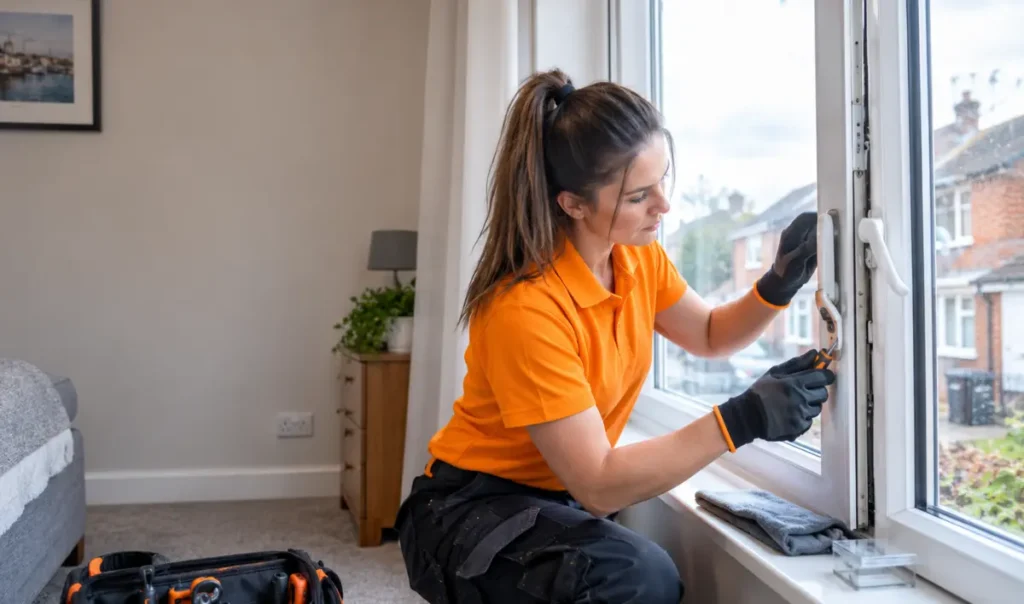
If a window in your Southampton home keeps sticking, or you would simply rather have it checked before the next hard frost, the team at Glaze Repair Southampton can look at the seals, hinges and hardware and get it moving freely again.