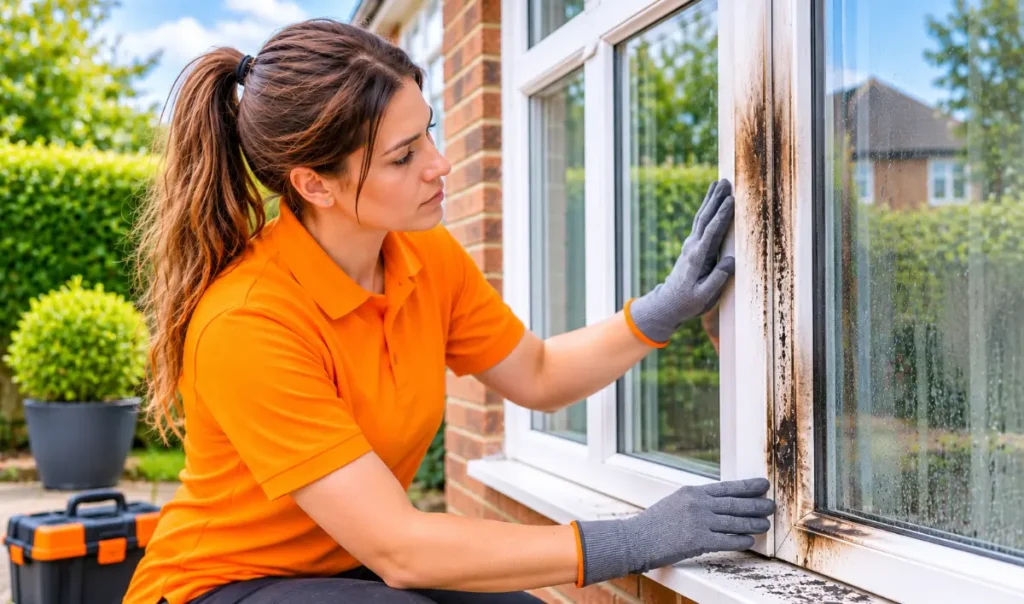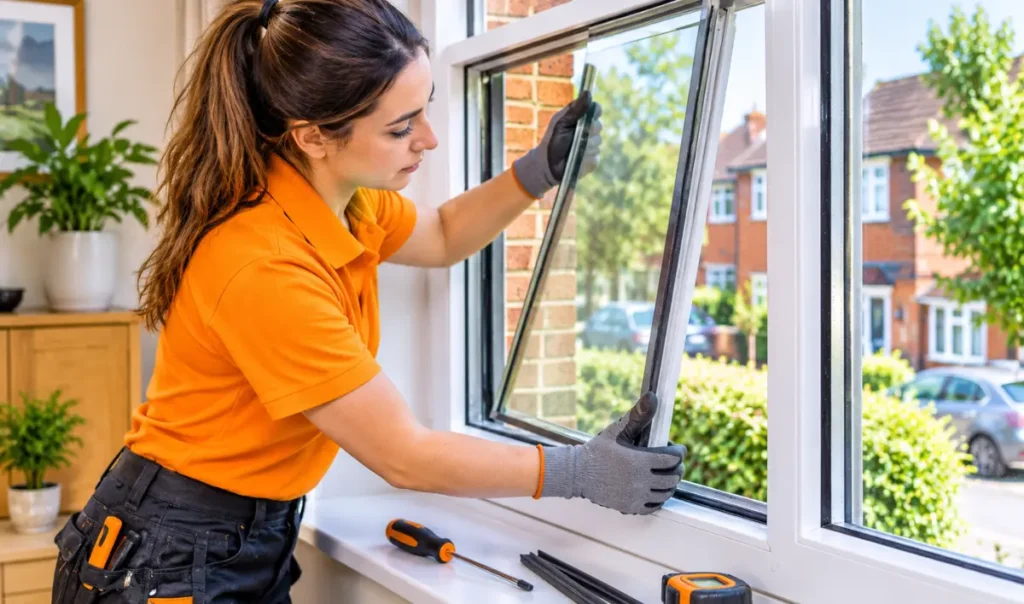

Only one pane of your patio door misting up while its neighbour stays clear almost always means that one sealed glass unit has failed, not the whole door. Each pane in a modern patio door is its own independent unit, so it is entirely normal, if annoying, for one to give out years before the other.
What This Pattern Tells You About Your Door
Before going further, here is the short version.
A patio door usually has two or more separate sealed glass units, not one continuous sheet of glass
Each unit ages on its own timeline, so uneven misting is a sign of individual seal failure, not a design fault
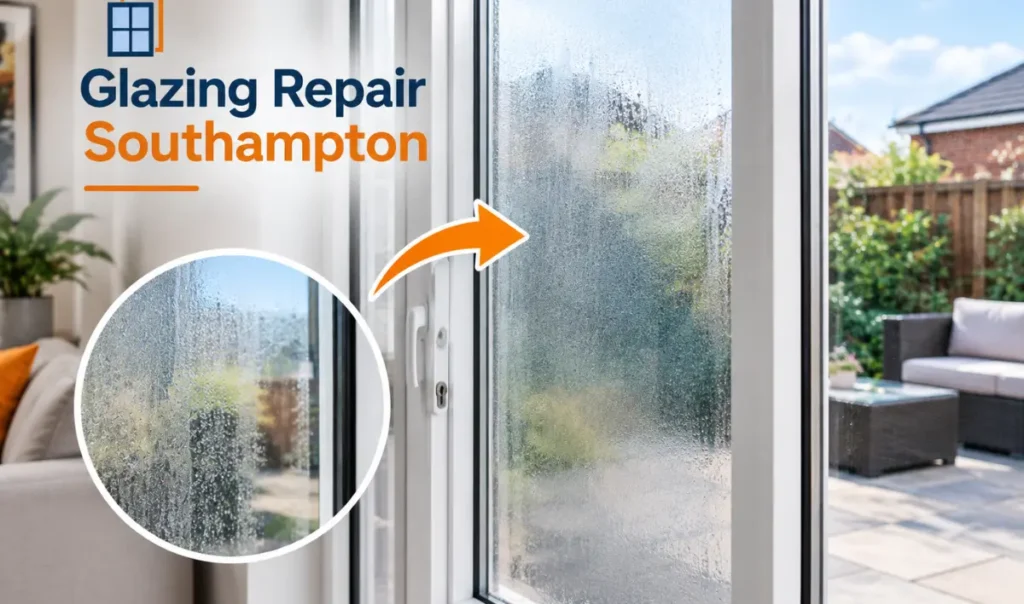
A haze that will not wipe away from either side of the glass means moisture is trapped between the panes
The fix is almost always a swap of the single failed glass unit, not a full door replacement
A damp smell that only appears when rain is blowing directly at the door is a separate but related clue worth checking at the same time
What Two Panel Patio Doors Are Actually Made Of
It helps to understand what you are actually looking at before diagnosing the fault. A sliding patio door is built from two or more separate sealed glass units sitting inside a shared frame. Each of those units is its own sandwich of two panes of glass with a spacer bar and a gas fill sealed between them.
Because each unit is manufactured, sealed, and fitted as its own component, there is no physical connection between the seal quality of one pane and the seal quality of the other. If you want to see the full range of glazing repairs we handle across the city, our patio and door repair work covers exactly this kind of individual unit replacement rather than treating the whole door as one job.
That separation is actually good news here. A door with one misted pane is not failing as a whole system. It has one weak point, and that weak point can be replaced on its own while the rest of the door carries on working exactly as it should.
Why One Sealed Unit Fails While Its Neighbour Doesn’t
This is the part that confuses most homeowners, because it feels like both panes should age at the same rate. In practice, several ordinary factors can push one unit past the point of failure while the other stays sound for years longer.
Different Manufacture Batches
Even when a patio door is fitted as a single job, the individual sealed units inside it are not always cut from the same production batch. A slightly weaker weld on the spacer bar, or a slightly thinner bead of sealant on one unit, is invisible on day one but shows up as an earlier failure five, ten, or fifteen years down the line.
Uneven Sun and Weather Exposure
A patio door that faces south or west gets far more direct sun on one side than the other, particularly if a wall, fence, or trellis partially shades one panel but not the fixed one beside it. Repeated heating and cooling cycles stress the seal, and a pane that spends more of the day in direct sun will generally show wear first.
Vibration From the Sliding Panel
On a two-panel patio door, one pane is usually fixed in place and the other slides. The sliding panel absorbs far more physical movement over its lifetime, opening and closing hundreds of times a year, which places more ongoing stress on its seal than the panel that never moves at all. If you are also noticing that the door feels heavier to slide than it used to, that is a related but separate fault worth mentioning to whoever inspects it, since it usually points to worn rollers rather than the glass itself.
Knowing which of these three applies to your door is not something you can diagnose from a photo. It generally requires someone to actually look at how the unit sits in the frame and how it is exposed to the weather.
Is This a Sign the Whole Door Needs Replacing?
Not on its own. A single misted pane, even on an otherwise fairly new door, is normally treated as a routine glass unit swap rather than a reason to replace the frame or the mechanism. The frame, the rollers, and the locking hardware are separate systems from the glass, and a failed seal does not mean any of them are compromised.
The exception is a door where multiple panes have failed within a short window of each other, or where the frame itself has warped enough that a new unit will not seal properly once fitted. In that situation, it is worth having a proper look at the whole door rather than patching a symptom while the underlying cause keeps producing new ones. This is the same logic covered in our guide to telling the difference between the three types of window condensation, since a unit that has failed between the panes behaves very differently to ordinary surface moisture and needs a different response.
The Related Clue A Damp Smell Only When Rain Blows Straight At the Door
Some homeowners notice a second symptom alongside the misting, a faint musty smell that only appears when wind and rain are driving directly at the door, and disappears the rest of the time. This is worth mentioning because it points to a different part of the door than the misting does, even though the two often get reported together.
A misted pane is a glass problem. A smell that only shows up in driving rain is usually a seal or drainage problem lower down in the frame, where the brush seals around the sliding panel have compressed with age or the small weep holes that let rainwater drain back outside have become partially blocked. Neither of these faults will damage the door quickly, but both are worth flagging in the same visit, since fixing the glass while ignoring a blocked drainage channel just means calling someone back out again in a few months. If misting on windows elsewhere in the house is also on your mind, our misted window repair service covers the same single-unit replacement approach on standard windows, not just doors.
What a Professional Repair Actually Involves
Replacing a single failed sealed unit in a patio door is a contained job, but it is not something most homeowners should attempt themselves, mainly because of the weight involved and the risk of damaging the frame while removing the old unit.
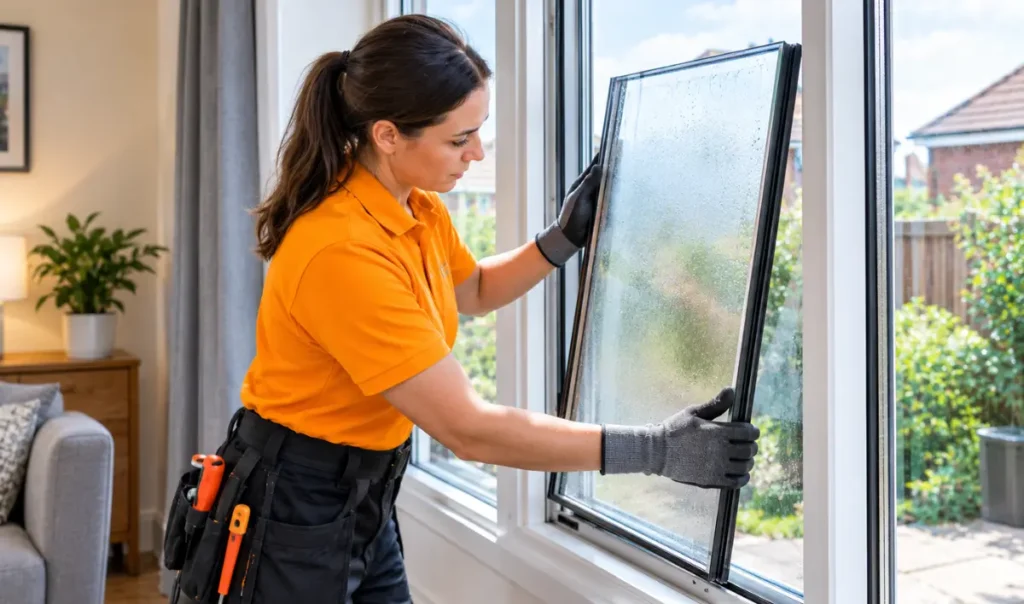
The general process looks like this. The internal beading around the affected pane is carefully removed, the old sealed unit is lifted out, and the new unit is measured and ordered to match the exact cavity depth and glass specification of the surrounding panes. Once the replacement arrives, it is fitted back into the frame, the beading is reseated, and the seal around the edge is checked before the job is signed off. Our double glazed door repair service covers this exact type of single-pane replacement across patio, French, and hinged doors alike.
A properly qualified glazier working to Glass and Glazing Federation standards will also check the surrounding frame and drainage while the unit is out, since this is the easiest point in the job to catch a secondary fault like the damp smell mentioned above, rather than leaving it for a second callout later.
Repair Cost Factors and When Replacement Makes Sense
Pricing for a single patio door pane replacement depends mainly on the size of the unit, whether it is toughened or laminated safety glass, and how easily the beading comes out on that particular door profile. As a general rule, a single-pane swap is considerably cheaper and faster than replacing the whole door, and it is what most Southampton glaziers recommend as the first option whenever the frame and mechanism are otherwise sound.
Replacement of the full door only tends to make sense once the frame has warped, once the rollers and locking mechanism are also failing, or once the door is old enough that matching glass specifications becomes difficult. If you are trying to work out which category your door falls into, our piece on why modern double glazing actually causes less condensation than your old windows covers the broader physics that decides whether a fault is worth repairing or living with.
Southampton Specific Factors Worth Knowing
Southampton’s mix of housing stock plays a role here too. Newer waterside developments around Ocean Village and West Quay often have larger patio door installations that see more direct exposure to salt-laden coastal air, which can accelerate seal wear on whichever pane faces the water. Properties further inland in areas like Bassett or Swaythling tend to see failure driven more by sun exposure and age than by coastal weathering, though the end result, a single misted pane, looks the same either way.
Frequently Asked Questions
Does one misted pane mean my whole patio door has failed?
No. A patio door is made of separate sealed glass units, and a failure in one does not mean the others, or the frame and mechanism, are affected. In almost all cases, only the single failed unit needs replacing.
Can I clean the mist off between the panes myself?
No, the mist sits inside a sealed cavity that only opens if the seal has already failed, so there is no safe way to clean or dry it out from either side. The only fix is replacing the sealed unit itself.
Why did one pane fail years before the other if they were fitted at the same time?
Manufacturing variation, uneven sun exposure, and extra vibration on the sliding panel can all cause one unit to age faster than its neighbour, even when both were installed on the same day.
Is a misted pane a security risk?
Not directly. A failed seal affects insulation and clarity, not the structural strength of the glass or the door’s locking mechanism, so it is a cosmetic and efficiency issue rather than a security one.
How long can I leave a misted pane before it causes other problems?
There is no fixed deadline, but a failed seal will not repair itself and typically gets slightly worse over time as more moisture works its way into the cavity, so it is worth addressing before it affects resale value or energy bills.
Final Thoughts

A single misted pane on an otherwise sound patio door is one of the more reassuring faults a homeowner can have, precisely because it is so contained. It tells you exactly where the problem is, it does not point to anything wrong with the frame or the mechanism, and it is usually a same-day fix once the correct replacement unit has been ordered. If you have noticed this on your own door, it is worth getting it looked at properly rather than living with the view, since the fix is simpler than most people expect.