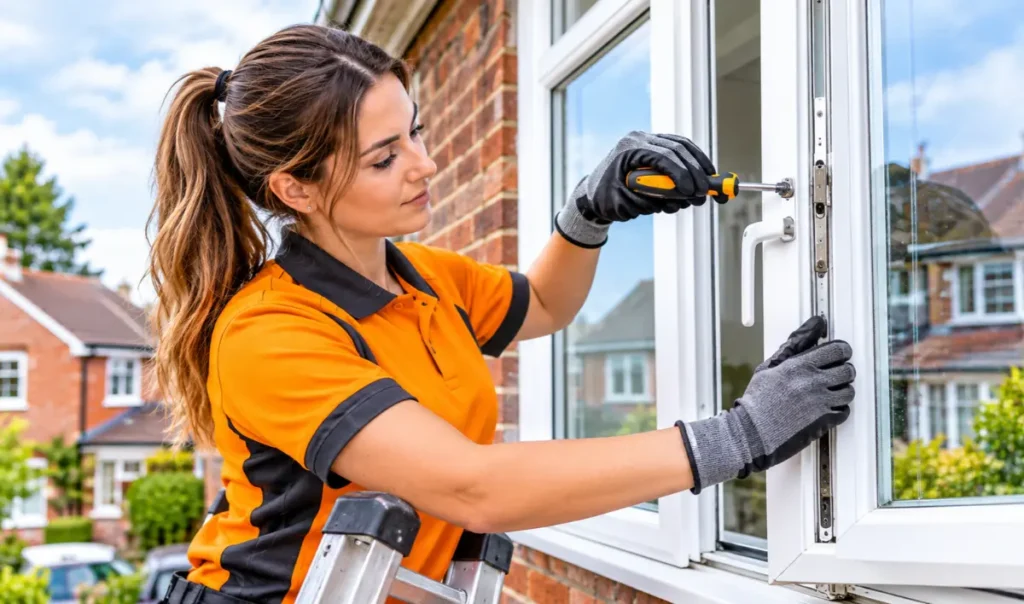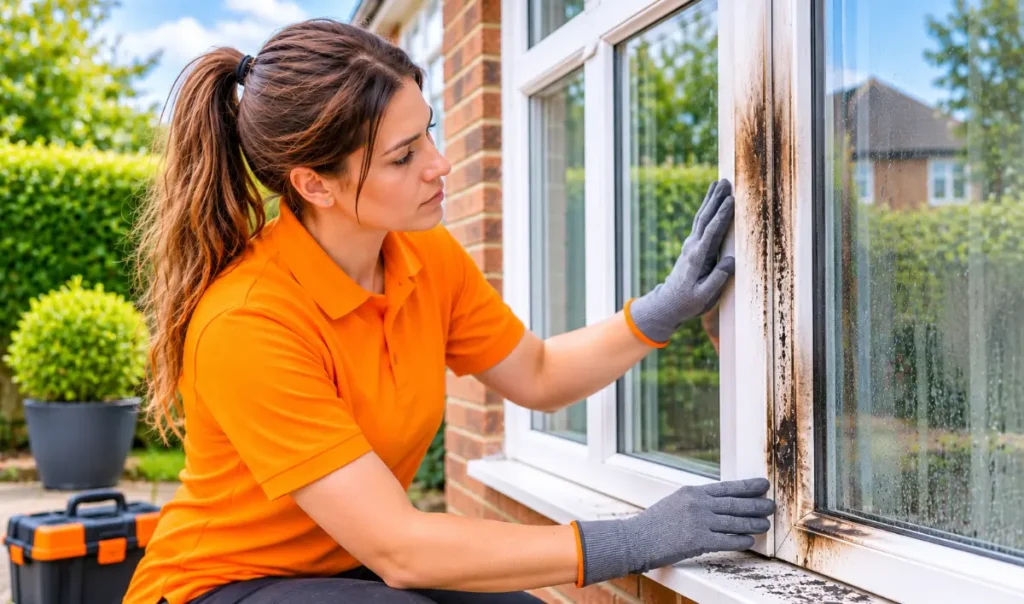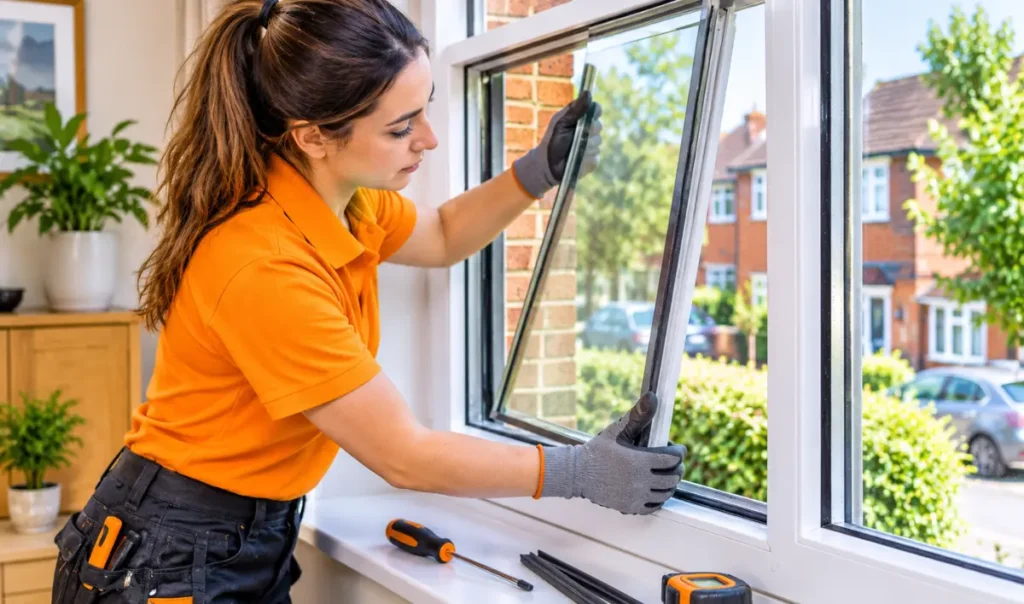

A UPVC patio door that has become heavy or difficult to slide has almost always developed a fault with its rollers or track, not with the door panel or frame itself. Unlike a hinged door, which hangs on hinges and can drop, a sliding patio door carries its full weight on small wheels running inside a track, and it is that roller and track system, not the glass or the frame, that wears out first.
What This Usually Means
A patio door runs on rollers set into the bottom of the panel, not on hinges
Dragging or heaviness almost always points to worn or seized rollers, not a fault with the glass, frame, or lock
Grit, sand, and salt in the track make the problem worse faster than in an inland home
Rollers can usually be adjusted or replaced without removing the whole door
A door that has become hard to slide often throws the lock out of alignment too, since a sagging panel no longer meets the frame the way it did when new
How a Sliding Patio Door Actually Carries Its Weight
It helps to understand what is physically happening before assuming the worst. A hinged door hangs vertically from two or three hinges fixed into the frame. A sliding patio door works completely differently. The moving panel sits on a set of small wheeled rollers fitted into its bottom edge, and those rollers run along a metal or UPVC track fixed to the floor of the frame.
Every bit of the door’s weight, which on a large patio panel can be considerable, rests on those few small wheels rather than being spread across hinges the way a normal door’s weight is. If you want to see the full range of glazing repairs we handle across the city, our team deals with exactly this kind of roller and track fault on a regular basis, alongside the more familiar hinge and lock problems homeowners already know to look for.
That difference in design is the whole reason a patio door fails differently to a front or back door. There is no hinge to drop here. There is a wheel to wear out.
Why Rollers Wear Out
A handful of ordinary, everyday factors combine to wear rollers down long before most homeowners expect it.
Weight and Daily Use
A patio door gets opened and closed far more often than most people realise, especially in warmer months when it becomes the main route in and out to a garden or patio area. Every one of those movements puts the full weight of the panel through the rollers, and like any wheeled mechanism under constant load, they wear gradually until the bearing inside each roller starts to bind rather than spin freely.
Grit and Debris in the Track
The bottom track sits at floor level, exactly where sand, grit, leaves, and general outdoor debris collect. Even a small amount of grit trapped under a roller acts like sandpaper every time the door moves, wearing down the wheel and scoring the track itself over time.
Southampton’s Coastal Salt Air
Homes closer to the water, around Weston, Woolston, and the waterfront, deal with salt laden air that speeds up corrosion on the metal components inside a roller housing far faster than it affects an equivalent door further inland. A roller that might last well over a decade in a sheltered inland garden can show noticeable wear in a fraction of that time on an exposed coastal property.
How This Differs From a Hinged Door Dragging
Homeowners who have dealt with a dragging front or back door before often assume the same cause applies here. It usually does not. Our guide to common faults on double glazed doors covers dropped or sagging hinged doors in detail, where a worn hinge lets the panel sink slightly and catch on the frame. A patio door has no hinge to drop in the first place, so a dragging patio door points somewhere else entirely, almost always to the rollers or the track beneath them.
Knowing this distinction matters because the fix is different too. Adjusting or replacing a hinge is a different job, with different parts and a different cost, to adjusting or replacing a roller.
Is It the Rollers or the Track Itself?
There are two possible faults here, and telling them apart before calling anyone out can help set expectations for the visit. If the door drags evenly across its whole travel, the rollers themselves have likely worn down or seized. If the door only catches or grinds at one specific point along its run, the track is more likely to be bent, gouged, or blocked by debris at that exact spot.
A quick visual check along the bottom track, looking for a dent, a build up of debris, or a section where the metal looks scored, can help narrow this down before a glazier arrives, though a proper assessment on site is the only reliable way to confirm which part actually needs replacing.
What a Professional Repair Actually Involves
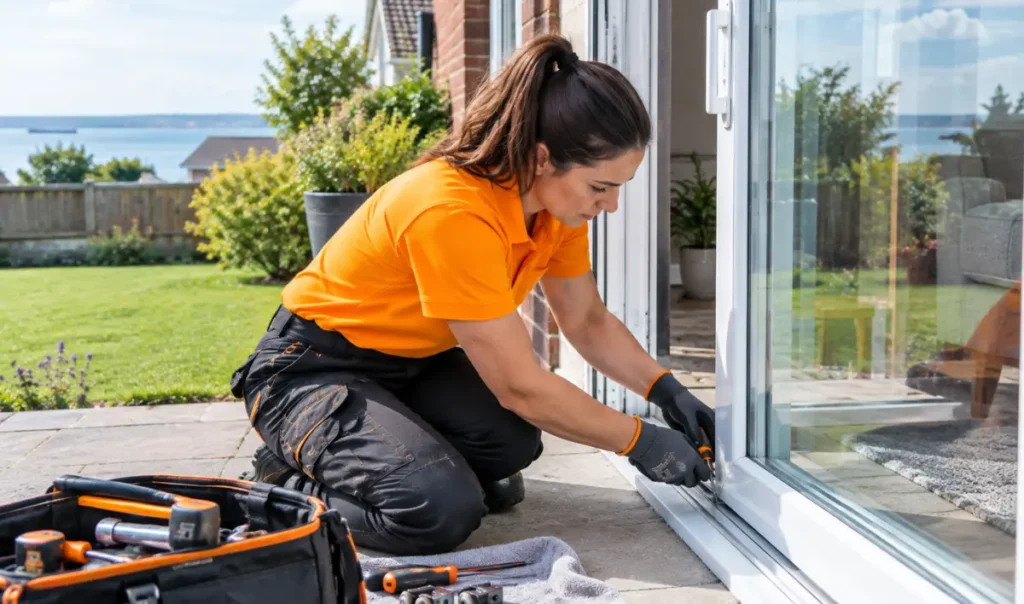
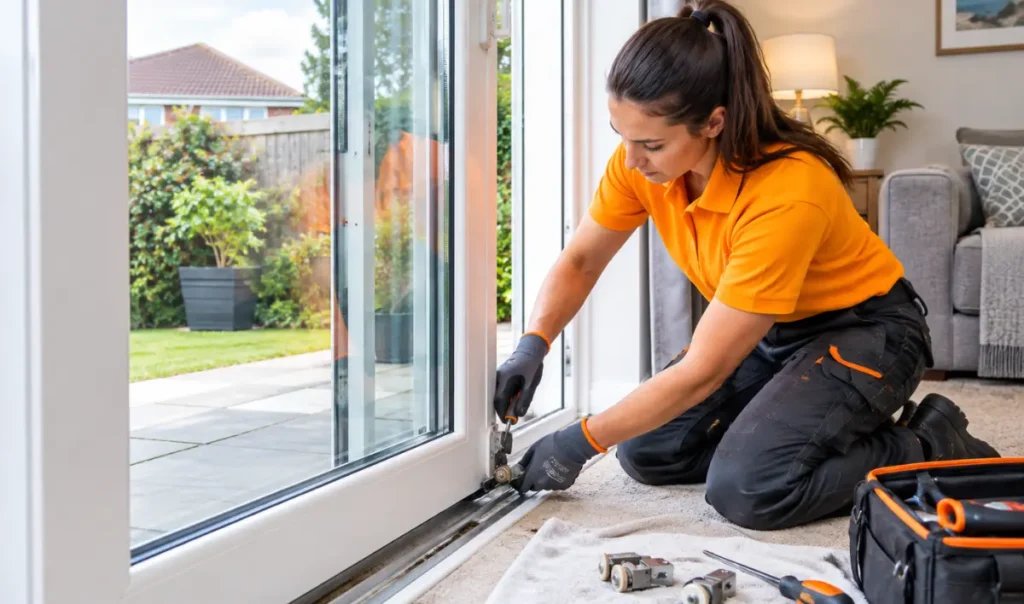
Roller replacement is a contained job in most cases. The sliding panel is lifted slightly to relieve pressure on the track, the old rollers are unscrewed from the bottom edge of the panel, and new rollers matched to the door’s weight rating are fitted in their place. Once refitted, the door is tested across its full range of movement to confirm it slides smoothly before the job is signed off.
Where the track itself has been damaged rather than just the rollers, it may need straightening, cleaning out, or in more worn cases replacing along its full length. Our double glazed door repair service covers this kind of roller and track work on patio, French, and hinged doors alike, and a technician working to TrustMark standards will also check the lock alignment at the same visit, since a door that has been dragging for a while often needs its keeps adjusted too once the roller fault is sorted.
Can You Adjust or Lubricate It Yourself First?
Some patio doors have an external adjustment screw near the bottom of the panel that raises or lowers it slightly on the rollers, and a small turn of this can sometimes improve a mild dragging problem without any parts needing replacement. A light silicone based lubricant on the track, rather than an oil based product that attracts more grit, can also help temporarily.
Neither of these fixes a roller that has actually worn out or seized internally, and forcing a door that is genuinely binding can damage the track further, turning a straightforward roller swap into a more involved repair. If a light adjustment and a clean of the track does not noticeably improve things within a day or two, the rollers themselves are the more likely cause.
When a Dragging Door Also Affects the Lock
A patio door that has been dragging for some time often develops a second, related symptom, where the lock hooks no longer line up cleanly with the keeps in the frame because the panel is no longer sitting exactly where it did when new. If you have noticed both a heavy door and a lock that needs extra force, both faults usually trace back to the same underlying roller wear and are worth having looked at together in one visit rather than treated as two separate problems.
Repair Cost Factors and When Replacement Makes Sense
Roller replacement is one of the more affordable patio door repairs, since the parts themselves are inexpensive and the job is generally finished within an hour once the correct roller specification has been identified. Track repair or replacement costs more, mainly due to the extra time involved in removing and refitting a full length of track rather than a small component.
Full door replacement is rarely necessary for this particular fault. It only becomes the sensible option where the frame itself has warped, where the glass has also failed, or where the door is old enough that matching roller and track parts becomes genuinely difficult to source.
Southampton Specific Notes
Properties nearer the water tend to report roller wear noticeably earlier than equivalent homes further inland, purely because of the extra corrosion pressure from salt laden air. Larger, more modern patio door installations common in newer developments around the waterfront also carry more glass weight per roller than older, smaller patio doors, which is a second reason rollers on newer coastal homes sometimes fail sooner than homeowners expect from what looks like a relatively young door.
Frequently Asked Questions
Why has my patio door suddenly become hard to slide?
Sudden heaviness usually means a roller has seized or a piece of debris has lodged in the track, rather than a gradual wear process. Both are generally quick to check and resolve.
Can I replace patio door rollers myself?
It is possible on some door models, but the panel needs to be lifted and supported safely during the process, and getting the correct roller specification matters for the door to run smoothly afterward, so most homeowners find it worthwhile to have a glazier handle it.
Does a dragging patio door mean the whole door needs replacing?
No. In the large majority of cases only the rollers, or occasionally the track, need attention, and the panel, glass, and frame are left completely untouched.
Will fixing the rollers also fix a patio door that won’t lock properly?
Often, yes, if the lock issue is caused by the panel sitting slightly out of position due to roller wear. If the lock still does not engage properly once the door slides freely again, that points to a separate fault with the lock mechanism itself worth mentioning at the same visit.

Final Thoughts
A patio door that has become heavy or difficult to slide is one of the more straightforward faults a glazier deals with, because the cause is almost always contained to a handful of small, inexpensive parts rather than anything structural. Catching it early, before the extra force needed to move the door starts damaging the track further, keeps the repair simple and the cost low.