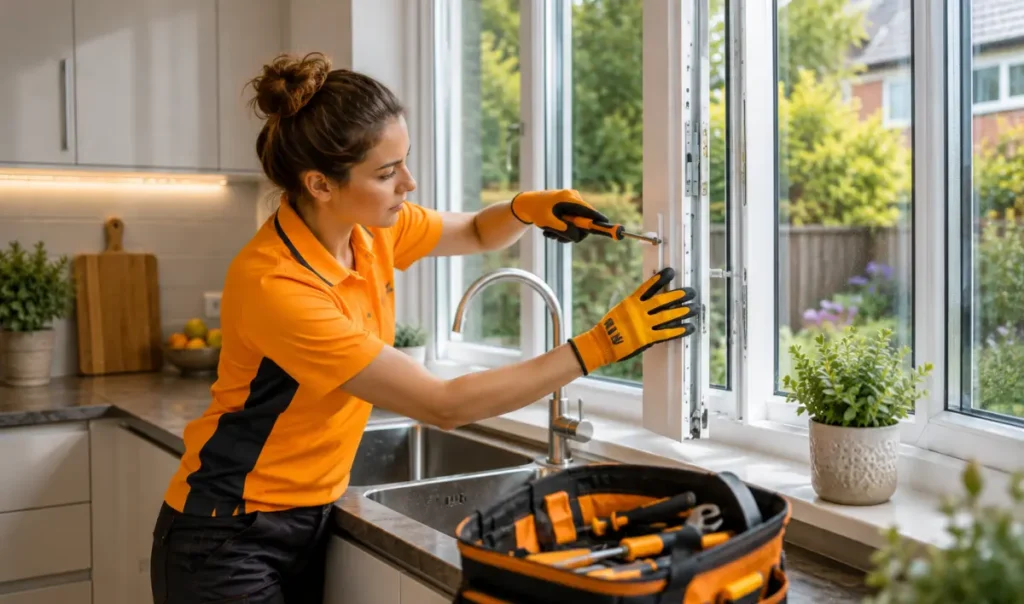
A UPVC window that won’t open usually comes down to one of four things: paint or sealant bonded around the sash, a swollen frame after wet weather, a seized or broken hinge, or a locking point that hasn’t fully disengaged. None of these normally means a new window. A glazier can usually work out which one it is within minutes and free the sash without touching the glass.
What “Won’t Open” Actually Means
Homeowners describe this fault in a few different ways. A window that used to open easily but now needs real force. A sash that shifts slightly but won’t swing out. A handle that turns fully, yet the window stays shut. Or a window that opened fine last year and has simply never been touched since.
Each version points to a slightly different cause, and knowing the difference before calling anyone saves time on the visit. A window that resists but eventually gives with force is a different job to one where the handle spins freely and nothing happens at all.
The Four Most Common Causes
A Sealed or Painted Edge
Older casements, and windows that haven’t been opened in a while, sometimes have a thin layer of old paint, sealant, or grime bonding the sash to the frame around its edges. This is the simplest cause to fix and the one most homeowners can safely check for themselves before booking a callout.
A Swollen or Shifted Frame
UPVC moves slightly with temperature and moisture, expanding a fraction in warm, humid conditions and contracting again as things dry out. A window that opens fine through most of the year but binds during damp spells is usually telling you the frame has swollen just enough to grip the sash at one edge.
A Seized or Failed Hinge
Casement windows swing on friction hinges, and those hinges rely on a small amount of grease to move smoothly. Once that grease dries out or washes away, the hinge can seize partway through its travel, which feels like the window is stuck even though the lock has released properly. A cracked or bent hinge arm produces a similar symptom but needs a part replaced rather than just a clean and re-grease.
A Locking Point That Hasn’t Cleared
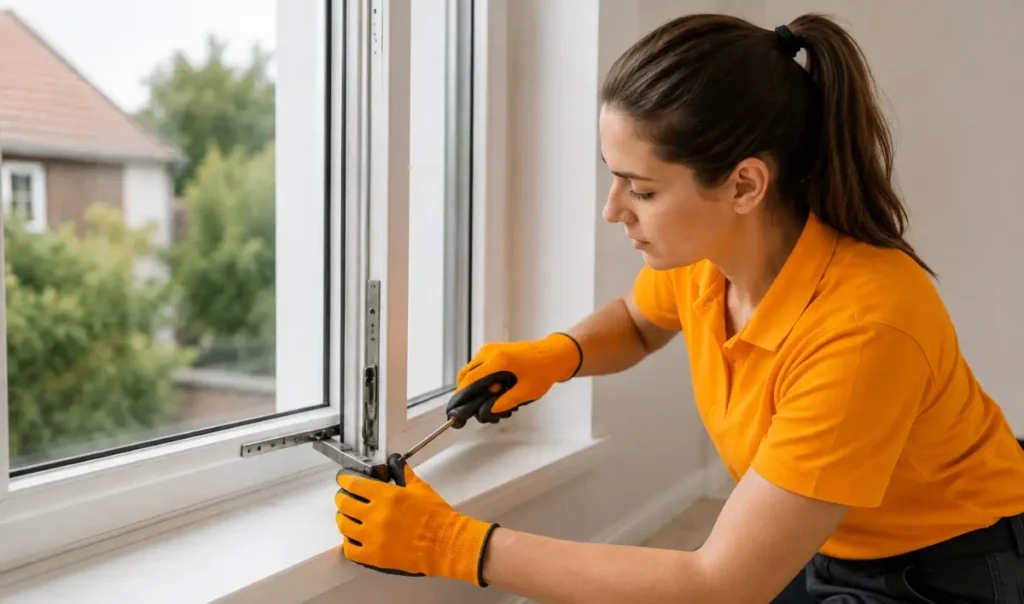
On windows fitted with a multi point locking handle, turning the handle drives several small hooks out of the frame at once. If even one of those hooks hasn’t withdrawn fully, most often from a misaligned keep or a worn mechanism, the sash will feel completely stuck even though the handle itself moved without resistance. This is a mechanical fault inside the handle system rather than anything to do with the sash or hinge, and it’s covered in more depth in our guide to espagnolette and handle faults on UPVC windows, since the same mechanism is behind both symptoms.
Why This Shows Up Differently Across Southampton
A window that has never once been opened since the day it was fitted behaves very differently from one that gets used weekly, and that gap widens depending on where in the city the property sits. Homes closer to the water in Woolston and Weston see paint and grime bond to the frame faster, since higher humidity off Southampton Water keeps the sash edge damp for longer stretches than a property a few miles inland.
Streets further back from the coast, around Bassett, Swaythling and Hedge End, tend to see the opposite problem more often: hinges that have simply dried out from disuse rather than corroded from salt exposure, since these properties face less of the airborne moisture that keeps hinge grease from hardening. Bitterne and Portswood sit somewhere between the two, with older terraced housing stock where narrower original openings mean a swollen frame has less margin before it starts gripping the sash.
Checking the Cause Before You Call
A few quick checks from inside the room can narrow this down without any tools. Run a finger along the visible gap between the sash and the frame. A crusty or slightly sticky edge points to paint or sealant bonding. A gap that looks tight or uneven compared with the rest of the window suggests the frame has swollen.
Next, turn the handle fully and watch the sash itself rather than the handle. If the handle turns smoothly through its full range but the sash doesn’t shift at all, the fault is most likely in the locking mechanism rather than the hinge. If the handle feels stiff or catches partway through its turn, that points back to the lock. And if the handle turns easily, the sash visibly loosens, but it still won’t swing outward, a seized hinge is the more likely cause.
Describing what you find when you call speeds up the visit considerably, since a technician arriving with a reasonable idea of the cause can often bring the right part on the first trip.
What to Avoid Doing Yourself
Forcing a stuck sash is the single most damaging thing a homeowner can do to a UPVC window, and it’s also the most common. Pushing or leaning on a window that won’t budge risks cracking the frame at the hinge point or snapping a locking hook clean off inside the mechanism, turning a simple free up into a parts replacement.
Using a knife or scraper to cut through a painted seal is another frequent mistake, since it’s easy to score the UPVC surface or nick the weatherstripping in the process, which creates a new draught problem on top of the original one. A dry PTFE lubricant worked gently into a stiff hinge is a safer thing to try while waiting for an appointment, though it won’t free a hinge that’s actually cracked or a lock that’s genuinely misaligned.
Repair or Replace How to Decide
A window that won’t open is almost always a repair rather than a replacement question, since the fault sits with the paint, the frame edge, the hinge, or the lock rather than the glazed unit itself. Replacement only becomes worth pricing up if the frame has warped badly enough that the sash no longer sits square within it, or if several windows across the property are showing the same fault at once, which usually points to age related wear across the whole batch rather than one isolated part.
A short assessment settles this far more reliably than guessing, since two windows with an identical symptom from the outside can have completely different root causes underneath.
What a Professional Repair Involves
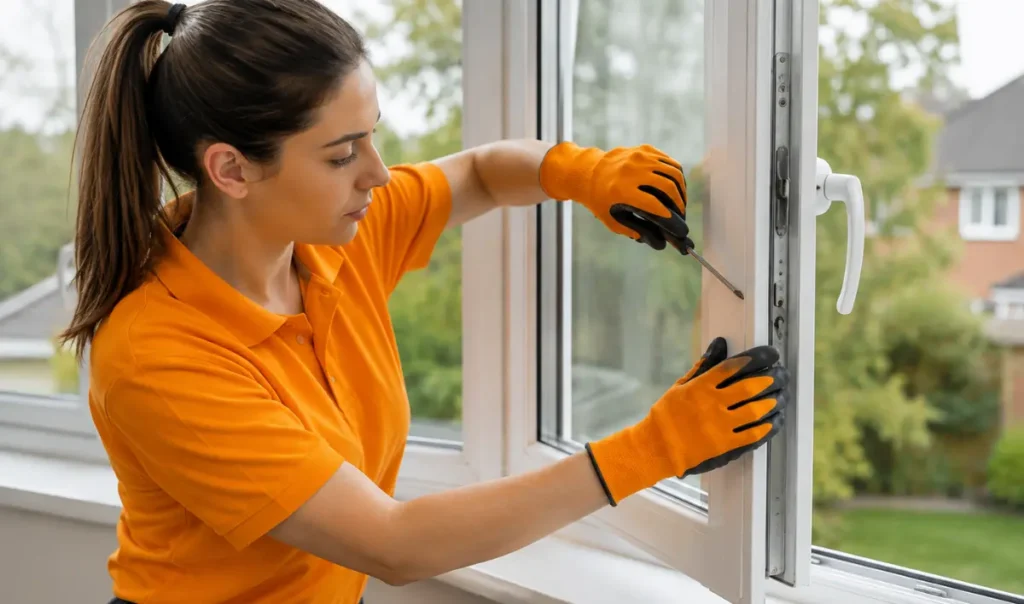
A technician starts by operating the handle and sash together to feel exactly where the resistance sits, since a hinge fault and a lock fault can feel almost identical from the homeowner’s side. Once the cause is confirmed, a bonded edge is carefully freed with the correct solvent rather than force, a swollen frame is eased and checked for square, a hinge is cleaned, re-greased or replaced, or a locking point is realigned or swapped depending on what’s actually failed.
Most single fault jobs of this kind are finished within an hour, and the sash is tested through several full open and close cycles before the visit is signed off, so the fault doesn’t resurface the following week.
UPVC Window Won’t Open: Typical Cost in Southampton
Freeing a painted or bonded sash edge typically runs from £45 to £90, since it’s a straightforward job with no parts involved. Hinge cleaning and re-greasing sits in a similar range, while a full hinge replacement where the arm has cracked or bent tends to run from £60 to £140 depending on the window brand and how easily a matching part can be sourced.
A locking mechanism fault preventing the sash from releasing generally costs more to put right, usually £70 to £160, since it often involves replacing part of the espagnolette assembly rather than a simple adjustment. As with most UPVC glazing faults, a firm figure is only possible once a technician has actually seen the window, since the same symptom can have very different underlying causes.
Choosing Who to Call
Not every business offering to fix a stuck window in Southampton diagnoses it the same way. A general handyman may free the sash on the day without checking whether a hinge or lock fault will cause it to seize again within weeks, while a glazier who tests the full mechanism is more likely to catch the actual cause first time.
It’s worth checking that whoever you call is registered with a scheme such as TrustMark, the government endorsed quality scheme covering home improvement trades in the UK, particularly if the repair turns out to need a replacement part rather than a simple free up. A company willing to give a clear price before starting, and that stands behind the work with a short guarantee, is generally the safer choice over the fastest quote in a search result.
Frequently Asked Questions
Why has my UPVC window suddenly stopped opening?
This is most often caused by paint or grime bonding around the sash edge, a frame that has swollen slightly with damp weather, a hinge that has dried out or seized, or a locking point that hasn’t fully withdrawn. Sudden onset after damp weather usually points to the frame rather than the hinge or lock.
Is it safe to force a stuck UPVC window open?
No. Forcing a sash that won’t move risks cracking the frame at the hinge or snapping a locking hook inside the handle mechanism, which turns a simple repair into a parts replacement. It’s safer to check the handle and sash edge for the likely cause and book an assessment if a gentle attempt doesn’t free it.
Can a stuck window be fixed without replacing the whole unit?
In almost every case yes. The fault typically sits with the sash edge, the hinge, or the locking mechanism rather than the glazed unit itself, so a targeted repair restores full function without the cost of a new window.
How much does it cost to fix a UPVC window that won’t open in Southampton?
Most single fault repairs, whether that’s freeing a bonded edge, servicing a hinge, or adjusting a locking mechanism, fall between £45 and £160 depending on what’s actually wrong. A firm price is only confirmed once a technician has assessed the window in person.
Why does my window only stick during certain times of year?
UPVC expands slightly in warm, humid conditions and contracts again as it dries out, so a window that grips only during damp spells is usually telling you the frame has swollen a fraction rather than pointing to a hinge or lock fault. This tends to ease off on its own but is worth monitoring if it happens repeatedly.
Final Thoughts
A UPVC window that won’t open is rarely as serious as it feels in the moment, and forcing it is the one thing that reliably makes it worse. Most cases trace back to a painted edge, a swollen frame, a dry hinge, or a locking point that hasn’t cleared, all of which a glazier can diagnose and fix without touching the glass.
If a window in your Southampton home is refusing to budge, getting it looked at before you force it keeps the repair simple and avoids turning a five minute fix into a replaced hinge or handle. You can also see the full range of window and door repairs we handle across the city if more than one fault needs sorting at the same time.