A UPVC door not closing properly almost always comes down to one of three things: the door has dropped on its hinges, the multipoint locking mechanism has worn out, or the frame has shifted slightly out of square. None of these usually means a new door. In the vast majority of cases a glazier can diagnose the actual cause in a few minutes and fix it in under two hours without touching the glass or the surrounding brickwork.
If your door is showing several problems at once rather than a single clear symptom, our wider breakdown of UPVC door faults and pricing across the city covers the full range of causes in more depth. This guide focuses specifically on the “won’t close properly” symptom, since it’s one of the most common reasons Southampton homeowners call a glazier and one of the easiest to misdiagnose without a proper look.
What “Won’t Close Properly” Actually Means
Homeowners describe this fault in different ways: a door that needs a shove to shut, one that only locks after being lifted, a handle that has to be forced down, or a door that closes but rattles in the frame afterwards. These are all versions of the same underlying problem, which is that the door is no longer meeting the frame the way it did when it was fitted.
That mismatch can come from the door itself dropping, from the locking mechanism failing to drive its hooks and bolts into the keeps cleanly, or from the frame having moved. Telling these apart matters, because each has a different fix and a very different price.
The Three Most Common Causes
A Dropped or Sagging Door
UPVC doors are heavy, and the hinges carrying that weight loosen gradually with years of daily use. A door that scrapes the floor, feels heavier to open than it used to, or sits slightly crooked in its frame has usually dropped rather than developed a lock fault.
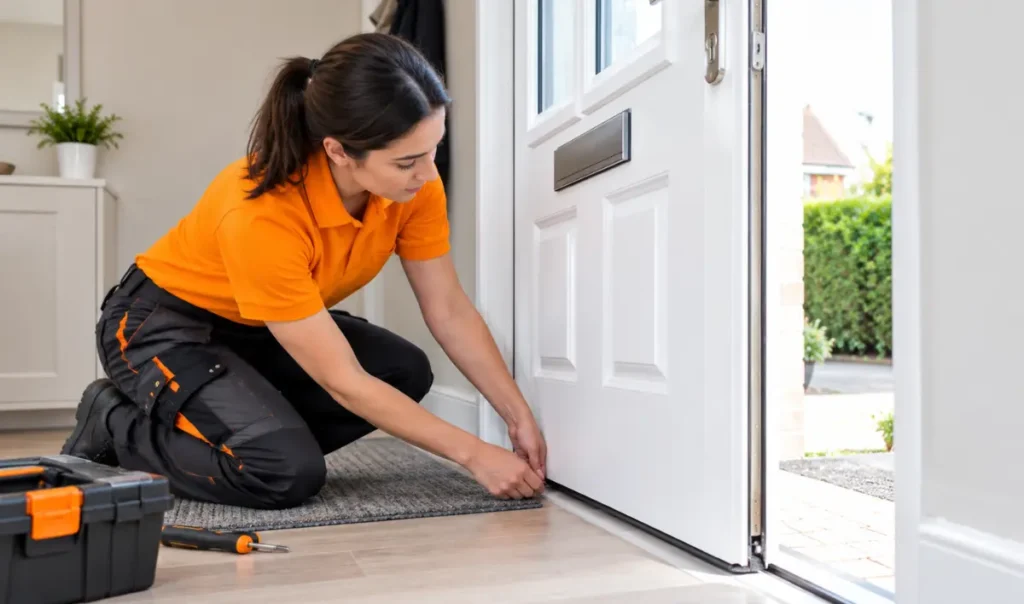
This is normally the cheapest and fastest fix on this list. A technician loosens the hinge screws, lifts and repositions the door within the frame, and retightens everything so it hangs square again. Left dragging on the floor for months, though, a dropped door can start wearing the frame itself, which turns a quick adjustment into a bigger job.
A Worn Multipoint Locking Mechanism
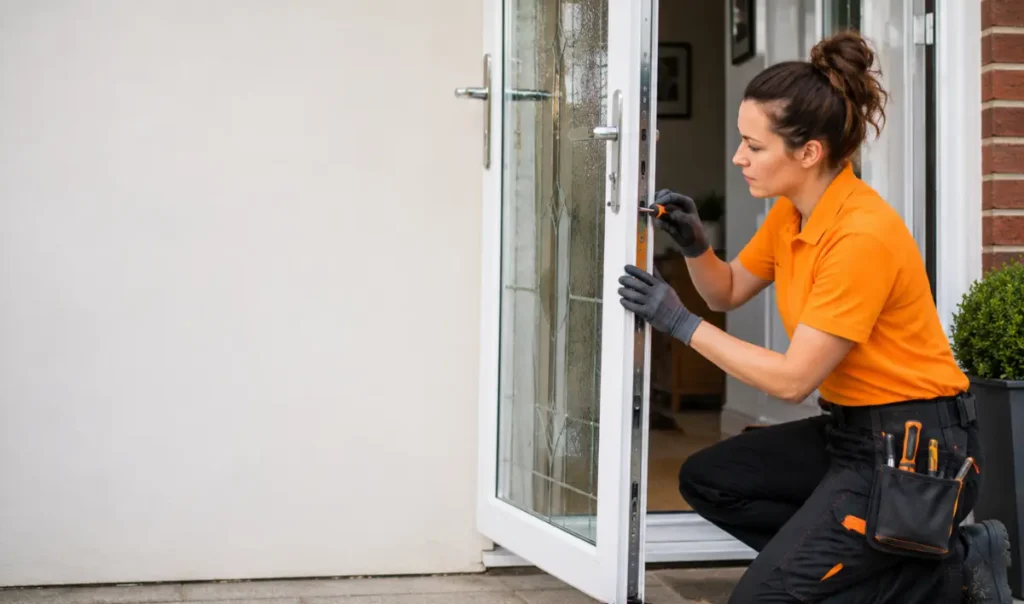
Most UPVC doors use a multipoint system rather than a single latch. Turning the handle drives a gearbox that pushes hooks and bolts out along the door edge into keepers fitted in the frame, locking at several points at once. Each part in that chain wears independently, and a single failing component, most often the gearbox or the euro cylinder, can make the whole door feel like it needs replacing when really it’s one part letting the rest down.
A door that locks only after being lifted or pushed, or a handle that has become stiff or loose, points to this mechanism rather than the frame. It’s a mechanical fault with a mechanical fix, and it’s covered in far more technical depth in our guide to diagnosing a failing UPVC lock, including which specific parts tend to go first.
A Frame That Has Shifted Out of Square
UPVC expands slightly in warm weather and contracts again as temperatures drop, and that small seasonal movement is often behind a door that closes fine in April but binds against the frame by August. Over several years, repeated expansion and contraction can gradually shift the fixings holding the frame square, even on a door that was fitted well.
This is the least common of the three causes but the one most likely to be misdiagnosed, since the symptom looks identical to a dropped door from the outside. A technician checks frame alignment as a matter of course precisely because a hinge adjustment on a warped frame will not hold for long.
Why This Fault Shows Up Faster on Southampton Doors
Properties near the water in Woolston and Weston and along the waterfront face a steady combination of salt laden air and high humidity coming off the Solent, which speeds up corrosion in hinges, keeps, and locking gearboxes compared with homes further inland. A door that seems to be failing early is often simply the reality of living close to Southampton Water rather than a sign of poor original fitting.
Older terraced streets in Shirley and Portswood carry their own version of the problem. Many of these properties have UPVC doors fitted into openings that were originally built for timber, and narrower original frames tend to settle and drop a little faster than doors hung in wider, more recently built openings. If you’re in one of the SO14 to SO17 postcodes, our postcode by postcode comparison of what tends to fail where breaks this pattern down in more detail.
A Simple Way to Work Out What’s Actually Wrong
Before calling anyone, three quick checks can narrow down the cause. Look at the bottom corner of the door on the hinge side. If there’s a visible gap that wasn’t there before, or the door scrapes the floor, it has likely dropped.
Next, try the handle without forcing it. If it feels loose, spongy, or needs extra effort to lift before the door locks, the fault is probably in the mechanism rather than the frame. Finally, run a hand around the closed door edge feeling for a cold draught on one side only. An even draught all round usually points to a perished seal, while a draught concentrated on one edge suggests the frame itself has moved.
None of these checks require tools, and describing what you find when you call speeds up diagnosis considerably, since a technician arriving with a reasonable idea of the cause can often bring the right part on the first visit rather than needing a return trip.
What to Avoid Doing Yourself
Forcing a door that won’t close is the single most common mistake homeowners make, and it’s also the one most likely to turn a cheap repair into an expensive one. Lifting, slamming, or shouldering the door shut puts direct strain on the gearbox, and a gearbox that fails completely under that strain is a far more involved repair than the original misalignment ever was.
Spraying general purpose oil into a stiff lock is another frequent habit that does more harm than good, since oil attracts dust and grit that clog the mechanism further over time. A dry PTFE based lubricant is a safer short term measure if the door genuinely needs freeing up before an appointment, though it won’t fix a part that’s already worn out.
Tightening hinge screws yourself is usually safe and can be worth trying if the gap is small, but stop there. Attempting to reset the locking mechanism without the right tools risks leaving the door unable to lock securely at all, which turns an inconvenience into a genuine security gap.
Repair or Replace: How to Decide
A door that won’t close properly is almost always a repair rather than a replacement question. Whether the cause is a dropped hinge, a worn gearbox, or a shifted frame, the fault sits with one part of the door rather than the whole unit, and fixing that part restores full function without the cost of a new door.
Replacement only becomes worth pricing up once the same door has needed repeated repairs within a short period, once the frame has warped badly enough that adjustments no longer hold, or once several faults are appearing together rather than one clear symptom. A short on site assessment settles this either way far more reliably than guessing from how the door feels.
What a Professional Repair Involves
A technician starts by testing the door through a full open and close cycle, checking hinges, locking points, and frame alignment together, since more than one symptom can share a single underlying cause. Once the actual fault is confirmed rather than assumed, the correct part is sourced to match the existing door, since hardware varies between manufacturers and doesn’t always fit universally.
The old component is removed, the replacement fitted, and the door tested again under normal use before the job is signed off. Most single fault repairs of this kind are finished within one to two hours, and the surrounding frame, brickwork, and plaster are left completely undisturbed throughout.
UPVC Door Not Closing Properly: Typical Cost in Southampton
Hinge adjustment or hardware tightening for a dropped door typically runs from £50 to £120. A worn gearbox or multipoint mechanism replacement sits higher, generally £65 to £180 depending on the door brand and how accessible the mechanism is. Frame realignment where the door has shifted rather than dropped tends to fall in a similar range to a hinge adjustment, usually £55 to £130.
A firm price is only possible once the fault has been assessed in person, since two doors with the identical symptom can have entirely different root causes. As a general guide, call outs for this kind of fault across Southampton typically start from around fifty five pounds, with the final figure confirmed once the technician has seen the door.
Choosing Who to Call
Not every business offering to fix a UPVC door in Southampton approaches it the same way, and it’s worth knowing the difference before booking. A specialist locksmith will usually focus on the mechanism alone, which is fine if that’s genuinely the fault, but a glazier who also handles frames, hinges, and seals is better placed to catch a frame or hinge cause that a lock focused visit might miss.
Checking accreditation is worth the extra minute. Checkatrade lists verified local tradespeople along with genuine customer reviews, which gives a useful second opinion beyond a company’s own website. A firm that offers a clear, itemised quote before starting work and that stands behind the repair with a short guarantee is generally the safer choice over the cheapest number in a search result.
Frequently Asked Questions
Why has my UPVC door suddenly stopped closing properly?
This is usually caused by a dropped hinge, a worn multipoint mechanism, or a frame that has shifted slightly with the seasons, rather than sudden damage to the door itself. UPVC expands and contracts with temperature changes, and that small movement can gradually shift a door out of alignment.
Can a UPVC door that won’t close always be repaired instead of replaced?
In most cases yes. A single worn part such as a hinge, gearbox, or cylinder can usually be repaired on its own, and full door replacement is only needed when several parts have failed together or the frame itself has warped beyond adjustment.
Is a UPVC door that won’t close a security risk while I wait for a repair?
Yes, a door that isn’t locking securely leaves a genuine gap in home security, so it’s worth booking an assessment quickly rather than leaving it. In the meantime, avoid forcing the handle, since this can worsen the underlying fault.
How do I know if the problem is the door or the frame?
A door that scrapes the floor or has a visible gap at one corner has usually dropped on its hinges. A draft concentrated on one edge of a closed door, rather than evenly all around, points more toward the frame having shifted. A short on site check confirms which it is.
How much does it cost to fix a UPVC door that won’t close in Southampton?
Most single fault repairs, whether that’s a hinge adjustment, a mechanism replacement, or a frame realignment, fall between £50 and £180 depending on the part involved. A firm price is only confirmed once a technician has assessed the door in person.
Final Thoughts
A UPVC door that won’t close properly is one of the more stressful faults to live with, since it touches both comfort and security, but it’s rarely as serious as it feels. Most cases trace back to a dropped hinge, a worn mechanism, or a shifted frame, all of which are straightforward for a glazier to fix without the cost of a new door.
If your door in Southampton is sticking, needing a lift, or refusing to lock properly, getting it looked at early keeps the fix simple and stops a small fault from putting extra strain on the rest of the mechanism.