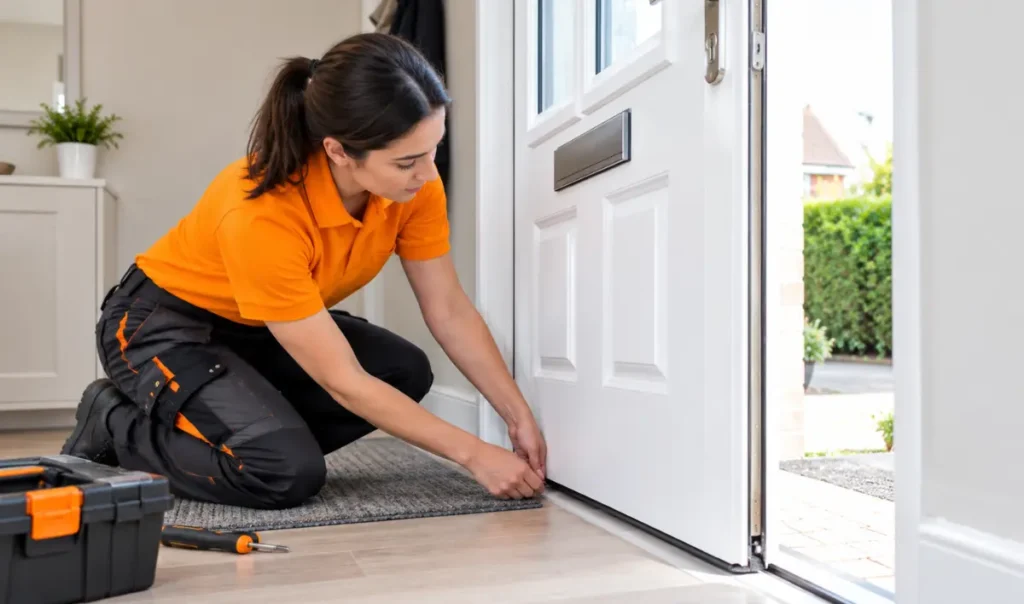
Sealed unit replacement means swapping only the failed glass unit inside your window or door while the frame, hinges and hardware stay exactly where they are. It is the fix for a unit that has misted, lost its gas fill, or simply reached the end of its working life, and it costs a fraction of a full window or door replacement. Most Southampton homeowners are told they “need a new window” when what they actually need is a new sealed unit fitted into the frame they already have.
That distinction gets lost in a lot of glazing advice online, which tends to treat sealed unit replacement as a footnote inside a page about misted windows rather than explaining it as its own job. If your window has already started fogging up, our full breakdown of what causes a window to mist over covers that specific symptom in more depth. This guide is about the unit itself: what it is, when replacing it is the right call even before misting shows up, and what changes for the older, non-standard properties that make up a large share of Southampton’s housing stock.
What a Sealed Unit Actually Is
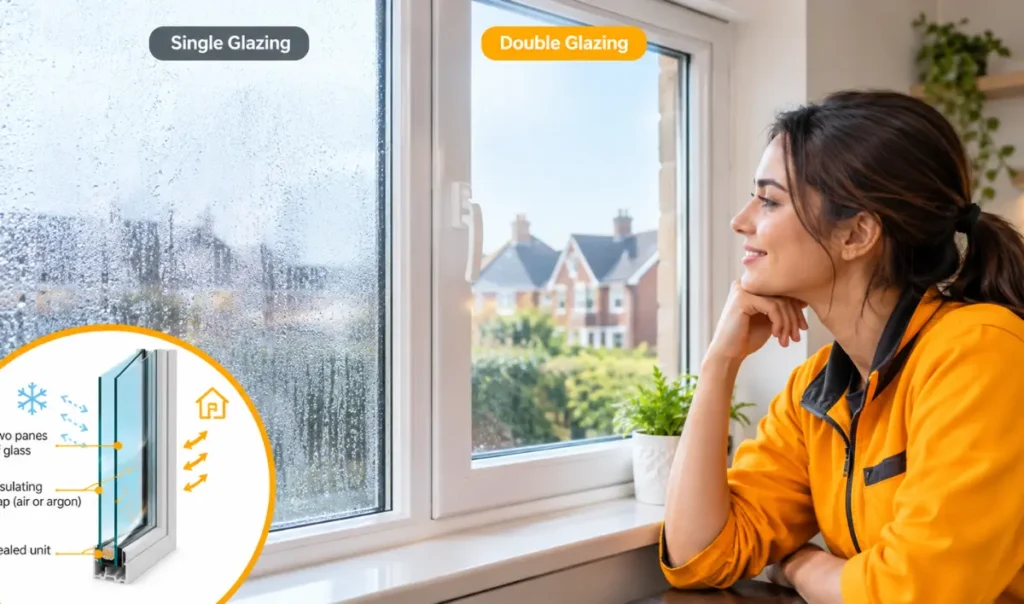
A sealed unit, sometimes called an insulated glass unit or IGU, is the glass part of a double or triple glazed window or door. It is built from two or three panes of glass held apart by a spacer bar, with the gap between them filled with dry air or an inert gas such as argon to improve insulation. A small amount of desiccant sits inside the spacer, quietly absorbing any residual moisture from manufacturing so the cavity stays clear.
The frame, the hinges, the handle and the lock are all separate components that sit around this unit rather than being part of it. That is the whole reason a sealed unit can usually be replaced on its own. As long as the frame is sound, only the glass itself needs to come out and go back in, which is why the job is quicker and considerably cheaper than fitting a whole new window or door.
Why a Sealed Unit Fails
The Perimeter Seal Breaks Down
Every sealed unit has a seal running around its edge, usually a combination of a primary butyl seal and a secondary silicone or polysulphide seal. Over time, and faster near the coast, that seal hardens and loses flexibility. Once it can no longer expand and contract with the weather, gaps open up and outside air starts working its way into the cavity.
The Gas Fill Escapes Before Misting Shows
This is the part most homeowners never hear about. A unit can lose its argon fill gradually through a failing seal for months or years before enough moisture gets in to cause visible fogging. During that window, the unit is already performing worse thermally and acoustically, even though it looks completely clear. A slightly higher heating bill or a colder feeling room near that window is sometimes the only early sign, and it is one reason a unit that “looks fine” can still be worth checking on an older property.
Physical Damage or Manufacturing Faults
A crack, chip, or a unit that was never quite square to the frame can also mean replacement is needed regardless of age. Impact damage to a single pane in a double glazed unit usually means the whole sealed unit needs replacing rather than just the damaged pane, since the two panes are bonded together as one component.
Signs You Need Sealed Unit Replacement Rather Than a Repair
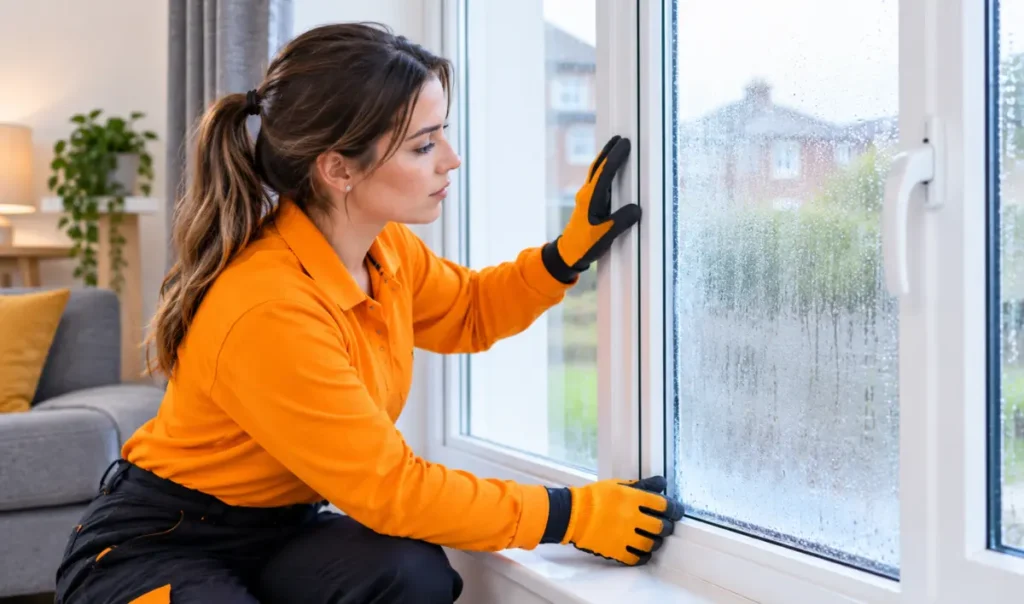
Fogging or condensation trapped between the panes that will not wipe away is the clearest sign, but it is not the only one. A window or door that feels noticeably colder than others of a similar age and size, visible discolouration or a slight yellowing between the panes, or a whistling draught that was not there before can all point to a failing seal before misting ever appears.
A unit that rattles slightly when tapped, or glass that looks very faintly warped or bowed, can indicate the gas fill has already been lost and the panes are no longer sitting at the correct pressure relative to each other. None of these require a new frame. In almost every case across Southampton, the fix is the same: measure the opening, order a like for like or upgraded unit, and fit it into the frame that is already there.
Sealed Unit Replacement, Misted Window Repair and Full Replacement: Knowing the Difference
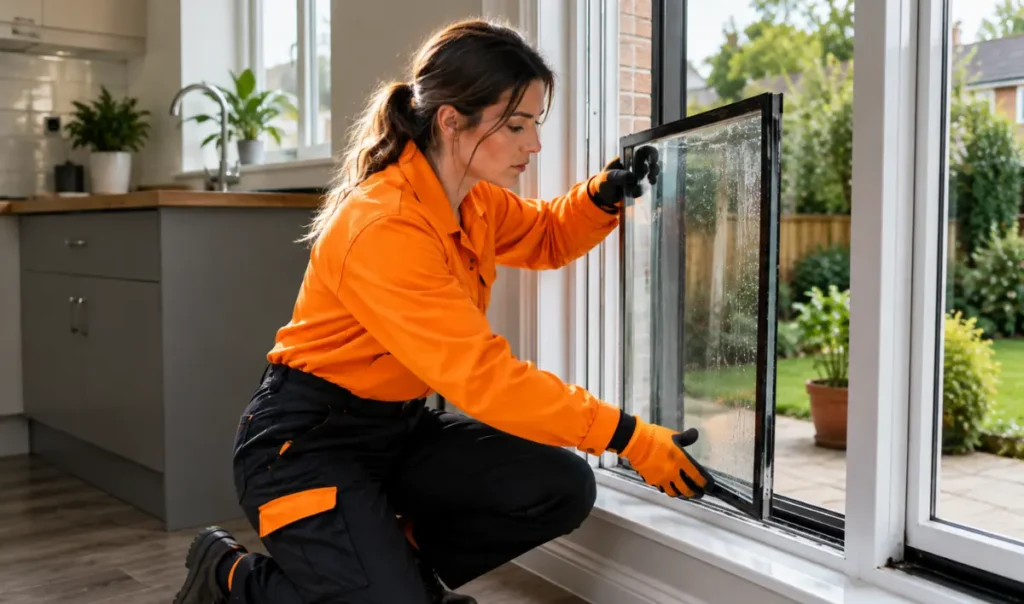
These three terms get used almost interchangeably by a lot of glazing companies, which makes it harder for homeowners to know what they are actually booking. A misted window repair is the specific case where a sealed unit has already fogged, and the fix is sealed unit replacement. Sealed unit replacement is the broader job, covering misting, gas loss, physical damage and specification upgrades, whether or not fogging has shown up yet. A full window or door replacement means the frame itself is removed and rebuilt, not just the glass.
Full replacement only becomes worth pricing up once the frame has warped, rotted, or been patched with more than one sealed unit swap in a short space of time. If several units across a property are failing together, or a frame is genuinely past its working life, our guide to when a full window replacement pays off walks through the point where repair stops making financial sense.
What Southampton’s Older Homes Need to Know That Most Guides Skip
Southampton has a large stock of Victorian and Edwardian terraces around Portswood, Bevois Valley and parts of Shirley, along with plenty of 1960s and 1970s builds further out toward Bassett and Chandlers Ford. A lot of these properties had double glazing retrofitted decades ago, often to openings that were never built to a modern standard size.
That matters because a straightforward sealed unit swap depends on the replacement unit matching the existing rebate depth and dimensions almost exactly. On a newer, standard-size window this is rarely an issue. On an older property with a non-standard opening, a slightly bowed original frame, or a unit that was custom cut when it was first fitted, getting an accurate measurement matters far more, and a unit that is even a couple of millimetres out on thickness can fail to seat properly or put pressure on the beading holding it in place.
Coastal exposure adds another layer specific to this city. Properties nearer the water in Woolston, Weston and along the waterfront see seal failure noticeably earlier than homes further inland, often within twelve to fifteen years rather than the twenty to twenty five you would expect elsewhere. A sealed unit that seems to be failing “too early” on a coastal Southampton property is usually just the reality of that location rather than a sign of a bad original installation.
None of this is complicated, but it is the kind of detail that gets left out of generic advice written for a national audience rather than for the specific mix of older housing stock and coastal weather that Southampton actually has.
What a Professional Sealed Unit Replacement Involves
A technician starts by measuring the existing opening precisely, including the rebate depth and the overall unit dimensions, since these determine what can be ordered. On period or non-standard properties this measurement is checked twice rather than once, precisely because a mismatch is more likely than on a modern build.
The correct replacement unit is then ordered to match, whether that means a like for like swap or an upgraded specification such as a warm edge spacer, a higher security laminated pane, or an A rated thermal fill. Southampton properties looking to cut heating costs often use a sealed unit replacement as a low disruption opportunity to upgrade the glass spec without touching the frame at all.
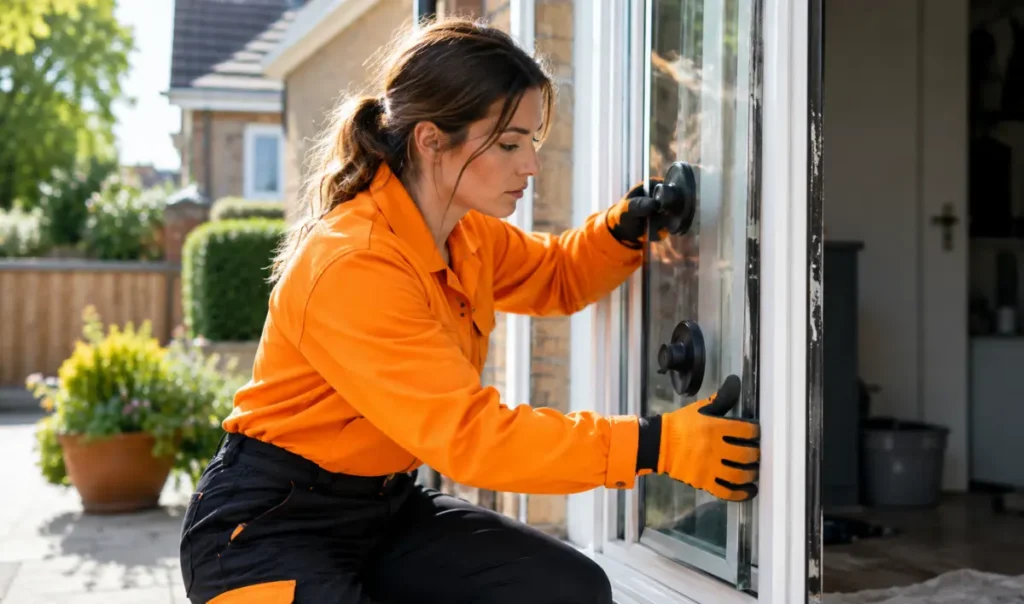
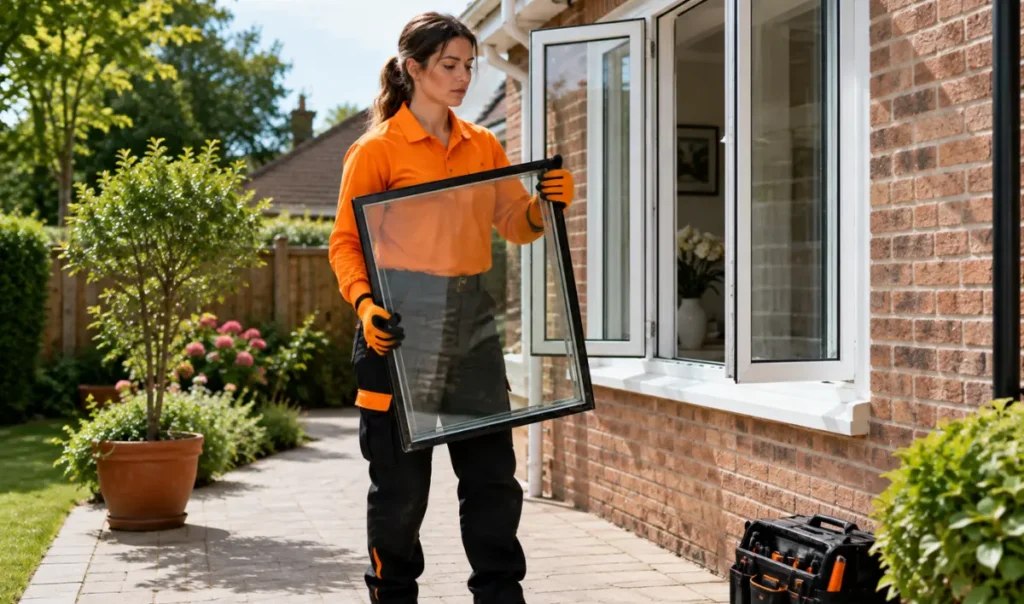
Once the new unit arrives, the old glazing bead is carefully removed, the failed unit lifted out, and the new one fitted and re-beaded. The whole process for a single unit is usually completed within an hour or two once the replacement glass is on site, and the surrounding frame, plaster and paintwork are left completely undisturbed throughout.
Sealed Unit Replacement Cost in Southampton
Pricing depends on the size of the unit, the glass specification, and how accessible the window or door is, but sealed unit replacement sits well below the cost of a full window or door swap in almost every case.
Standard double glazed unit, small to medium window: roughly £60 to £150
Larger window or a unit with an upgraded thermal or acoustic spec: roughly £150 to £280
Sealed unit in a door panel: roughly £150 to £320
Bespoke or non-standard size unit for an older property: priced individually, typically at a premium of 15 to 30 percent over a standard size due to custom cutting
A firm price is only possible once a technician has measured the opening in person, since two windows that look identical can have different rebate depths or original glass specifications. As a general guide, Southampton callouts for sealed unit replacement typically start from around fifty five pounds before the unit itself is priced in.
Common Mistakes Homeowners Make
Ordering a replacement unit based on a rough measurement rather than an on site check is the most costly mistake, particularly on older properties. A unit that is slightly too thin can rattle or fail to seal properly, while one that is too thick can put pressure on the beading and crack the trim holding it in place, turning a straightforward swap into a repeat job.
Assuming a misted unit always means a full window replacement is another common and expensive error. In the vast majority of cases the frame is completely unaffected, and a homeowner who books a full replacement without getting a second opinion on the sealed unit alone often pays several times more than they needed to.
Waiting too long after noticing early signs such as a cold draught or slight discolouration is the third mistake. A unit that has lost some of its gas fill but not yet misted is still a straightforward, affordable swap. Left long enough, moisture ingress can eventually affect the frame itself, particularly on timber framed properties, which is a very different and more expensive job. Our breakdown of door specific glazing faults covers what happens when a similar issue is left unaddressed on a door panel rather than a window.
Areas Across Southampton We Cover
Sealed unit replacement is carried out across Southampton and the surrounding areas, including Portswood, Bitterne, Woolston, Shirley, Bassett, Swaythling, Millbrook and Weston, along with nearby towns such as Totton, Hedge End and Netley. A same day assessment is usually possible anywhere within the city and its immediate surrounding areas, and older or non-standard properties are measured on site before any unit is ordered.
Choosing an installer registered with a recognised body such as the Glass and Glazing Federation is worth checking before booking, since it gives a baseline for workmanship standards and helps confirm any guarantee offered on the new unit will actually hold up.
Frequently Asked Questions
Can I replace just one pane of a double glazed unit instead of the whole thing?
No. The two panes in a double glazed unit are bonded together as a single sealed component, so a fault in one pane, whether that is a crack or a failed seal, means the whole unit needs replacing rather than just the affected pane.
Will a replacement sealed unit match my existing frame exactly?
In the large majority of cases yes, since the new unit is measured and cut to the exact dimensions of the opening it is going into. On older Southampton properties with non-standard or bespoke original glazing, an on site measurement is essential to guarantee a proper fit rather than relying on a rough estimate.
How long does sealed unit replacement take once I book it?
The fitting itself usually takes one to two hours per unit once the replacement glass has arrived. The unit is typically ordered to the exact measured specification, so there is a short lead time between the initial assessment and the fitting appointment, usually within a week for standard sizes.
Do I need building regulations approval for a sealed unit replacement?
No. Replacing the glass unit within an existing frame does not trigger building regulations requirements, since the frame itself is not being altered or removed. This is different from a full window or door replacement, which does fall under current UK building regulations.
Is it worth upgrading the glass spec when replacing a sealed unit?
Often yes, particularly if the existing unit is older and not performing well thermally. Since the frame is already being opened up for the swap, upgrading to a warm edge spacer, a higher security laminated pane, or an improved thermal fill adds relatively little to the cost compared with doing it as a separate job later.
Final Thoughts
A misted, draughty or underperforming window rarely means the whole thing needs replacing. In almost every case across Southampton, from a modern build in Hedge End to a Victorian terrace in Portswood, the fix is a sealed unit replacement rather than a new frame, and the price reflects that difference. Getting the measurement right matters more on older and non-standard properties, which is exactly where a proper on site assessment earns its cost.
If a window or door in your Southampton home is fogging up, feeling colder than it should, or has taken a knock, you can browse our full range of glazing and door services to see how we can help, or get the unit assessed before a straightforward swap turns into something bigger.