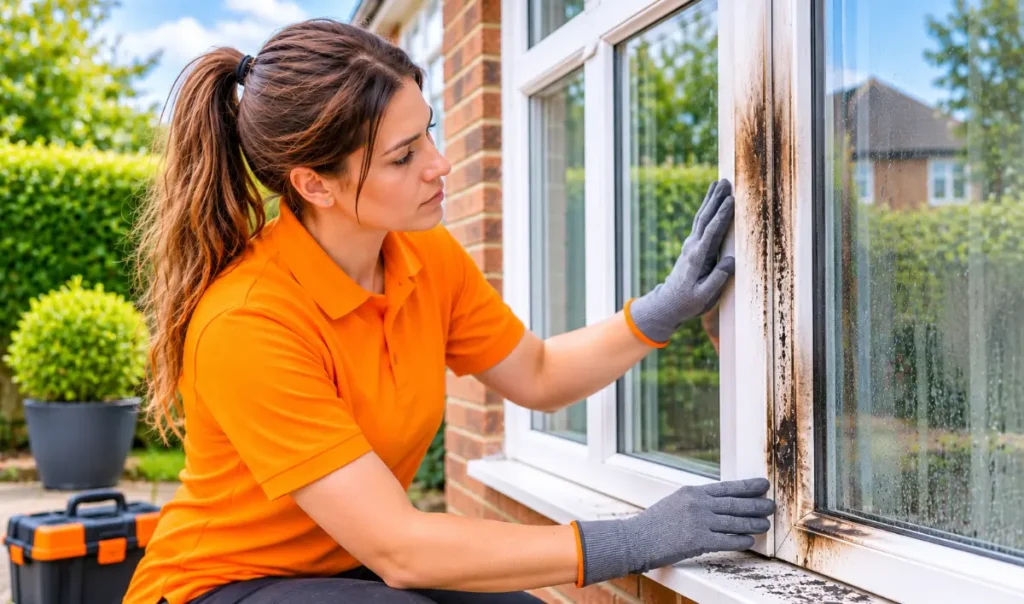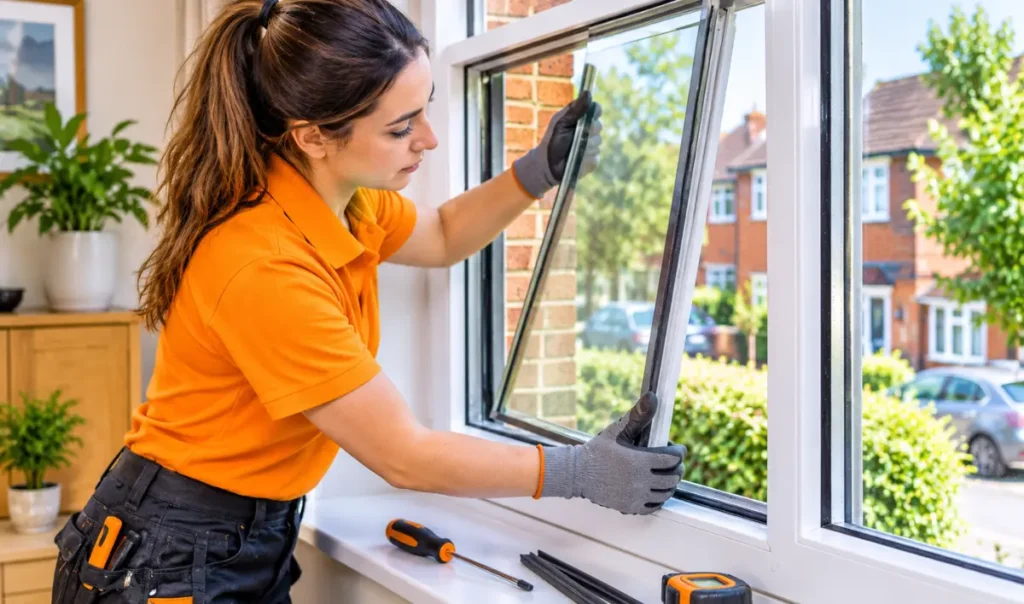

You can storm proof your windows and doors before winter with a short, five-point check: seals and weatherstripping, hinges and friction stays, locks and handles, hairline cracks in the glazing itself, and anything in the garden that could become a projectile in high wind. None of it takes long, and doing it now is far cheaper than a same-day callout once a named storm has already rolled through.
What actually needs checking before the next storm rolls in
Rubber seals around every window and door, checked by running a hand around the frame for cold air or gaps
Hinges and friction stays, since a window that already feels loose is the one most likely to be torn or blown open in a gust
Locks and handles, tested through a full turn rather than just glanced at
Glass itself, looking for any hairline crack that hasn’t been dealt with yet, since wind pressure alone can finish off glass that’s already weakened
Guttering, fence panels, and anything loose nearby that wind could turn into debris against your own glazing
Why This Matters More in Southampton Than It Does Inland
Southampton sits right on the Solent, catching weather systems coming in off the Channel with less shelter than towns further inland get. That’s not about salt slowly wearing down hardware over years, it’s a different problem entirely: a property here is simply more exposed to the kind of sudden wind loading that finds any existing weakness in a frame, seal, or pane the moment a storm arrives, rather than gradually over a season.
A window or door that’s been “fine” all year can still fail during a single bad night if it was already carrying a small fault nobody had got round to sorting. The properties that come through a storm without a callout are almost never the newest or best-specified ones. They’re the ones where someone checked the basics before the wind picked up.
The Five Point Pre Storm Check
1. Seals and Weatherstripping
Run your hand slowly around the edge of every external window and door frame. A stream of cold air means the seal has compressed, cracked, or come away from the frame, and a compromised seal under normal conditions becomes a much bigger problem once wind-driven rain is forcing water against it rather than just sitting there.
A seal that’s merely worn is a maintenance job today. The same seal, left through a storm, can let enough water past to damage the sill, the surrounding plaster, or the flooring beneath a door threshold.
2. Hinges and Friction Stays
Open every window fully and check how it holds its position. A casement that drifts shut on its own, or one that feels loose rather than resisting slightly as you move it, has a friction stay that’s lost its tension. In a strong gust, that’s exactly the kind of window that gets caught and slammed, sometimes hard enough to crack the glass or wrench the hinge arm.
If you’ve already noticed a window that won’t hold itself open properly, it’s worth reading up on what’s actually happening inside the hinge before deciding whether it’s a quick adjustment or something that needs replacing.

3. Locks and Handles
Test every lock through a complete cycle, not just a glance to see the handle moves. A multi-point lock that isn’t fully engaging leaves a door under more strain than one that’s properly secured, since an unlocked or partially locked door flexes more against wind pressure than one pulled tight against its seals by a fully engaged mechanism.
4. Hairline Cracks in the Glass
Look closely at every pane, particularly larger ones and anything at a corner, in good light. A hairline crack that’s been sitting there for weeks under normal conditions is a completely different risk once wind pressure starts flexing the glass, especially on a larger pane that has more surface area to catch a gust. Glass that’s already compromised doesn’t need an impact to fail in a storm, the wind loading alone can be enough.
5. What’s Around the Property, Not Just On It
Loose fence panels, an overfull gutter, garden furniture, or anything leaning against an outbuilding near a window all become projectiles in strong wind. This is the one homeowners forget most often because it isn’t actually about the glazing itself, but it’s frequently the actual cause of storm damage rather than the window or door being at fault at all.
What to Do in the Day Before a Weather Warning
Once a warning has actually been issued for your area, the checklist above becomes urgent rather than routine. Bring in or secure anything loose in the garden, double-check that every external door is fully locked rather than just pulled shut, and if you’ve spotted a fault during the checks above that you haven’t had time to fix, it’s worth calling out our Southampton team before the wind arrives rather than after. The Met Office publishes live weather warnings by area, and it’s worth checking these directly rather than relying on secondhand reports if you’re trying to judge how much urgency a specific check deserves.
After the Wind Drops
If something does get damaged despite the prep, the priority shifts from prevention to making the property safe again. A hairline crack that was borderline before a storm can finish cracking right through, and that’s a job for our broken window repair service, which is built around exactly this kind of urgent, wind-related callout.
Doors tend to show storm strain differently to windows, often at the hinge or in a threshold that’s started letting water in for the first time during driving rain. If you’re noticing water tracking in under a front door that’s never leaked before, it’s worth working through the three most common causes before assuming the worst, since it’s sometimes a blocked drainage channel rather than anything structural. And if it’s the door itself feeling stiff, dropped, or reluctant to lock fully after a storm, our uPVC door repair service can usually get it assessed and sorted the same week.
Common Mistakes Homeowners Make With Storm Prep
Waiting until a warning is issued to do any of this is the biggest one. By the time a weather warning is live, you’re working against the clock rather than fixing things calmly, and any parts that need ordering in won’t arrive before the wind does.
Assuming a newer property doesn’t need checking is another common mistake. Age isn’t the deciding factor here, an unresolved fault is, and even a recently installed window can have a hinge that was never quite tensioned correctly from day one.
Only checking the glazing and ignoring the garden is the third. A fence panel or a stack of loose garden furniture a few feet from a window is frequently the actual cause of a smashed pane, not a fault with the window itself.
Frequently Asked Questions
How often should I actually do a pre-storm check on my windows and doors? Once at the start of the season covers most of it, with a quicker recheck any time a specific warning is issued for your area. The seasonal check catches slow developing faults, while the pre-warning recheck is really just confirming nothing’s changed since.
Can a professional glazier do this check for me instead? Yes, and it’s worth considering if you’d rather not be checking hinges and seals yourself, particularly on a property with several windows or an older door that’s already shown signs of wear. A same-visit check across the whole property is usually more thorough than checking one window at a time yourself.
Does home insurance cover damage if I never did any of this prep? Most policies still cover genuine storm damage regardless of whether preventative checks were carried out, since insurers are covering the event itself rather than requiring proof of maintenance. That said, a fault that was clearly failing well before the storm, rather than damaged by it, can be treated differently, which is another reason to deal with an existing problem rather than leave it.
Is it worth fitting secondary glazing or storm shutters just for a few bad weeks a year? For most Southampton homes, no, the existing double glazing copes fine with normal storm conditions once seals, hinges, and locks are actually sound. Shutters or secondary glazing tend to make more sense for a specific exposed property, such as one directly facing open water, rather than as a general precaution.
What’s the single most commonly missed check on this list? Friction stays and hinges, by a clear margin. Homeowners tend to notice a seal that lets in a draught quickly, but a window that’s slightly loose on its hinge often goes unnoticed until it’s caught by a gust, simply because it still opens and closes normally under calm conditions.
Final Thoughts
None of this takes more than an afternoon, and most of it costs nothing beyond the time it takes to walk the property and actually test things properly rather than glance at them. The homes that come through a bad storm without a callout are rarely the newest ones, they’re the ones where someone dealt with the small stuff before the wind arrived.

If your check throws up anything you’re not sure about, get in touch with our Southampton team before the next warning is issued rather than after. And if you’re weighing up the wider picture of what tends to go wrong and when, our guide to what a failed window seal is really costing you is worth a read alongside this one, since a lot of what makes a property storm vulnerable is the same thing that’s already quietly costing you on heating.