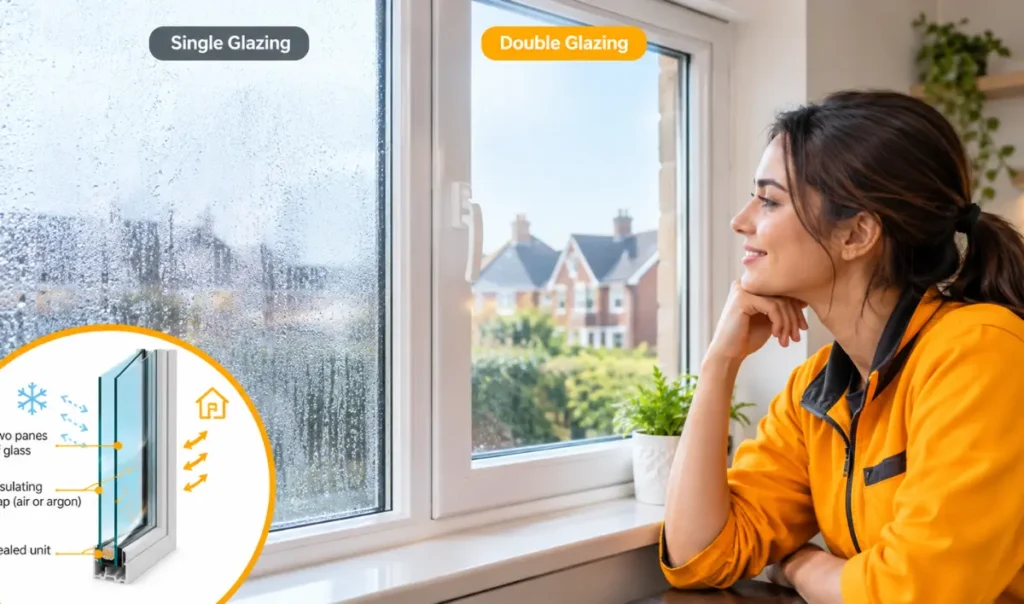
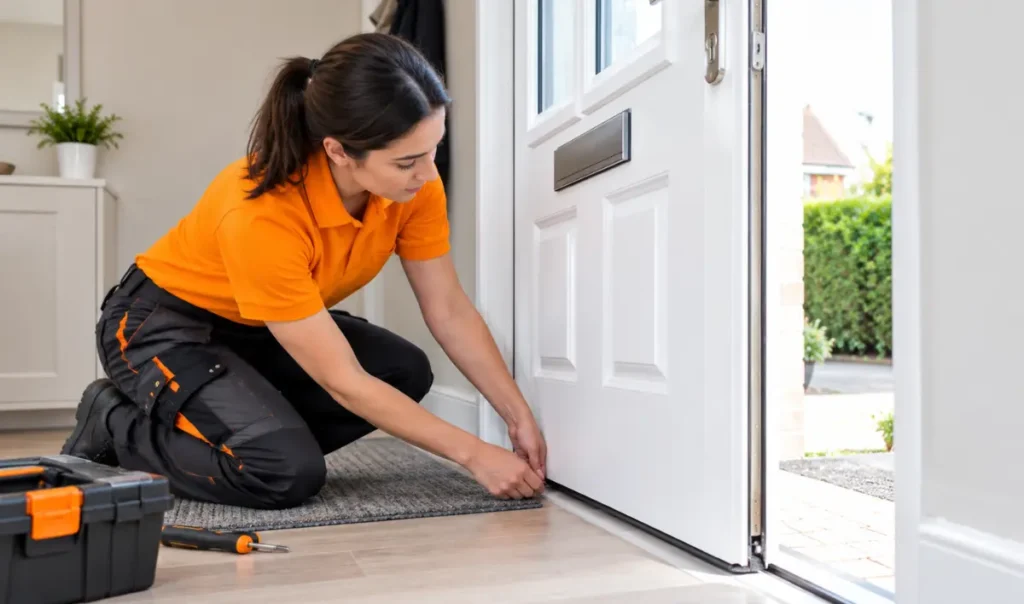
A door catching on new carpet or flooring almost always means the floor has gone up, not that the door has gone wrong. When a hardwood, laminate or thicker carpet and underlay combination replaces a thinner floor covering, even a small rise of a few millimetres is enough to bring the bottom edge of a UPVC door into contact with the surface it used to clear.
That distinction matters, because the fix for a floor that has risen is completely different from the fix for a door that has dropped on worn hinges. Treating one as the other wastes money and, in some cases, damages a perfectly healthy door. If you’re not sure yet which one you’re dealing with, Glaze Repair’s team across Southampton can usually confirm it within a few minutes on site, but the checks below will get you most of the way there yourself first.
What’s Actually Happening When a Floor Change Affects a Door
A UPVC front or back door is fitted with a specific gap between its bottom edge and the finished floor level at the time of installation. That gap is deliberately small, usually just enough to clear the floor while still sealing well enough to keep out draughts and water.
When flooring work adds height under the door, whether that is a thicker carpet and underlay, a new engineered wood floor, or extra layers of screed and tile, that clearance shrinks or disappears entirely. The door itself has not moved. The floor underneath it has simply come up to meet it.
This is a completely different mechanism from the far more common cause of door problems, a hinge that has worn or loosened over years of daily use and let the door leaf sag within its frame. A worn hinge changes the position of the door. A raised floor changes the position of everything below the door. Both end up looking similar from a few feet away, which is why homeowners often assume the door itself has failed.
How to Tell Whether It’s the Flooring or a Genuine Door Fault
A short check before calling anyone out can save an unnecessary hinge repair.
Check the Timing
If the dragging started within days of new carpet, laminate or tiling going down, and the door was closing perfectly beforehand, the flooring is almost certainly the cause. A hinge fault tends to develop gradually over months, with the door getting slightly stiffer over time rather than changing overnight.
Check the Gap on the Hinge Side
Open the door and look at the gap between the door and the frame on the hinge side. If that gap has widened or become uneven, the hinge has likely dropped and the fault lies there regardless of any recent flooring work. It’s worth reading through why UPVC door hinges drop over time if that’s what you find, since it’s a different fix with a different price point to anything covered here. If the hinge side gap still looks even and square, the floor is the more likely explanation.
Check Where the Door Actually Touches
A door affected by a raised floor typically drags evenly along the full width of its bottom edge, or catches specifically where the new flooring sits proud, such as at a threshold strip or transition bar. A door affected by a dropped hinge usually scrapes more on one corner, the side furthest from the hinge, because that is where sagging shows up most.
Fixing a Door That’s Catching Because the Floor Has Risen
Once flooring height is confirmed as the cause, there are a few genuine options, and the right one depends on how much clearance has actually been lost.
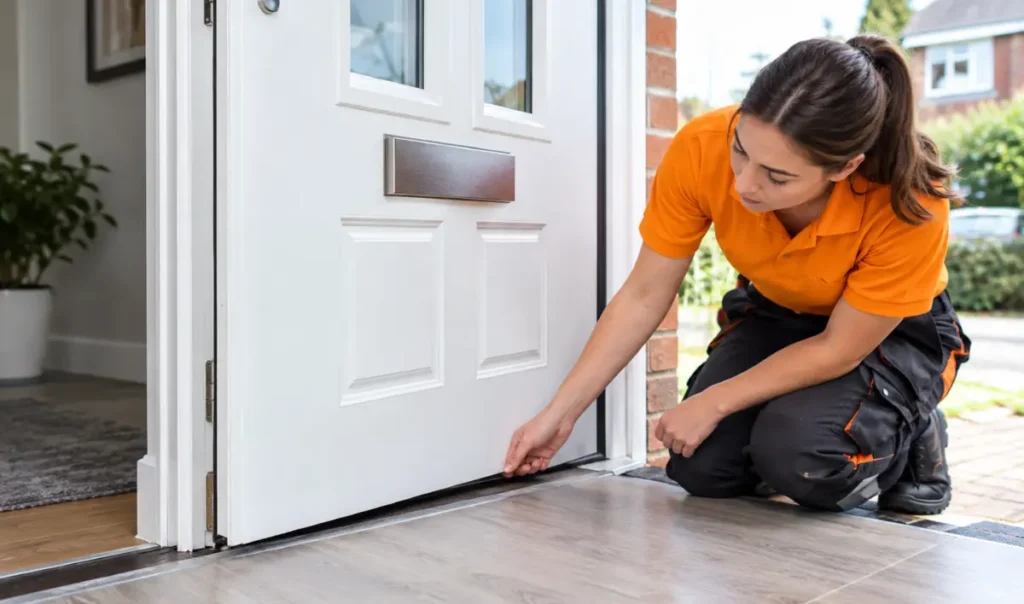
Raising the Door Within the Frame
Where the hinges allow for it, a UPVC door can sometimes be lifted very slightly higher within its frame, gaining a few millimetres of clearance at the bottom without touching the door itself. The keeps on the frame side usually need to move up to match, since the multipoint locking mechanism has to line up with them once the door shifts position. This is the least invasive option when there is enough hinge adjustment available to make a real difference, and it falls under the same UPVC door repair work we carry out across Southampton as most other hardware adjustments.
Trimming the Bottom of the Door
When the height difference is too large for hinge adjustment alone, trimming a small amount off the bottom of the door panel is the next step. UPVC door panels can usually have a modest amount removed without affecting the glazed unit or the panel’s structural integrity, though this is a job for someone who knows exactly how much can safely come off a specific panel design before it compromises the seal or the weatherstrip fixing at the base.
Adjusting the Threshold or Fitting a Lower Profile Strip
In some cases the more practical fix sits at floor level rather than at the door. A lower profile transition strip where the new flooring meets the threshold, or a small adjustment to the threshold itself, can restore clearance without touching the door or its hardware at all. This is often the quickest and cheapest route when the door only catches at one specific point along its swing rather than along its entire length.
What Southampton’s Older and Newer Housing Stock Means for This Fix
Southampton’s mix of Victorian terraces in areas like Portswood and Bitterne, postwar semis in Shirley and Swaythling, and newer builds around Woolston and Hedge End all handle this issue slightly differently. Older properties with solid or suspended timber floors often have more play in the threshold detail, which sometimes makes a small adjustment at floor level straightforward. Newer builds with a concrete slab base tend to have a fixed, unforgiving threshold height, which usually pushes the fix toward the door itself rather than the floor.
The same clearance principle shows up on folding doors too, though it tends to affect the bottom track rather than a single hinge line. If your household has a bifold set rather than a standard hinged door, our guide to bifold panels that drag or catch covers that version of the problem in more depth, since the fix looks a little different once multiple panels and a track are involved.
Properties that have had multiple flooring changes over the years, common in older rental stock across the city, sometimes carry a cumulative clearance loss that only becomes obvious once the most recent job tips the door from just clearing the floor to just catching it. In that situation the current flooring gets blamed for a problem that several previous jobs each contributed a small amount toward.
What This Kind of Fix Typically Costs
Because the underlying problem is usually a small clearance issue rather than a structural fault, the cost tends to sit well below what most homeowners expect when a door starts dragging.
A straightforward hinge adjustment to regain a few millimetres of clearance is normally the cheapest of the three options, since it involves no new parts and can often be completed in a single short visit. Moving the keeps on the frame side to match usually happens in the same appointment.
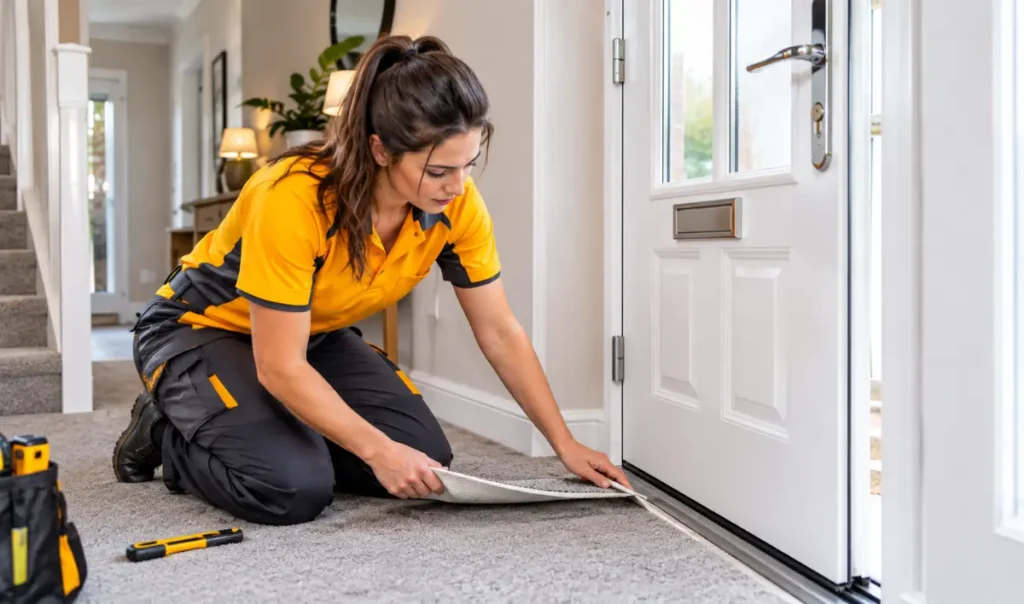
Trimming the bottom of a door panel costs more than a hinge adjustment because of the care needed around the seal and the internal reinforcement, but it still sits well below the price of a replacement panel, let alone a full door and frame. Where the panel itself is glazed rather than solid, this is the kind of job that sits within our double glazed door repair work rather than a general joinery callout, since the seal around the glass needs the same care as the panel edge.
A threshold adjustment or a lower profile transition strip at floor level varies more depending on the flooring material either side of it, but it is rarely the most expensive of the three routes and often solves the problem without the door being touched at all. An accurate figure for any of these depends on which fix actually applies once someone has looked at the door in person, since guessing from a description alone tends to either overstate or understate the job.
Mistakes That Make This Worse
Forcing a door shut against a raised floor is the single most common mistake, since repeated force stresses the hinges and the frame in ways that can eventually cause the exact hinge fault this issue is often mistaken for in the first place. What starts as a floor clearance problem can turn into a genuine hinge problem within a matter of months if the door keeps being slammed or leaned on to close it.
Cutting a large section off the bottom of a door without professional input is another common misstep, since removing too much can expose the internal reinforcement or affect how the weatherstrip seals against the threshold, trading a minor dragging issue for a permanent draught. The Glass and Glazing Federation publishes general homeowner guidance on door and threshold standards that’s worth a look if you want a sense of what a competent installer should be checking before any panel gets trimmed.
Assuming the whole door needs replacing is rarely necessary. In the overwhelming majority of cases seen across Southampton, a raised floor calls for a small adjustment rather than a new door, and treating it as anything bigger usually means paying far more than the fix actually requires.
Frequently Asked Questions
Will my door warranty cover this if the flooring caused it?
Usually not, since most door and hardware warranties cover manufacturing or installation faults rather than changes made to the property after fitting, such as new flooring. The adjustment itself is typically a small, affordable job regardless of warranty status.
Can I trim a UPVC door myself?
It is possible for a very small amount, but UPVC door panels contain internal reinforcement and a sealed glazed unit close to the edges, so removing too much risks the panel’s structural integrity or its weather seal. Getting a professional assessment first avoids turning a simple job into an expensive mistake.
How much clearance does a front door actually need above the floor?
Most UPVC doors are fitted with somewhere between six and ten millimetres of clearance above the finished floor level, enough to swing freely without letting in a significant draught. New flooring that adds more height than that will almost always cause some degree of contact.
Does this affect the door’s security or its seal?
A door that is forced shut against a raised floor over time can loosen its alignment with the multipoint locking keeps, which does affect how securely it locks. Resolving the clearance issue properly, rather than continuing to force the door, keeps both the seal and the locking mechanism working as intended.
Is this more common with certain types of flooring?
Thicker underlay under carpet and engineered wood floors laid over an existing floor rather than in place of it are the two most common causes, since both add noticeable height compared with the original covering. Simple retiling or thin laminate rarely adds enough height to cause a problem on its own.
Can this happen with internal doors too, not just the front door?
Yes, and internal doors are often affected first simply because flooring changes usually start in a hallway, living room or bedroom before reaching an external threshold. The same clearance principle applies, though internal doors are typically easier to trim or adjust since there is no weatherproofing to protect at the base.
Final Thoughts
A front door that suddenly starts catching right after new flooring goes down is one of the more straightforward glazing callouts to diagnose, precisely because the timing gives the cause away. In most cases it is a floor height problem wearing the disguise of a door problem, and the fix is a small hinge adjustment, a modest trim, or a threshold change rather than anything more drastic.
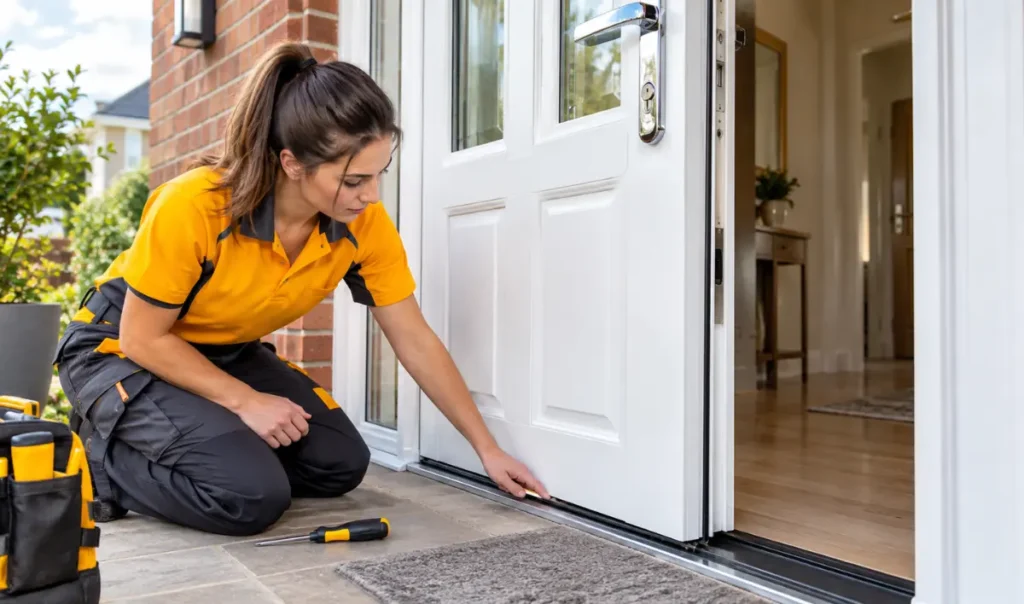
Working through the checks above first will usually tell you which of the two you’re dealing with, and from there the right fix tends to be quicker and cheaper than most homeowners expect.