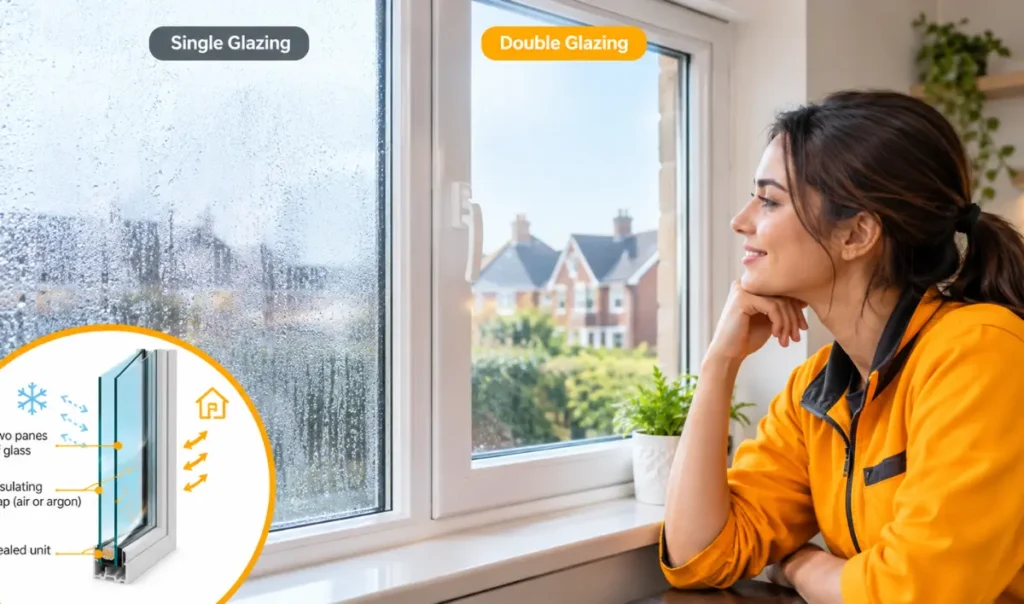

Most window repairs in Southampton do not need to meet the UK Building Regulations U value requirement, because Building Regulations Part L applies to the replacement of a whole window and frame, not to repairs carried out within an existing frame. A misted sealed unit swapped for a new one, a hinge replaced, or a lock repaired all fall under repair work rather than replacement, so the formal certification process most homeowners picture doesn’t come into play.
That distinction trips up a lot of people, understandably, since the government’s own language talks about “replacement windows” without always being clear about where a repair stops and a replacement starts. Once you know where that line sits, the whole picture gets a lot less confusing.
What the U value Requirement Actually Says
Under Part L of the Building Regulations, replacement windows fitted into existing dwellings must achieve a whole-window U-value, known as Uw, of 1.4 W/m²K or lower. This figure measures how much heat escapes through the complete window assembly, glass, frame, and the spacer bar between the panes, not just the glass on its own.
New-build homes face a tighter target under the Future Homes Standard, with a notional window U-value of 1.2 W/m²K, which in practice tends to push new-build specifications toward triple glazing or higher performance double glazing. If you’re comparing quotes and one specifies a Uw figure and another only quotes the glass performance, ask for the whole-window number specifically, since that’s the figure regulations actually assess.
Why a Repair Isn’t the Same as a Replacement in the Eyes of the Regulations
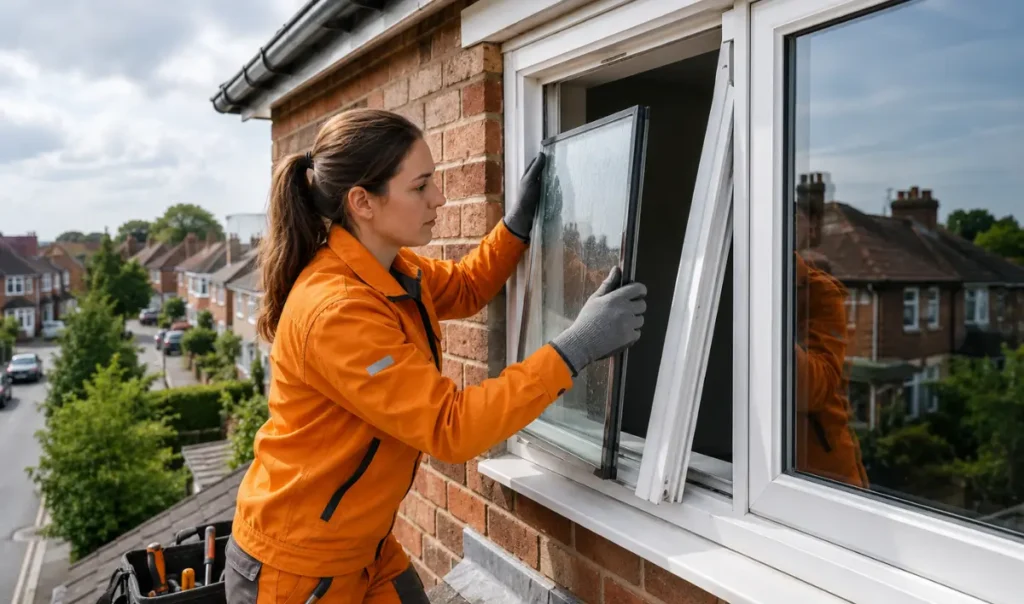
This is the part that answers most people’s actual question. Replacing the sealed double-glazed unit inside an existing frame, which is what happens when we fix a misted window, is treated as a repair rather than a window replacement, because the frame itself, the part regulations are primarily concerned with, hasn’t been touched.
The same logic applies to hardware repairs. Fixing a hinge, replacing a multipoint lock, or adjusting a dropped door doesn’t touch the thermal envelope of the property at all, so there’s nothing for Part L to assess in the first place. None of this work requires a FENSA certificate or Local Authority Building Control sign off, and none of it needs to hit the 1.4 W/m²K figure to be considered compliant, because compliance in the regulatory sense simply isn’t the test being applied.
Where the picture changes is if the whole window, frame included, is being taken out and replaced. At that point you’ve moved from repair into replacement, and the full Part L process applies, including the U-value requirement and the certification that follows. If you’re at that stage rather than needing a repair, our double glazing replacement service covers exactly this kind of full window swap and the compliance paperwork that comes with it.
So Does My Repaired Window “Meet” the Regulations or Not?
Strictly speaking, the question doesn’t quite apply to a repair the way it applies to a replacement, since there’s no formal test being carried out. That said, it’s still worth knowing roughly where your repaired window sits.
A sealed unit replaced within an otherwise sound frame will usually perform close to what the original unit achieved when new, and a reasonable installer will fit a unit with Low-E coated glass, a warm edge spacer, and an argon fill as standard, all of which pushes the centre pane performance well within what a compliant replacement window would need anyway. It won’t come with a certificate confirming a Uw figure, because that certificate genuinely isn’t required for this type of work, but the unit itself isn’t a poor performer just because no paperwork was issued.
Our misted window repair service replaces failed units with modern glazing as standard, so while you won’t receive Part L documentation for this kind of job, you’re not settling for outdated performance either.
How Window Thickness Fits Into This
A question we hear alongside this one is whether a thicker unit automatically means better U-value performance, and the honest answer is not necessarily. Overall unit thickness matters less than the combination of glass coating, gas fill, and spacer type, and two units of the same thickness can perform quite differently depending on what’s actually inside them. Our guide to how thick double glazing should actually be goes into this in more detail if you’re trying to work out whether your existing units are behind current standards.
When It’s Worth Considering Full Replacement Instead of Repair
There are situations where the smarter move is replacement rather than repeated repairs, even though a repair remains the cheaper option in the moment. If a frame is genuinely failing, cracking, warping, or no longer sealing properly regardless of what’s fitted inside it, no amount of unit replacement will fix the underlying draught or heat loss, since the frame itself is the source of the problem.
Age is a reasonable guide here too. Windows over twenty years old that are on their second or third repair are often better candidates for full replacement, both because the frame is more likely to be the real issue by that point and because current window specifications have moved on considerably since those units were first installed. Our guide to double glazing repair costs and when replacement makes more sense walks through this comparison in more detail, including where the cost balance typically tips one way or the other.
What to Check If You’re Told a Repair “Needs” a Building Regs Certificate
Occasionally homeowners are told, sometimes by a salesperson pushing a full replacement rather than a repair, that any glazing work requires Part L sign off. This isn’t accurate for genuine repair work, and it’s worth knowing so you’re not paying for certification you don’t need.
Ask specifically whether the frame is being replaced or just the glazed unit inside it. If it’s the unit alone, no certificate is required and none should be charged for. If the answer involves replacing the frame, then yes, a FENSA or Local Authority Building Control certificate is genuinely required, and you should expect to receive it, usually within four to six weeks of the work being completed.
FENSA’s own registration scheme exists specifically to let installers self-certify replacement window work without needing a separate council inspection for every job, and checking an installer’s FENSA registration before booking any replacement work is a straightforward way to confirm they’re set up to issue that paperwork correctly.
Common Mistakes Homeowners Make With This
Assuming a repaired window is somehow “not compliant” is one of the most common misunderstandings, when in reality compliance in the regulatory sense was never the test being applied to a repair in the first place.
The opposite mistake also happens. Some homeowners assume that because their windows are old, any repair automatically needs Part L sign off, and end up paying more for certification that isn’t required for the work being carried out.
Confusing centre pane glass performance with whole window Uw performance is another frequent issue, particularly when comparing quotes from different companies who may be quoting different figures without making clear which one they mean.
Frequently Asked Questions
Does a repaired double glazed window need to meet the U value regulations?
No, not in the formal sense. Building Regulations Part L applies to the replacement of a whole window and frame, and repair work such as a sealed unit swap or hardware fix doesn’t trigger that requirement, so there’s no certificate or U-value test involved.
What U-value do replacement windows need to meet?
Replacement windows fitted into existing homes need a whole-window U-value of 1.4 W/m²K or lower under current Part L requirements, while new-build homes face a tighter notional target of 1.2 W/m²K under the Future Homes Standard.
If I only replace the glass unit, will it still perform well even without certification?
Usually yes. A well fitted replacement unit with Low-E glass, a warm edge spacer, and an argon fill will typically perform close to what a compliant replacement window achieves, even though no formal certificate is issued for this type of repair work.
How do I know if my window needs a full replacement rather than a repair?
If the frame itself is cracked, warped, or no longer sealing properly, a repair to the glazed unit won’t resolve the underlying draught or heat loss. Windows over twenty years old on a second or third repair are also often better candidates for full replacement.
Should I be worried if my glazier doesn’t give me a Building Regulations certificate for a repair?
No. A certificate is only issued for full window and frame replacement work carried out under a Competent Person Scheme like FENSA. Genuine repair work, including sealed unit and hardware repairs, doesn’t require one.
Final Thoughts

The confusion around this question almost always comes down to the same thing, treating repair and replacement as the same category of work when the regulations themselves draw a clear line between them. A repaired window doesn’t need to hit the 1.4 W/m²K figure because that figure was never the test being applied to it in the first place, though a well specified replacement unit will often perform close to it anyway.
If you’re not sure which side of that line your own window falls on, we’re happy to take a look and explain plainly which category the work fits into before any quote is given. You can see our full range of glazing and door repair services or get in touch directly to talk through your specific window. For the official position on Competent Person Scheme registration and what it covers, FENSA’s own guidance is a useful independent reference alongside anything a glazier tells you.