A conservatory glazing repair fixes a specific failed panel, seal, or glazing bar rather than replacing the whole roof structure, and in most cases across Southampton, that targeted fix is all a leaking or cracked conservatory roof actually needs. The roof is built from separate glass or polycarbonate panels held in place by a bar and seal system, and when one part fails, water ingress, cracking, or discolouration usually points to that single component rather than the frame underneath it.
Getting this right matters because conservatory roofs get quoted for full replacement far more often than the fault actually justifies, largely because homeowners assume a leak means the whole structure has failed. It rarely does.
What a Conservatory Is Actually Built From
Most conservatory roofs fitted across Southampton over the last few decades fall into one of two categories: polycarbonate multiwall sheeting or sealed glass units, both held within an aluminium or UPVC glazing bar framework that runs from the ridge down to the wall plate.
Polycarbonate roofs are lighter and cheaper to install originally, built from twin or triple wall sheets that trap air between layers for insulation. Glass roofs, whether original or retrofitted, use toughened sealed units similar to a window, sometimes with a low emissivity or solar control coating baked in.
Between each panel sits a rubber gasket seal, and the glazing bars themselves carry an internal drainage channel designed to move any moisture that gets past the outer seal safely down to the gutter rather than into the room below. Almost every genuine leak traces back to one of these three components rather than the panel material itself.
Signs You’re Looking at a Repair, Not a Replacement
A few patterns tend to separate a straightforward repair from a job that genuinely needs a fuller reglaze.
A Single Panel Showing Damage or Discolouration
Polycarbonate sheets yellow and become brittle with UV exposure over time, and this usually shows up unevenly, worse on the south facing pitch than the rest of the roof. Where only one or two panels have visibly degraded while the others still look clear, swapping those specific sheets is normally enough.
Water Tracking From One Identifiable Point
A leak that consistently appears at the same glazing bar junction or the same panel edge, rather than seeping in generally across the whole roof, points to a failed seal or a blocked drainage channel at that specific point rather than a structural problem.
A Cracked Pane With the Frame Still Sound
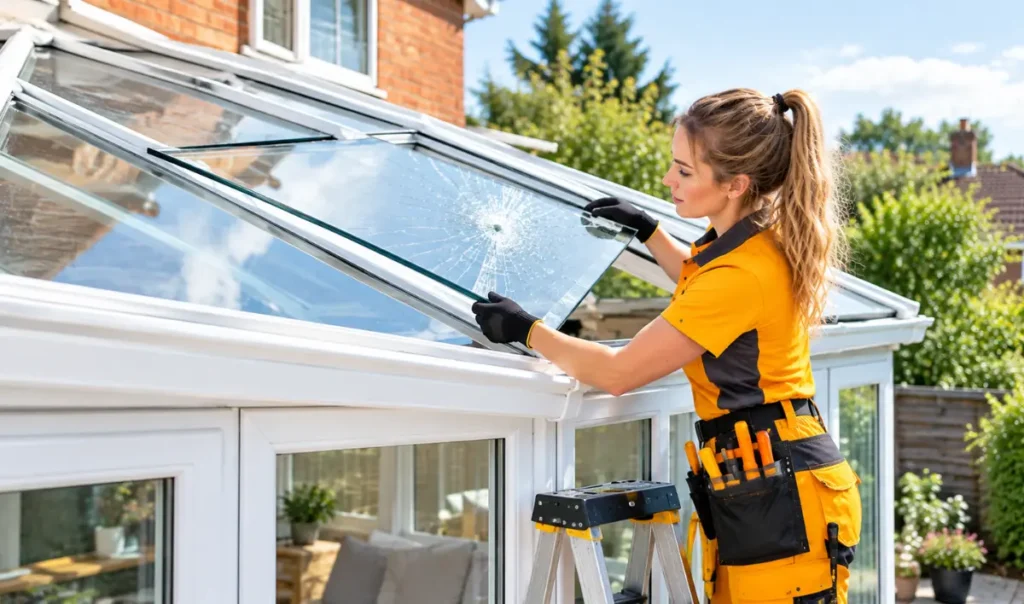
Impact damage from a fallen branch or debris during a storm typically cracks or shatters a single panel while leaving the surrounding bars and frame completely undamaged. This is one of the most common Southampton call outs, since conservatory roofs sit more exposed to wind blown debris than a standard window ever does, and it’s handled under the same broken glass and cracked pane repair work we carry out across the city as any other impact damage.
When Full Replacement Genuinely Becomes the Better Option
A conservatory roof reglaze, replacing every panel while keeping the existing frame, tends to make more sense once the polycarbonate has yellowed and gone brittle across most of the roof rather than in isolated patches, since sourcing an exact colour and finish match for one old panel among newer ones can look worse than a full refresh.
It also becomes the sensible route where multiple panels are leaking at different points simultaneously, which usually signals the gasket seals throughout the whole roof have reached the end of their working life together rather than one having failed early. A roof original to a house built decades ago, still running single skin polycarbonate with no thermal break in the bars, is often better served by a modern insulated panel upgrade than a like for like repair, purely on comfort and condensation grounds rather than any active fault.
Diagnosing the Leak Before Booking Anyone
A short check before calling a glazier usually narrows things down considerably.
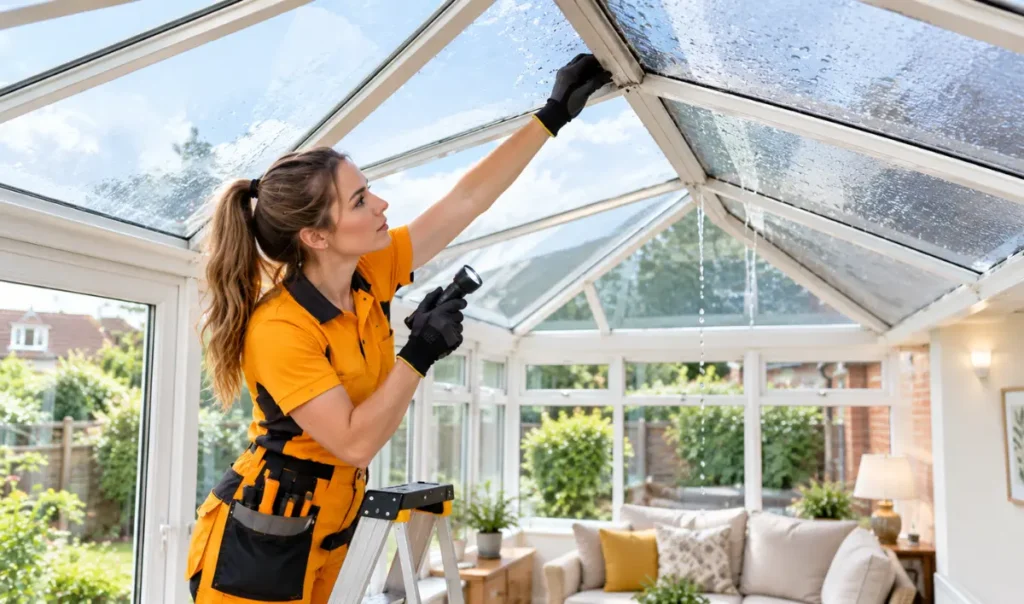
Look along the inside of the roof during or right after rain and note exactly where water first appears, since a leak that shows several feet from where it’s actually entering is common on a sloped conservatory roof, with water tracking along a bar before dripping. Check whether the affected point sits at a panel edge, a ridge junction, or where the roof meets the house wall, since each of those failure points has a different typical fix. A leak concentrated at the wall junction often points to failed flashing rather than anything wrong with the glazing itself, which is a different repair entirely from a panel or seal issue.
If what you’re actually seeing is fogging or a persistent haze between two layers of a glass panel rather than active water coming through, that’s a sealed unit failure rather than a leak, and it behaves the same way misted double glazing does in a standard window, just on a sloped surface instead of a vertical one.
What the Repair Actually Involves
Once the failure point is confirmed, the work itself is usually more straightforward than homeowners expect.
Replacing a Single Panel
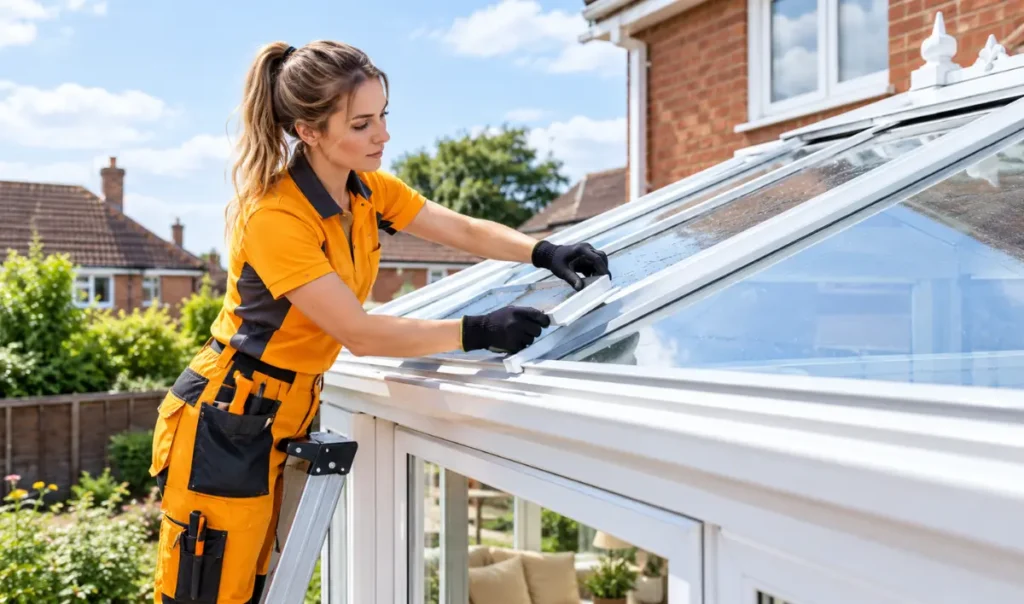
The glazing bar cap is unclipped, the damaged sheet or unit is slid out, and a matched replacement panel goes in with a fresh gasket seal around the edge before the cap is refitted. Matching polycarbonate wall count, thickness, and tint matters here, since a mismatched panel is one of the more common complaints about a rushed repair.
Reseating or Replacing Gaskets
Where the panel itself is sound but the seal around it has perished, the fix is simpler still, drawing the old gasket out and fitting a new one along the same run without touching the panel at all. This is often the cheapest genuine fix available for a roof leak and is worth ruling out before assuming a panel needs replacing.
Clearing or Repairing the Internal Drainage Channel
Glazing bars carry a channel that should carry stray moisture down to the gutter line. Debris, old sealant, or a poorly fitted bar cap can block that route, forcing water to find its own way into the room instead. Clearing the channel, or in some cases replacing a section of bar where the drainage detail has failed, resolves this without needing to touch the panels above it at all.
What This Typically Costs Compared With a Full Reglaze
A single panel swap, whether polycarbonate or a glass sealed unit, sits well below the cost of a full roof reglaze, since it involves one panel and one gasket run rather than the entire roof surface. A gasket only repair, where the panel is undamaged, tends to be the least expensive fix available for this kind of fault.
A full reglaze scales with roof size and panel material, with glass replacement costing meaningfully more than polycarbonate due to the weight and the need to confirm the existing bars can support it. Where a homeowner is choosing between an insulated polycarbonate upgrade and glass, the glass option carries a higher upfront cost but tends to hold its appearance and thermal performance longer, which is worth weighing against how long the conservatory is expected to stay in use.
Mistakes That Turn a Small Leak Into a Bigger Job
Sealing over a visible drip from inside the room is the single most common misstep, since a bead of sealant on the ceiling side rarely reaches the actual entry point several inches away along a bar, and it can trap moisture against the timber or aluminium beneath the panel instead of stopping it. Left long enough, that trapped moisture causes far more damage than the original leak ever would have.
Ignoring a cracked panel because it isn’t currently leaking is another frequent mistake. A cracked polycarbonate sheet or a chipped glass edge that hasn’t let water through yet almost always will eventually, and a small crack is a far cheaper fix than the water damaged plasterboard and swollen timber that follows once it does.
Working on a conservatory roof without the right access equipment or fall protection is worth flagging directly, since even a single storey conservatory roof presents a genuine fall risk and the Health and Safety Executive’s guidance on working at height applies just as much to a homeowner attempting a DIY panel swap as it does to a tradesperson.
Why Southampton Conservatories See This Fault Pattern Often
Southampton’s mix of coastal exposure and older housing stock in areas like Bitterne, Hedge End, and Totton means a lot of conservatories fitted years ago are now reaching the point where original single skin polycarbonate has genuinely aged out, while newer builds around Chandler’s Ford and Bassett more often see storm related panel damage rather than general wear. Properties closer to open water tend to show gasket wear a little earlier than those further inland, in line with the same salt laden air that accelerates seal failure on standard UPVC windows across the city.
A conservatory roof also takes wind loading differently to a vertical window, which is part of why isolated cracked panels from storm debris turn up as a repeat pattern here rather than a one off. If a recent storm is what brought you to this page in the first place, our broader look at storm damaged windows and who typically covers the cost covers the insurance side of that question in more depth than this guide will.
Where the roof sits high enough that standard ladder access won’t safely reach it, the same access planning that applies to high level glass replacement work elsewhere on a property applies here too, and it’s worth asking any glazier upfront how they intend to reach the roof safely before agreeing a price.
Frequently Asked Questions
Can a single cracked conservatory roof panel be replaced without redoing the whole roof?
Yes, in the large majority of cases. Provided the surrounding glazing bars and seals are in good condition, a single panel can be removed and replaced on its own without disturbing the rest of the roof.
How do I know if my conservatory roof leak is a seal problem or a structural one?
A leak that consistently appears at one panel edge or bar junction, rather than seeping in broadly across the roof, is almost always a seal or drainage issue rather than a structural fault, and it’s worth having assessed before assuming the worst.
Is polycarbonate or glass better for a conservatory roof repair?
It depends on what’s already fitted and what you want from the room. Polycarbonate is lighter and cheaper to repair or replace, while glass holds its clarity and thermal performance for longer but costs more upfront, particularly for a full reglaze rather than a single panel swap.
Will home insurance cover conservatory roof damage from a storm?
Storm damage to a conservatory roof is generally treated the same way as storm damage to any other part of a home under most UK policies, though the specific terms and excess vary by insurer, so it’s worth checking your policy wording before assuming full cover.
How long does a conservatory roof panel or gasket repair usually take?
A single panel or gasket swap is typically a same day job once the correct replacement part is confirmed, since it involves one section of the roof rather than the full structure.
Final Thoughts
A leaking or cracked conservatory roof looks worse than it usually is, and the fault almost always sits in one panel, one seal, or one drainage point rather than the roof as a whole. Working out which of those three is responsible, using the checks above, is the fastest route to a fix that costs a fraction of what a full reglaze would.
If you’re dealing with a conservatory roof issue anywhere across Southampton, Glaze Repair can take a look and confirm which fix actually applies before any work starts, rather than quoting a full replacement by default.