The most useful window and door checks before guests arrive are the front door lock, the handles on every door visitors will actually use, the windows in any room someone will sleep in, and anything you plan to hang on your UPVC frames. Those are the things that fail in front of visitors, and most of them can be tested in one short walk round the house.
A home that copes perfectly well with two or three people can behave very differently once it is full. There are more hands on handles, more feet through the front door, a spare room that has been shut for months, and suddenly the lock that has been stiff for ages becomes the one thing everybody notices.
This guide covers what to test, how to tell a quick adjustment from a proper repair, how to put up lights and decorations without marking your frames, and how to decide what can safely wait until the visit is over. It applies to Southampton homes of every age, from terraces in Portswood and Bitterne to newer builds in Hedge End and flats close to the city centre.
The Quick Checks That Matter Most Before Visitors Turn Up
If you only have a few minutes, these are the points that cause the most trouble once a house is busy:
Front door: the key turns fully, the handle lifts and returns smoothly, and the door pulls shut without a shove or a lift.
Back and patio doors: they open, close and lock without force, including for someone who has never used them.
Guest bedroom windows: each one opens, stays open, closes fully and locks.
Handles: nothing loose, cracked or sticking on any door or window guests might touch.
Decorations on frames: nothing pinched in a closing gap, nothing stuck on with something that will mark the finish.
Children and older relatives: windows that open only as far as is safe, and handles that do not need a strong grip.
Keys: a spare that actually works, and a sensible home for each key while the house is full.
Why a Full House Exposes Faults You Have Learned to Ignore
Most households build quiet workarounds around a fault without ever deciding to. You lift the front door slightly as you turn the key. You always push the back door with your hip. You know which bedroom window needs two hands. After a while these habits stop registering as problems at all.
The workarounds you stopped noticing
A workaround only works for the person who knows about it. A guest who does not know the trick will stand on the doorstep wondering why the key will not turn, or force a handle that was already close to giving up. Forcing is how a stiff handle becomes a snapped one.
It is worth asking yourself a simple question as you walk round: what do I do automatically that I would not expect a visitor to know? Whatever the answer is, that is the part of the door or window that needs attention.
Guests use your house differently
Visitors use doors and windows more often and less carefully than the people who live there. Doors get slammed because nobody wants to hold them. Windows are opened wide in a hot bedroom and shut again in a hurry. Children run in and out of the garden. All of that puts extra wear on hinges, handles and locking points in a short space of time, so a part that was already tired tends to show it quickly.
Start With the Door Everyone Uses: The Front Door
The front door is the first thing a guest touches and the last thing you lock at night, so it deserves the most careful look.
Test the lock the way a stranger would
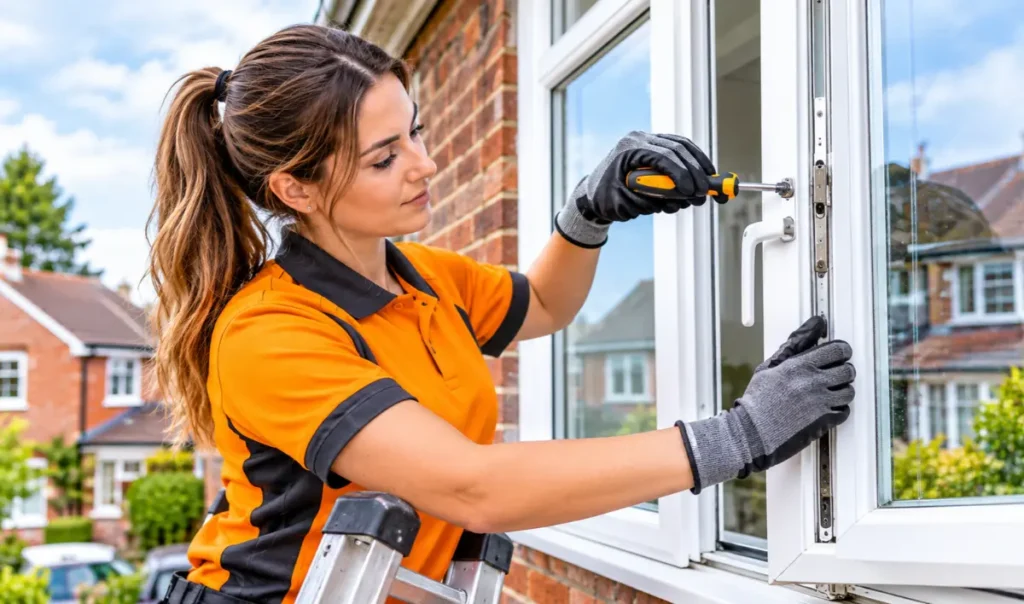
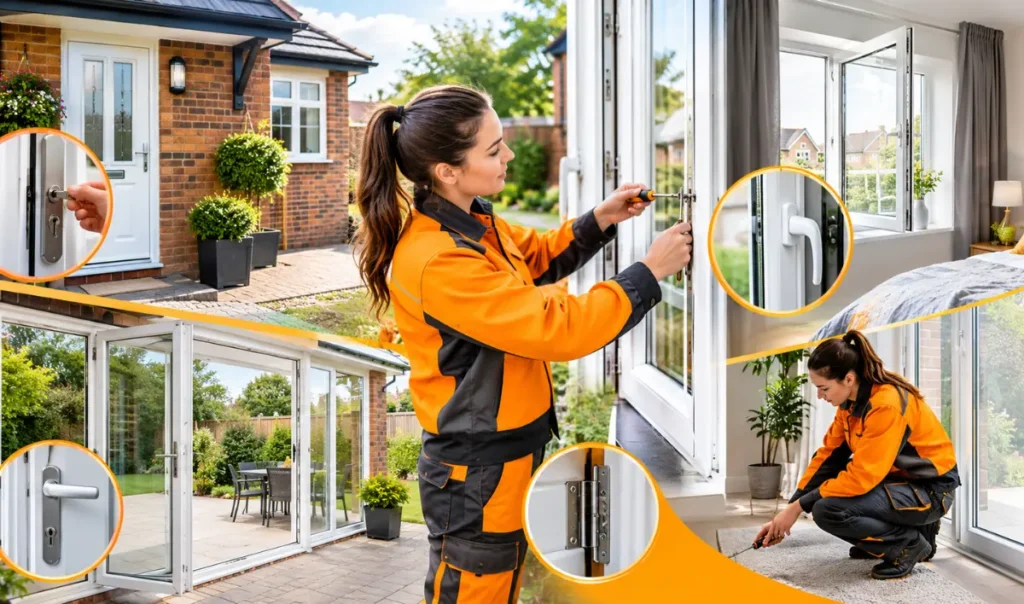
Stand outside, shut the door, and let yourself in as if you had never used it. Lift the handle fully, turn the key, and notice how much effort each step takes. On a modern multipoint lock, the handle should lift with a firm, even feel and the key should turn the same distance every time, with the locking points sliding out cleanly.
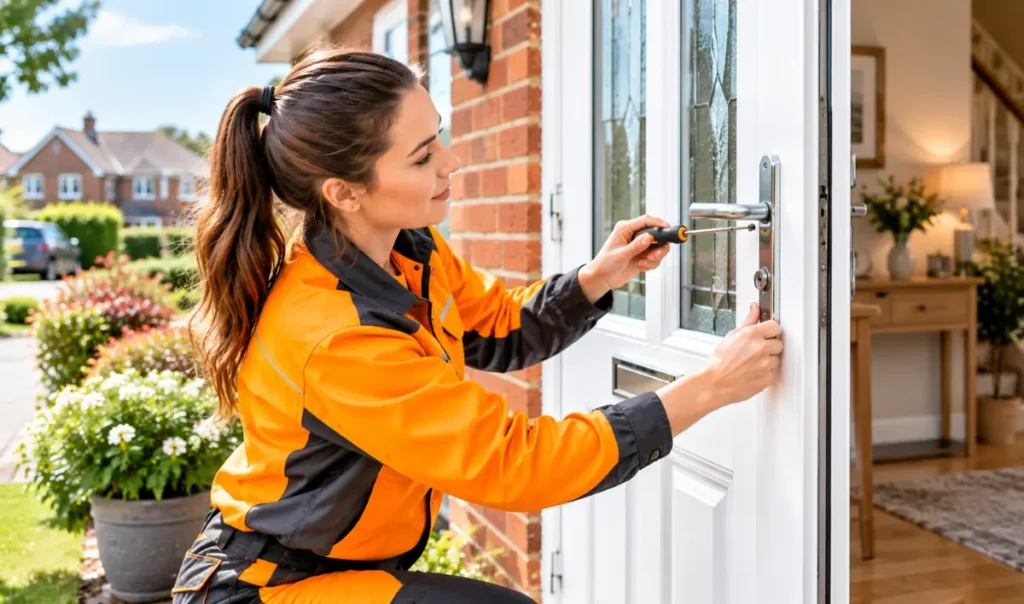
Warning signs are easy to recognise once you are looking for them. You have to lift the door upward or pull it toward you to get the key to turn. The key turns part way and stops. The handle feels loose or springs back slowly. Any of these suggests the lock and keeps are no longer lined up, which is common in doors that drag or catch on the frame and is usually fixed by adjusting or repairing the door rather than replacing it.
Signs the problem is alignment rather than the lock itself
The door closes fine in one season and rubs in another.
You can see an uneven gap down the closing edge, wider at the top or bottom.
Marks on the frame show where the door has been scraping.
Does it close without a fight?
A door that needs a slam to latch is a poor host. Check that it closes under its own weight to the point where the latch engages, and look along the hinge side for loose screws or a door that has dropped slightly. A letterbox flap that springs open or a gap you can see daylight through is worth noting too, because both are obvious to a visitor standing in the hall on a cold night.
Back Doors, Patio Doors and the Ones Visitors Will Tackle Alone
The back door is where guests go when they step out for air, when children disappear into the garden, and when someone is trying not to wake the rest of the house. It is often the door in the worst condition, simply because the household uses it least carefully.
Open it, close it and lock it as a visitor would. If it only locks after you lift the handle and shove, that needs sorting. If you have a sliding patio door, run it along its full length. A door that drags, grinds or jumps in its track will frustrate anyone who is not used to it, and an older relative may not be able to move it at all.
Pay attention to what happens when the door is left unlocked by mistake. Guests are the most likely people in the house to leave a back door unlatched overnight, so a handle that makes it obvious whether the door is locked, and a lock that engages cleanly, matters more than usual.
The Spare Room Windows Nobody Has Opened for Months
A spare room is the place where windows get ignored. Nobody sleeps there, so nobody notices that the handle is stiff, the window will not stay open, or the room is far colder than the rest of the house.
Test each window fully open and fully closed
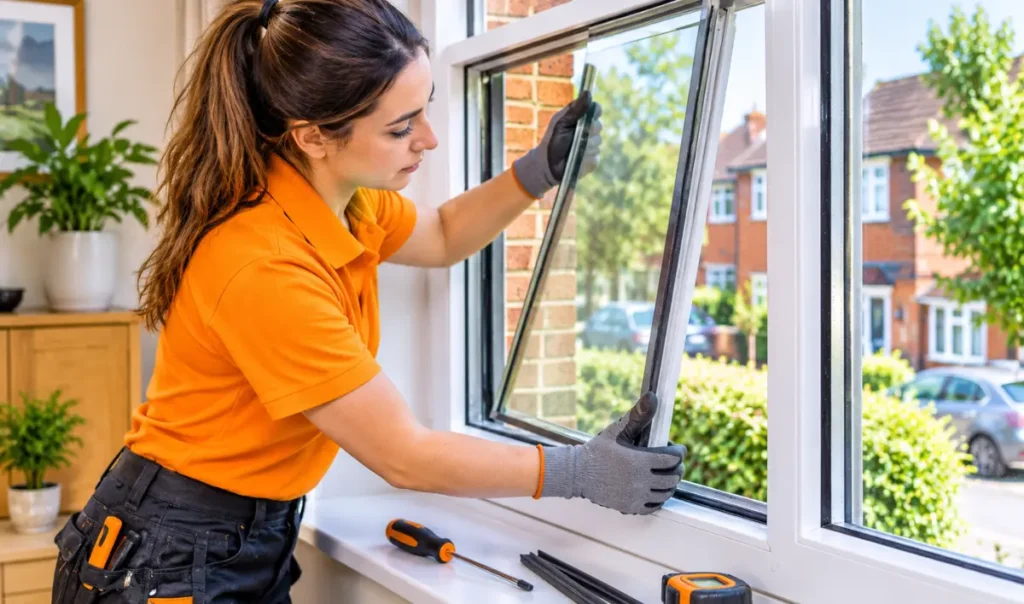
For every window in a room where someone will sleep, open it all the way, let go, and see whether it stays where you put it. Then close it and lock it. You are looking for a handle that turns without resistance, a window that sits flush when shut, and a lock that engages without lifting or pressing. A window that swings shut in the breeze is more than an annoyance when a guest is trying to get fresh air, and one that will not close properly leaves a gap that nobody wants beside a bed.
Cold rooms and draughts
A bedroom that has been unused and unheated will feel the cold more than a lived in room, and a draught beside the bed is the sort of thing a guest remembers. Before assuming the window is at fault, it helps to work out where the draught is actually coming from, since worn seals, a poorly closing sash and a gap around the frame all need different fixes.
A window that will not lock matters more than one that will not open
A stiff window is an inconvenience. A window that cannot be locked is a different matter, particularly in a ground floor room or a bedroom that looks onto a quiet side of the house. If a handle spins without engaging the lock, or the window does not pull tight when shut, treat it as a priority rather than something to tidy up later.
Children, Grandparents and Safe Windows
A full house often means small children sleeping in rooms they do not know and older relatives using doors and handles that are heavier than they are used to. Both deserve a few minutes of thought.
For children, the main concern is upstairs windows. Falls from open windows are one of the more common serious accidents involving young children, and the Child Accident Prevention Trust explains why preschool children are at particular risk and what simple steps help. The practical points are straightforward:
Make sure bedroom windows open only a limited amount, using a restrictor that cannot be released by a small child.
Move beds, sofas, toy boxes and other climbable furniture away from windows.
Keep window keys somewhere you can reach quickly, so that you could still open a window in an emergency, but out of reach of children.
If your windows do not have restrictors, ask whoever looks after your glazing whether they can be fitted to your type of frame.
For older guests, think about grip and strength. A stiff window handle, a heavy patio door or a front door that needs a hard pull can be difficult for someone with weaker hands. Easing a stiff handle or sorting a door that drags is often a small job, and it makes the house easier for everybody.
Hanging Christmas Lights and Decorations on UPVC Without Marking It
Lights and wreaths are where well meaning decorating most often damages doors and windows. UPVC is hard wearing, but its surface and its rubber seals are less forgiving than they look.
What to use, and what to leave in the drawer
Use clips and hooks designed to be removed, such as low tack adhesive clips or suction hooks on the glass itself, and check the manufacturer’s weight limit. Avoid nails, tacks, staples and screws into the frame. A small hole may seem harmless, but it can let water into the profile and it is permanent.
If you are using adhesive, test a small hidden spot first and avoid leaving it in place for a long period, since strong adhesives can leave residue or mark the surface. Battery powered or LED lights are a sensible choice near glass, as they produce less heat than older style bulbs.
Keep cables out of the gap
The commonest mistake is running a cable through a closing window or door. A cable pinched in the gap stops the window seating fully, which can leave the lock unable to engage, and it can flatten or tear the rubber seal. A door that does not close properly because of a trailing cable is also a door that is not properly locked. Route cables over the top of the frame or use battery lights so that nothing ever has to pass through a gap that closes.
Wreaths and weight on the door
A wreath is light, but a heavy decoration on a door that is opened and closed constantly adds strain to the hinges. Choose something light, and avoid over door hooks that sit on top of the seal or stop the door pulling fully shut. After you hang it, check that the door still latches and locks as it did before.
Taking decorations down
When the festive season is over, remove adhesive clips slowly and clean any residue with a soft cloth and mild washing up liquid. Scrapers, blades and harsh solvents can scuff or dull the surface of the frame, and the damage is much harder to put right than a bit of sticky residue.
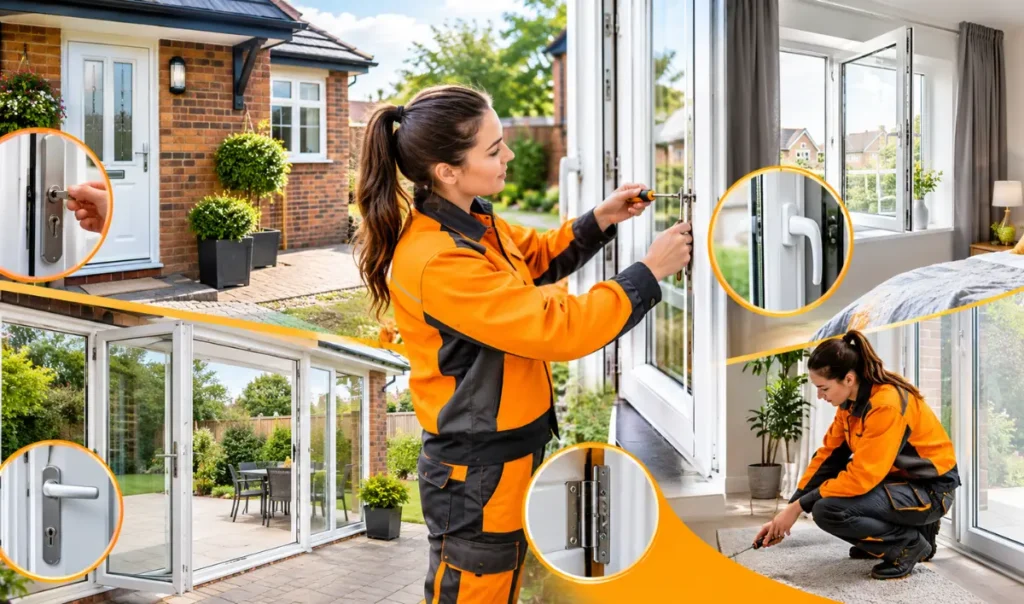
Fix Before the Visit or Wait Until Afterwards? A Sensible Way to Decide
Not every fault needs sorting before guests arrive. A simple way to decide is to ask what happens if it is left.
Worth fixing before the visit:
front or back door that will not lock reliably.
window handle that is loose, cracked or turning without engaging the lock.
A bedroom window that will not close fully or will not stay open.
Cracked or chipped glass in a door or low window.
door that has to be forced to open or close.
Usually fine to leave until afterwards:
mild draught that does not make a room uncomfortable.
stiff handle that still works smoothly enough with normal pressure.
Cosmetic marks on a frame.
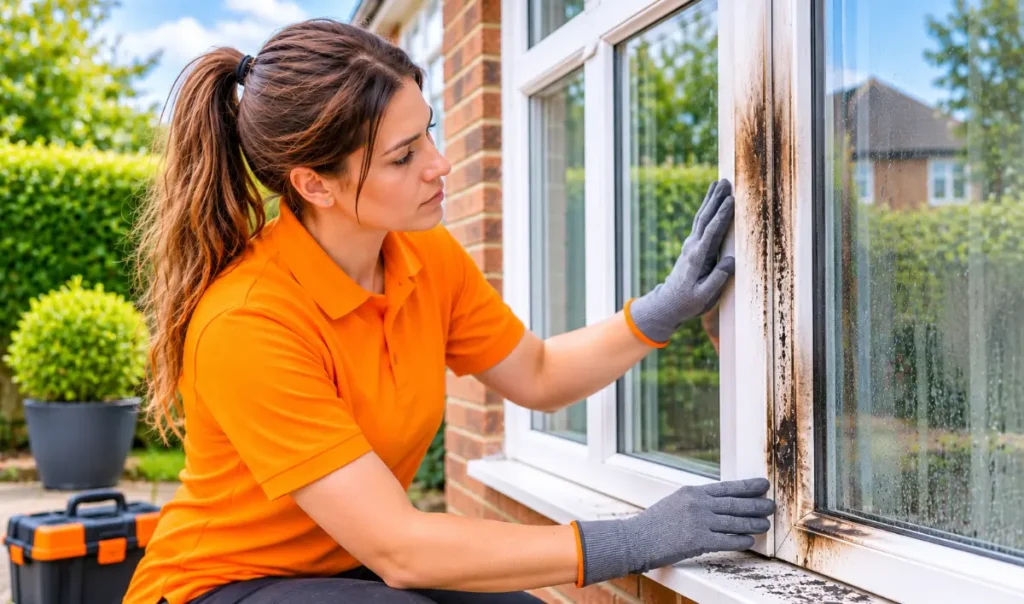
sealed unit that has misted but is still sound and secure.
The dividing line is security and safety. Anything that stops a door or window locking, or that could hurt someone, belongs in the first group. If a lock is the problem, it is worth reading about how a UPVC lock fault is diagnosed and repaired so you know what to expect before you pick up the phone.
Getting Work Done When Everyone Else Is Booking Too
The weeks before a busy household event are a popular time for people to remember jobs they have been putting off, so availability can be tighter than usual. A few habits make it much easier.
Send photos before anyone visits
Clear photos of the lock, the handle, the gap along the frame or the damaged glass let a glazier understand the problem before arriving, so the first visit is more likely to be a repair rather than a diagnosis. Include a wider photo of the whole door or window as well as a close up.
Be realistic about timing
Simple lock, handle and adjustment jobs are often quicker than people expect, while anything that needs a specific part or a new sealed unit takes longer. Ask what is realistic for your fault rather than assuming, and do not leave a lock problem until the last moment. If a fault cannot wait, it helps to know what to expect when you call an emergency glazier before you need one.
Sort access in advance
If nobody will be home, decide how the glazier will get in, or whether the work can be done from outside. Many glass and exterior door repairs can be completed without going indoors, which is useful when the house is about to fill up.
One Short Walk Round: A Practical Checklist
Work through this in order, and write down anything that needs attention.
Stand outside the front door, shut it, and let yourself in with the key as a stranger would.
Lift the front door handle fully and check the locking points slide out and in cleanly.
Open and close the back door and any patio door, and confirm each one locks without force.
In every guest bedroom, open each window fully, check it stays open, then close and lock it.
Look at every handle you can reach and note anything loose, cracked or stiff.
Check upstairs windows for limited opening and move climbable furniture away from them.
Look at any lights or decorations on frames and make sure no cable passes through a closing gap.
Decide where each key lives while the house is full, and make sure a spare works.
Questions People Ask Before a House Full of Visitors
How can I check whether my UPVC front door lock is working properly?
Stand outside, close the door, and use your key as if you had never used it. The handle should lift smoothly, the key should turn the same distance each time, and the door should lock without you lifting or pulling it. Needing a workaround is a sign the lock or the door alignment needs attention.
Can I hang Christmas lights on UPVC windows and doors?
Yes, if you use the right fixings. Removable clips and suction hooks are safer than nails, screws or staples, and cables should never pass through a gap that closes. After hanging anything, check the window or door still closes and locks fully.
Should window keys be left in the locks when children are visiting?
Keep keys somewhere everybody responsible in the house knows about and can reach quickly, in case a window needs to be opened in an emergency, but out of reach of small children. Leaving them in the lock is usually the least safe option when little ones are around.
Can a glazier fix a window or door quickly before guests arrive?
Often, for straightforward faults such as a lock, handle or door adjustment, though it depends on the problem, parts and availability. Sending photos in advance helps, and anything that cannot be locked should be treated as the priority.
Why is the spare room window so hard to open or so cold?
A window that has not been used for a while can stiffen, and an unheated room feels the cold more. Dirt in the hinges, a worn friction stay or a poorly seated sash can all be behind it, so test it fully open and closed before guests arrive.
Final Thoughts: A Calmer House Starts With a Door That Locks
You do not need to inspect every window in the house. A few minutes spent on the front door, the back door, the guest bedrooms and your decorations will catch most of the problems that show up once the house is busy.
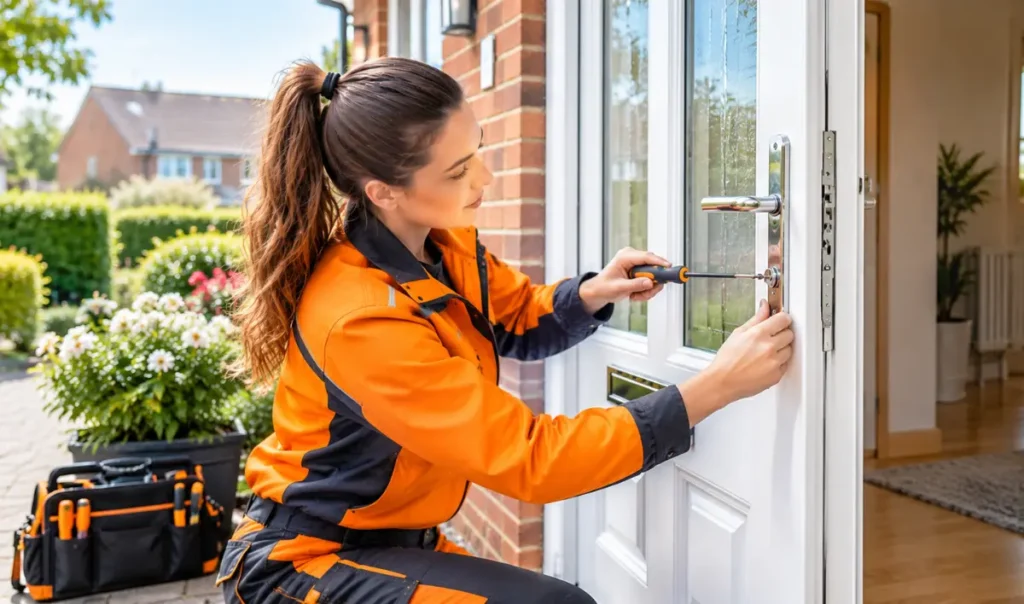
Fix anything that stops a door or window locking, leave the cosmetic jobs until the visit is over, and keep cables and nails away from your frames. If one of these checks turns up something you would rather not live with, the team at Glaze Repair Southampton can talk you through your options for doors, locks and windows across the city.