Double glazing repair in Bitterne covers the same core faults as anywhere in Southampton, misted units, worn locks and doors that drop, but which one you are most likely to meet depends on whether you live in Bitterne Park, around Bitterne Village or along Bitterne Road West.
That is worth knowing, because “Bitterne” is not one street. It is a stretch of the east side of Southampton that runs across the SO18 and SO19 postcodes, with a river on one side, a busy shopping road through the middle and estate housing behind it. A window on a quiet road near Riverside Park has a different life from a flat above a shop or a front window facing a main road. Glaze Repair Southampton works from Bitterne Road West, so this is home ground, and the faults below are the ones that come up on these streets.
This guide explains where Bitterne starts and stops, what tends to go wrong in each part of it, which faults you can spot yourself, what repairs cost, and how to get a price before anyone visits. If one window has fogged between the panes, a failed sealed unit replaced on its own is usually all it needs, and the rest of this page will help you work out whether that is your situation.
Where Bitterne Starts and Stops
People use the name loosely, so it helps to pin it down. Bitterne is an eastern suburb of Southampton, and its neighbours are Bitterne Park, Peartree, Harefield, Thornhill and Sholing. Its postcodes are mostly SO18, with parts of the area, around Peartree and the roads towards Sholing, falling in SO19. The official list of Southampton’s wards shows how these areas fit together, and it is a handy map if you are not sure which side of a boundary your street sits on.
For glazing, the boundaries matter less than the type of street. Bitterne Park, the centre around the pedestrianised part of Bitterne Road, the main road itself and the estates behind it each have a different mix of homes, so they develop different faults.
Bitterne Park: Mixed Windows and a Lot of Bays
Bitterne Park centres on the Triangle shops and sits beside the River Itchen, with Riverside Park along the water and Cobden Bridge crossing the river. It is mostly residential, with a lot of family houses and many that have been extended or altered over time.
The glazing problem that shows up most here is mixed windows. A house may have a front bay put in at one time, a rear extension at another, and a kitchen window replaced separately, so units differ in age, tint and spacer colour. When one fails, the owner often asks whether a new unit will look odd beside its neighbours, and whether a new sealed unit will match the windows beside it is something a good glazier can answer before ordering.
Bay windows are common on streets like these. A bay has several separate units, so a fogged side pane is a one unit repair, not a new bay. Joints between units can also open up and whistle, which is a sealant and gasket job, not a glass one.
Bitterne Village and the Shopping Streets
The centre of Bitterne is the old village, with the pedestrianised part of Bitterne Road as a shopping precinct and a mix of shops, flats and small businesses around it. This is where the glazing changes character.
Flats above shops often have windows at height, which makes access part of the job. Shopfronts and office entrances are commercial glazing, where a cracked pane may need quick making safe and a unit made to a specific size. Homes close to the centre also tend to have a lot of foot and van traffic past the door, so a front door that sticks or a lock that is wearing out becomes noticeable quickly.
If you manage a shop or a small office here, say so when you enquire, because commercial glass is priced and scheduled a little differently from a house window.
Bitterne Road West and the Roads Off It
Bitterne Road West is a main road, and it is where Glaze Repair Southampton is based. Homes and flats facing a road like this live with more noise, more dust on the glass and more everyday vibration from heavy vehicles.
Dirt and grime are cosmetic, but noise is a reason people look at their windows twice. It helps to be realistic about it: what noise reducing glazing can and cannot do beside a main road depends on the glass, the frame and the seals, and an old, worn seal can let in as much noise as a thin pane.
Hinges and handles on a front window facing the road work hard, and loose fixings are worth tightening early, before a sash starts to drop.
The Estates Around Harefield, Thornhill and Peartree
Behind the main road are larger areas of family housing, including the Harefield and Thornhill estates and the streets around Peartree. These are homes that have been looked after by many owners over a long time, so you often see a street where no two houses have the same windows.
That means the faults vary house by house, but a few appear again and again: a misted unit on a side or kitchen window, a front door that has dropped on its hinges, a lock that has gone stiff, and handles that have worn loose. Most are repairs, not replacement jobs.
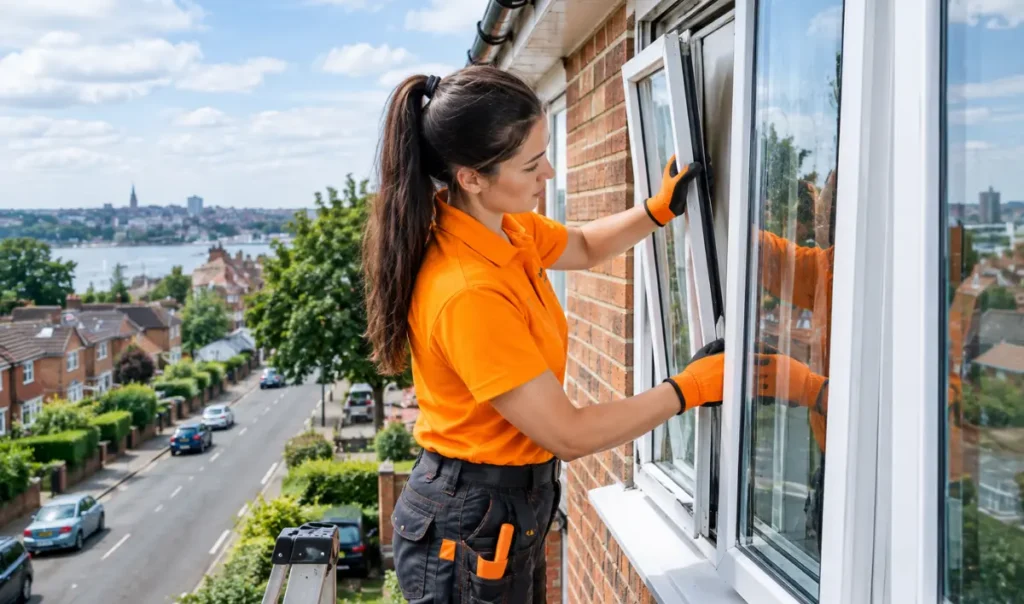
Faults We See Across All of Bitterne
Whichever part of Bitterne you live in, these are the common ones:
A sealed unit with fog or moisture between the panes
UPVC door that drags, needs lifting to lock or will not close properly
A lock or handle that is stiff, loose or has stopped engaging
Cracked or chipped pane, usually in a door panel or a low window
Draught at a frame edge or a worn gasket
Window that drops, sticks or will not stay open
Most of these are hardware or single unit jobs. Dropped, sticking and loose doors put right on site are among the quickest, and often need nothing more than an adjustment or a new part.
A Ten Minute Walk Round Your Own Home
You do not need any tools to find most glazing faults, and a short walk round the house now, while the heating is coming on and the evenings are drawing in, tells you what to book before the cold weather makes it urgent.
Start at the front door. Open it fully, then close it and lift the handle. It should shut without a push, lock without a lift and turn the key smoothly. If it needs shoulder pressure, the hinges or the keeps probably need adjusting.
Move to the windows that face the street. Look for fog between the panes, a handle that feels loose and a frame edge where you can feel a draught with the back of your hand. On a main road, check that the seals still sit firmly, because a worn gasket is one of the easiest ways for noise and dust to get in.
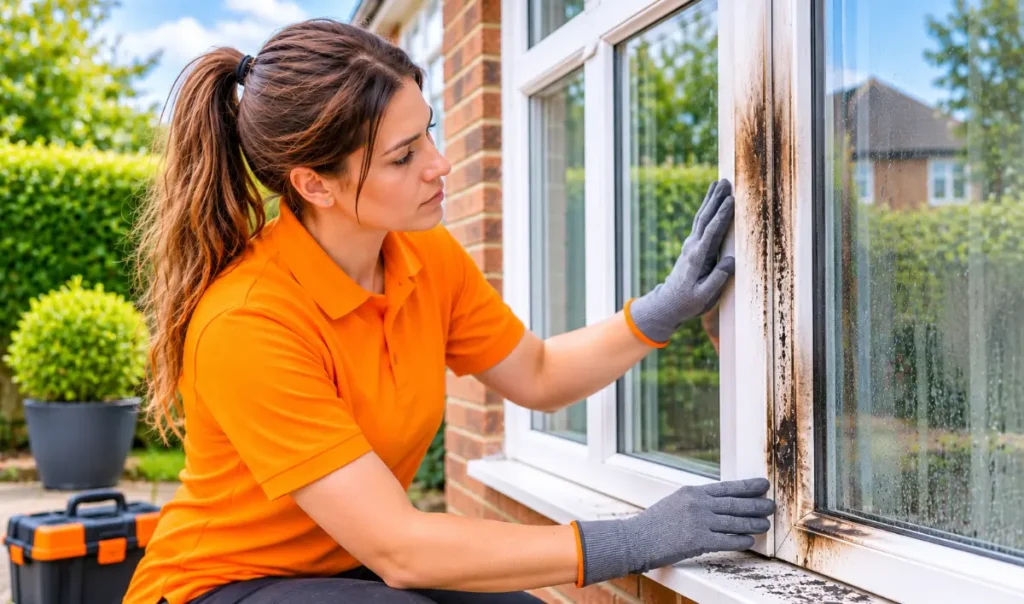
Next, the kitchen and bathroom, where steam makes problems show first. Moisture on the inside surface is a ventilation matter, but moisture trapped between the two panes is a failed unit, and the two look different once you know what to look for.
Then go upstairs. Open and close each window, lift each handle fully and check that every window stays where you leave it. Upper floor windows are the ones people forget until a sash drops or a handle snaps.
Finally, check any extension, porch or conservatory, since these often have different glass and different hardware from the main house. Write down what you find, take a photo of each fault and you have everything a glazier needs to give you a realistic guide price before anyone visits.
What a Visit Looks Like and What It Costs
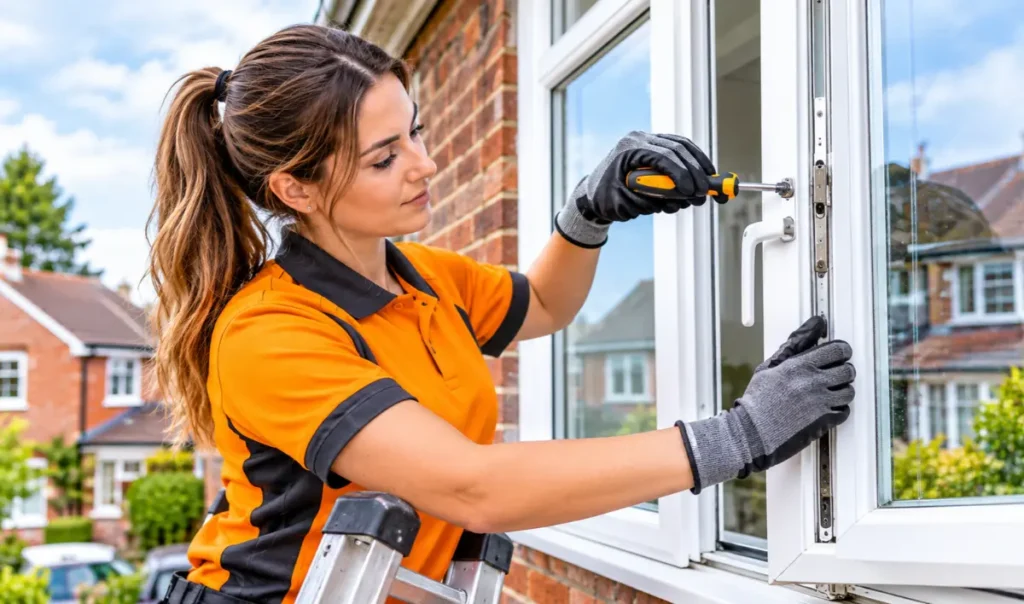
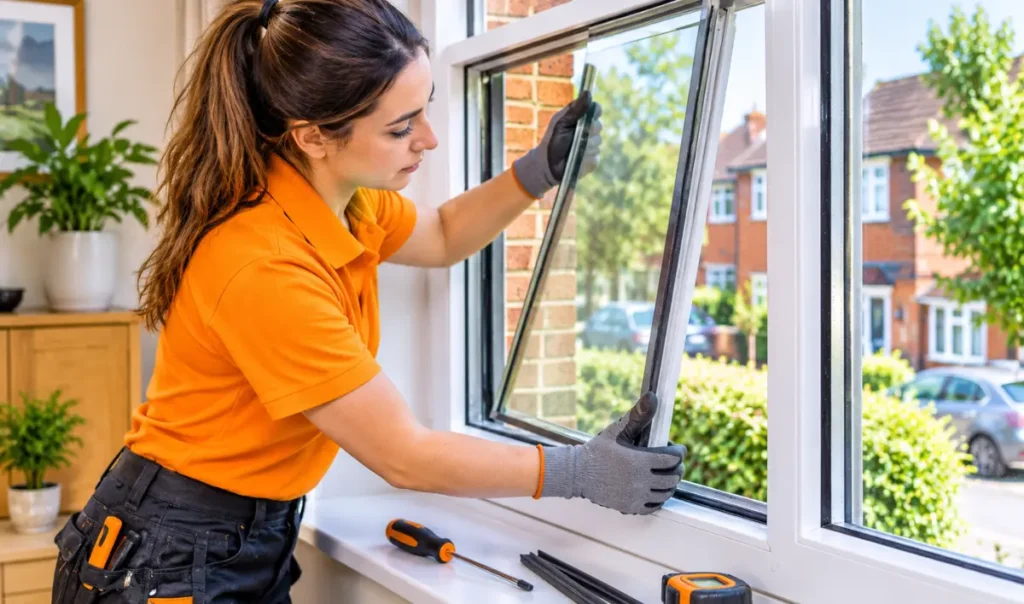
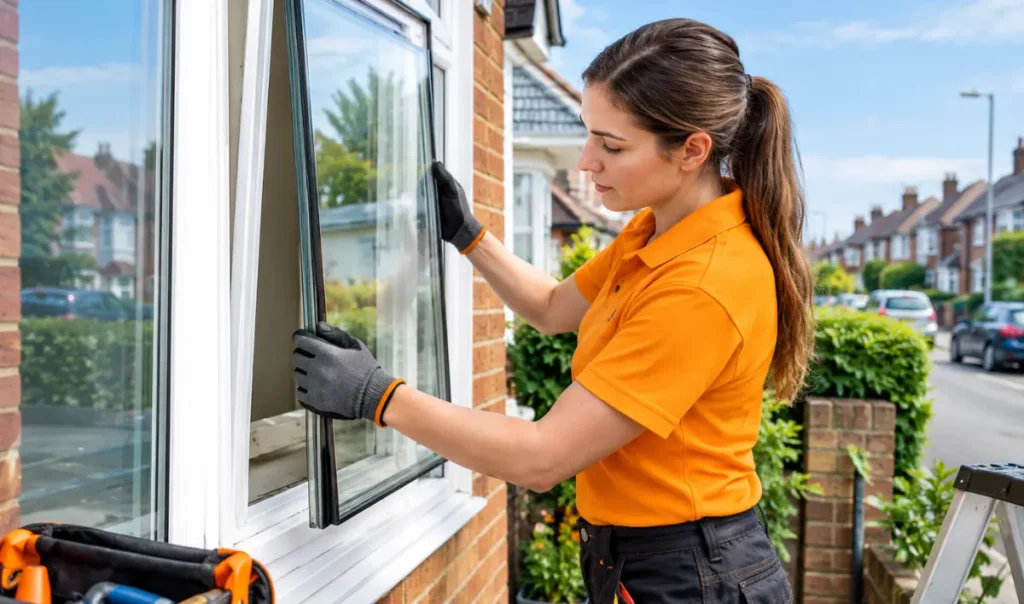
A visit starts with someone looking at the fault, telling you what it is and giving you a price before starting. Where a part is on the van, it is usually fixed there and then. Where a sealed unit has to be made to measure, the unit is ordered and fitted on a second visit a few working days later.
For orientation, a standard sealed unit in a small to medium window often sits between £60 and £150. A larger window or one with an upgraded specification more commonly falls between £150 and £280, and a unit in a door panel between £150 and £320. Most hardware repairs fall somewhere between £55 and £250, depending on the part. These are guide figures, not quotes.
Genuine emergencies, such as a door that will not lock or a pane that is broken through, are dealt with first and often on the same day where possible, with the permanent repair following.
Getting a Price Before Anyone Visits
A few photos let a glazier give a realistic guide price without a visit. Take one of the whole window or door from a few steps back, a close up of the fault, and one of the handle or lock if it is involved. Add a line about what it does, which floor it is on and how many windows or doors show the same problem.
Treat the first number as a planning figure. The firm price is confirmed once sizes and specification are checked in person.
Mistakes That Cost Bitterne Homeowners Time or Money
Replacing a whole window when only one sealed unit has failed
Ordering a unit without checking how it will match the windows beside it
Leaving a loose hinge or handle until the sash drops
Forgetting to mention that a window is on an upper floor above a shop
Treating road noise as a glass problem when worn seals are letting it in
Waiting on a door that will not lock properly, instead of getting it secured
Comparing two quotes that cover different glass specifications
Questions Bitterne Residents Ask
Is Bitterne in SO18 or SO19?
Both. Most of Bitterne is SO18, while parts of the area around Peartree and the roads towards Sholing are SO19. Harefield, Thornhill and Bitterne Park are separate neighbouring areas, mostly in SO18.
Do you cover Bitterne Park, Bitterne Village and Thornhill?
Yes, glazing repairs are carried out across Bitterne, including Bitterne Park, the village centre, Thornhill, Harefield and Peartree, with Bitterne Road West as the base. Response times depend on the fault and what is already booked.
How much does double glazing repair cost in Bitterne?
A standard sealed unit in a small to medium window commonly costs between £60 and £150, larger or upgraded units can reach £280, and a unit in a door panel often falls between £150 and £320. Most hardware repairs fall between £55 and £250. The final price depends on size, specification and access.
How quickly can a glazier reach Bitterne?
For a genuine emergency, such as a door that will not lock or a broken pane, a same day visit is often possible where the diary allows. For a sealed unit, the unit has to be made to measure, so allow a few working days after the first visit.
Can one visit fix several windows and a door?
Often, yes. If you send photos of each fault, a glazier can plan one visit for the hardware repairs and order any sealed units in advance. Mention how many windows and doors are involved when you enquire, since one callout for several jobs usually costs less than separate visits.
Before You Search for a Glazier Near You
If you live or work in Bitterne, a glazier who knows these streets already knows the mix of homes, the older windows, the bays, the shops with flats above and the main road noise. Work out which part of Bitterne you are in, take photos, and describe the fault in plain words.
If a door will not lock or a pane is broken through, make that call first. For everything else, a few photos get you a clear answer before anyone visits.
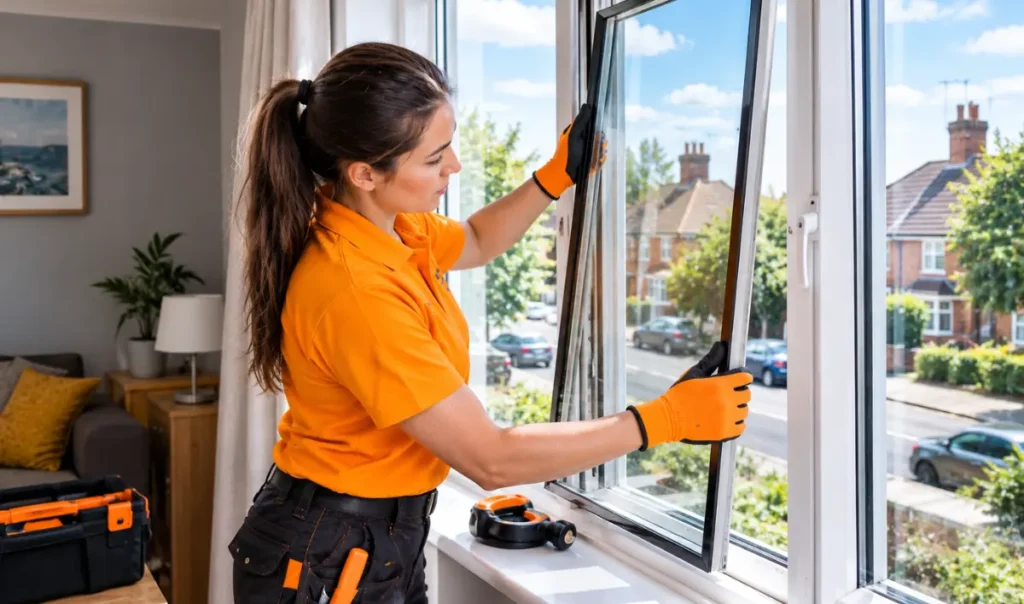
When you are ready, you can arrange a glazing repair visit in Bitterne with Glaze Repair Southampton and send over your photos for a realistic guide price.