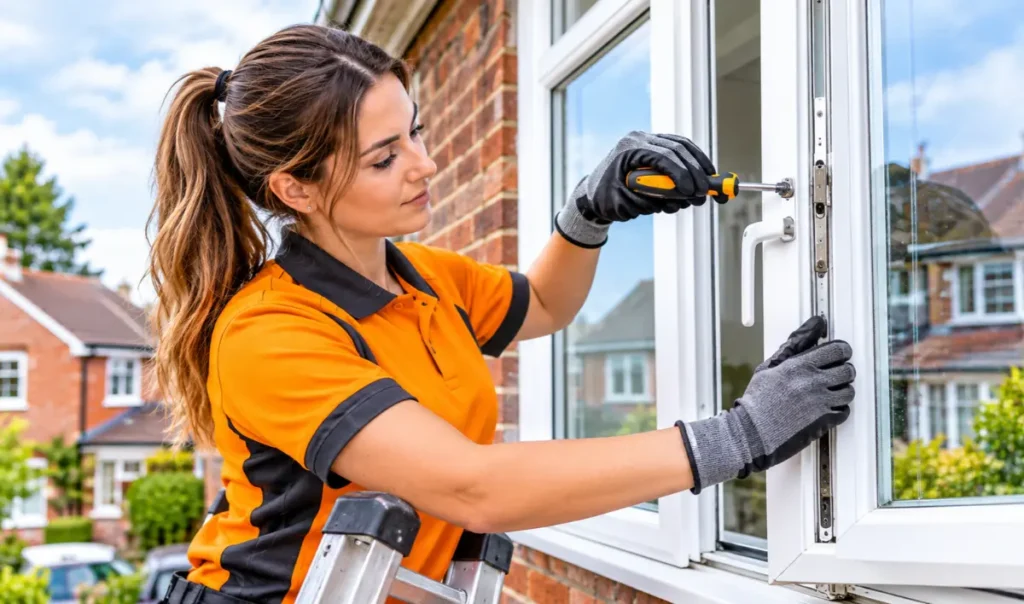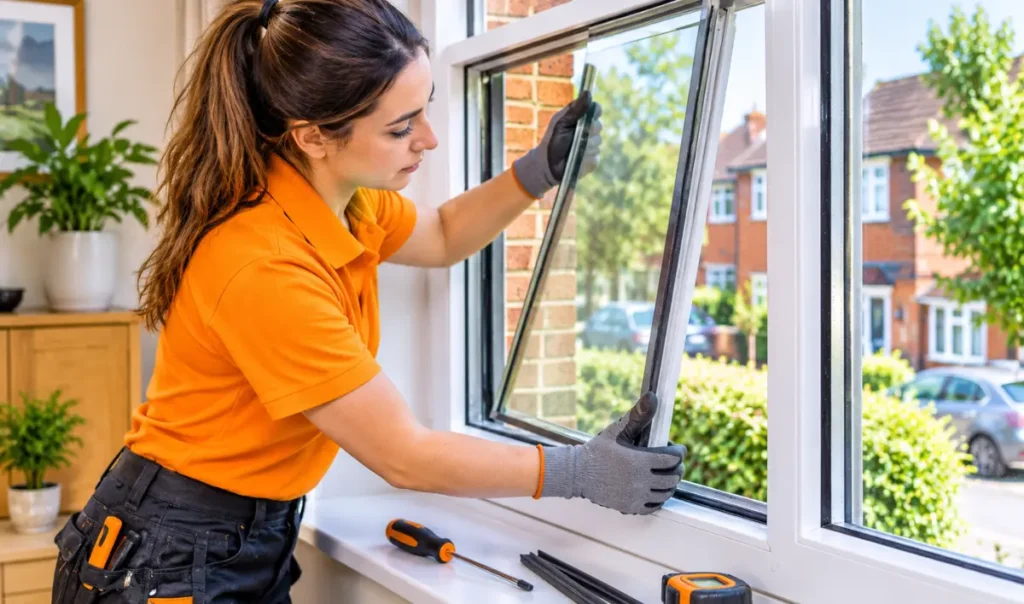
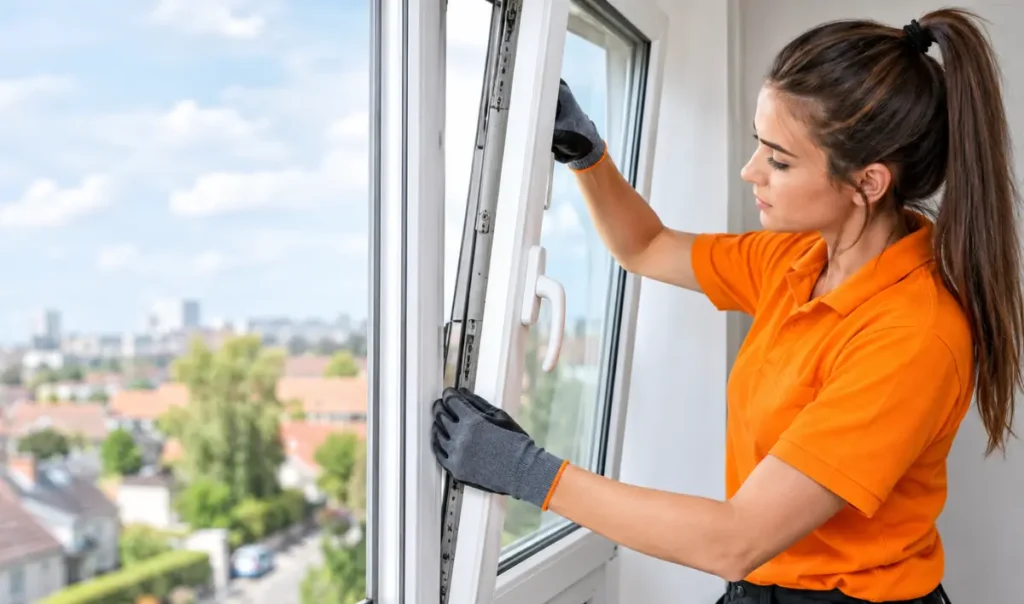
Tilt and turn window repair is almost always a hardware job, not a glass job: when a sash drops, sticks in tilt or hangs from one corner, the fault is usually in the handle gearbox, a corner hinge or the tilt stay, and the glass and frame are fine.
It tends to happen the same way. You turn the handle to air the bedroom, change your mind halfway, push it to the wrong position while the window is open, and the sash lurches inward and hangs from one corner like a broken gate. Or the window tips in at the top for ventilation and then refuses to close, however you move the handle.
Tilt and turn windows turn up in flats around Ocean Village and the city centre, in extensions, and in newer builds across Hedge End and Bitterne Park. They behave differently from an ordinary side hung window, so the usual fixes do not apply. If your problem is a normal window that will not stay put, that is a different mechanism, and a side hung window that will not stay open is covered separately. This page is for the windows with a handle that has three positions.
How a Tilt and Turn Handle Works in Three Positions
On most tilt and turn windows the handle has three positions, and every fault in this guide starts with what the handle was doing when it went wrong:
Handle down: the sash is closed and locked
Handle sideways: the sash swings inward like a door, hinged at the side
Handle up: the top of the sash tips inward for ventilation, hinged at the bottom
Anywhere in between: the sash is neither properly locked nor properly open, and this is where trouble starts
Behind the handle sits a small gearbox, a drive rod that runs around the edge of the sash, corner pieces that pass the movement round, hinges at the bottom corner and one side, and a tilt stay at the top that holds the sash while it is tipped in. Many windows also have a safety device that stops the handle moving to the wrong position while the sash is open. When that device fails, wears out or has been forced past, the sash can drop.
All of that is metal hardware fixed to the sash and frame. None of it is the glass, which is why a bad day with the handle rarely means a new window.
The Four Faults Behind Almost Every Call
The Sash Is Hanging From One Corner
This is the one that frightens people, and it should be taken seriously. The handle was moved while the window was open, the sash slipped out of its normal position and now hangs from its bottom corner hinge, often tilted into the room.
A double glazed sash is heavy, heavy enough to hurt someone if it swings or falls. Do not try to lift it back into place by yourself, and do not keep working the handle in the hope that it will click back. Keep people and pets away from the window, keep your fingers clear of the gap between sash and frame, and take a few photos from inside, one of the whole window and one of the top corner.
An engineer can usually re seat the sash and check what let it drop. The common causes are a stripped gearbox, a drive rod that has come out of its corner piece, or a tilt stay that has slipped out of its housing.
The Window Is Stuck in Tilt and Will Not Close
You tipped the top of the sash in, and now it sits there. Move the handle and nothing changes, or it moves but the window does not follow.
Most of the time the top corner has slipped off the tilt stay or the latch that holds it, so the sash is no longer connected to what the handle controls. Pushing the sash shut with force makes it worse. It can bend a stay or damage the corner piece.
If the sash is only slightly off, a careful re hang of the top corner sorts it. If a part is bent or broken, it is replaced.
The Handle Spins, Flops or Will Not Move
A handle that turns freely without doing anything points at the gearbox, which is the small unit the handle spindle drives. When its teeth strip, the handle feels loose and empty. A handle that will not move at all can mean a seized gearbox or a drive rod that has jammed in a corner.
It helps to know what is inside a window’s locking mechanism, because on a tilt and turn window the same parts do the locking and the opening. Loose handle screws are the cheapest cause to rule out, so tighten them before assuming the worst.
The Sash Catches at the Bottom or Sits Crooked
You can see a lopsided gap, the sash scrapes the frame at the bottom corner, or the window feels as if it has dropped a few millimetres. That is usually a hinge that needs adjusting, or a hinge that has worn enough that the sash has sagged.
Hinge adjustment is a small job when the sash has simply settled. It becomes a bigger one if the hinge has worn through or the fixings have pulled out of the sash.
What You Can Safely Try Before You Call
Some checks cost nothing and tell you a lot:
Move the handle slowly through each position and note where it stops, grinds or feels gritty
Wipe fluff and grit out of the gap around the sash and the metal plates on the frame
Put a small amount of silicone based lubricant on visible moving points, and only a little
Check the handle screws are tight
Take photos of the sash, the top corner and the bottom hinge from inside
Hardware makers publish operating guides that show the handle positions for their systems, and a window hardware maker’s own guide to handle positions is worth a look if you are not sure which position does what. It also warns about keeping fingers clear when closing, which matters more than most people realise.
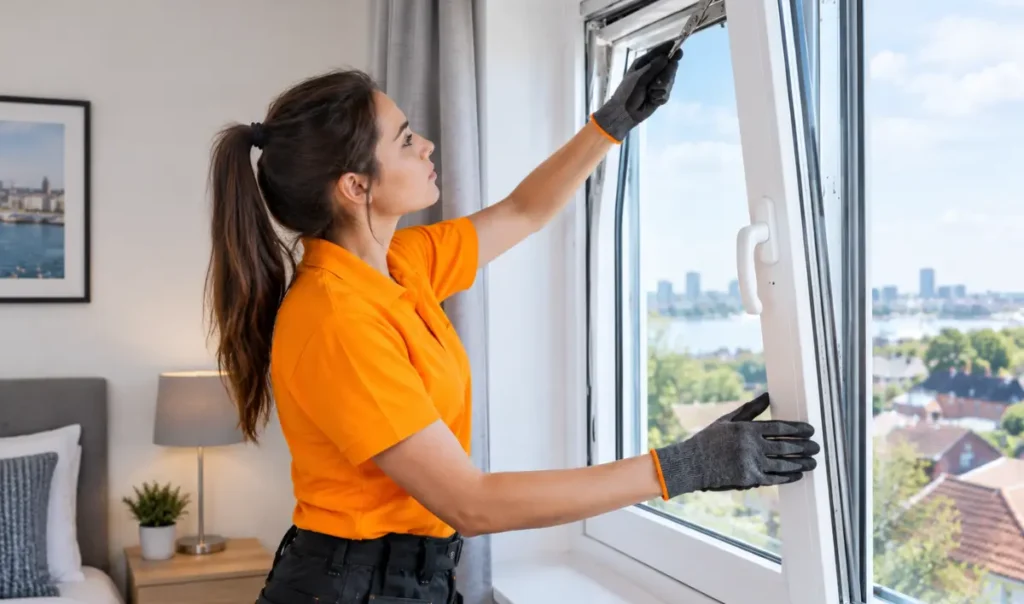
What not to do is just as important. Do not force the handle past a point where it stops. Do not undo hinge screws to see what happens. Do not leave a sash that has dropped open in the wind, and do not stand on a chair to lift it back on by yourself.
Repair or Replace?
In most cases it is a repair. The gearbox, the corner pieces, the tilt stay and the hinges are all parts that can be changed without touching the glass, so a window that looks like a write off often is not.
Replacement comes into the conversation in three situations. If the sash fell and the glass cracked, you are dealing with a cracked sash pane that needs the glass replaced and the opening secured, which is a glass job as well as a hardware one. If the frame has warped or several sashes in the same house are failing, the question becomes when repair stops making sense and a new window does. And if the hardware is an unusual or discontinued system, a matching part can be hard to find, which may tip the balance.
Most people in Southampton who call about a tilt and turn problem fall into the first group, a part that has worn or been forced, and the answer is a repair.
What a Repair Visit Involves
A visit usually starts with someone looking at the sash and the handle together. The engineer works out which of the four faults you have, checks whether the sash is safe to move, and tells you what the repair will be before starting.
From there it is a short list of possibilities: adjust the hinges, re seat the sash, replace the gearbox or a corner piece, replace a bent tilt stay, or swap a worn handle. The sash is then tested in every handle position, tilted, turned and closed, and checked for a firm lock and an even gap all round.
Matching the right part matters, because tilt and turn systems are not interchangeable between makers. The name of the maker is often stamped on the hardware along the edge of the sash, so a clear photo of that edge speeds things up. Where a part has to be ordered, it may need a return visit.
What It Costs and How Long It Takes
For orientation, most window and door hardware repairs fall somewhere between £55 and £250, depending on the part and the work involved. A hinge adjustment or a replacement handle sits at the lower end. A sash that has to be re hung, or a gearbox and corner drive that need replacing, sits towards the higher end.
Many of these repairs are finished in a single visit. An unusual system or a part that has to be ordered adds time. Photos of the handle, the top corner and the edge of the sash let a glazier give a realistic guide price before anyone arrives.
These are guide figures, not quotes. The firm price is confirmed after the window has been seen in person.
Mistakes That Turn a Small Fault Into a Big One
Forcing the handle when it stops or feels stuck
Trying to lift a dropped sash back into place alone
Leaving the window open and unattended after the sash has slipped
Pushing a window that is stuck in tilt shut with your hand
Taking the hinge screws out to investigate
Ordering a replacement gearbox from a photo without knowing the system
Ignoring a loose or floppy handle until the gearbox fails completely
Questions Southampton Homeowners Ask About Tilt and Turn Windows
Why is my tilt and turn window stuck in tilt?
Usually because the top corner of the sash has slipped off the tilt stay or latch, or because the handle has been left in a position between two settings. The sash is no longer connected to what the handle controls. Forcing it shut can bend the stay, so it is better to leave it and have it re seated.
Is it dangerous if a tilt and turn window is hanging from one corner?
It can be. The sash is heavy, and it may swing or fall if it is moved or caught by wind. Keep people away from the window, do not try to lift it back yourself, and have it dealt with promptly. If it cannot be closed and secured, treat it as urgent.
Can a tilt and turn window that has dropped be repaired?
Most of the time, yes. The sash can often be re seated and the failed part replaced without touching the glass or the frame. A repair is less likely if the glass has cracked, the frame has warped or the hardware is a system that is no longer made.
Why does my tilt and turn handle spin loosely?
A loose, empty feeling usually means the gearbox teeth have stripped, or the handle fixings have worked loose. Tightening the handle screws is worth trying first. If the handle still spins without moving the window, the gearbox needs replacing.
How much does tilt and turn window repair cost in Southampton?
Most window hardware repairs fall between £55 and £250. A hinge adjustment or a new handle is at the lower end, while a re hung sash or a new gearbox and corner drive costs more. The final price depends on the system and the part, and is confirmed in person.
Before You Force the Handle
A tilt and turn window that has dropped or stuck looks like a disaster, and it feels like one when the sash is leaning into your bedroom. In practice it is nearly always a worn or misused part inside the sash, and a short repair puts it right.
Stop moving the handle, keep clear of the sash, and take photos of the handle, the top corner and the bottom hinge. If the window cannot be closed and secured, do not wait.
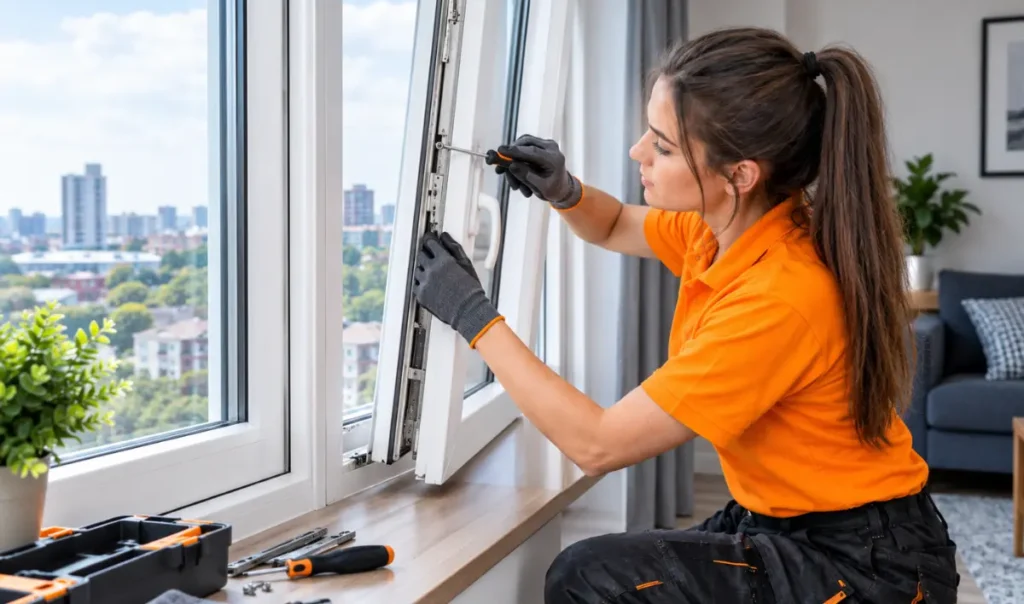
When you are ready, you can arrange a tilt and turn window check with Glaze Repair Southampton and send over your photos for a realistic guide price.