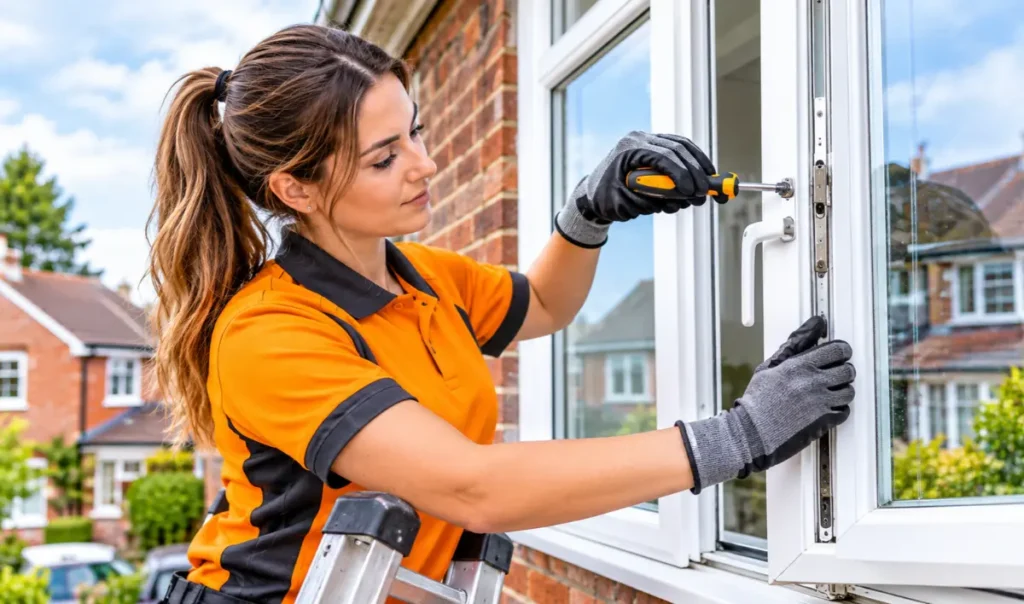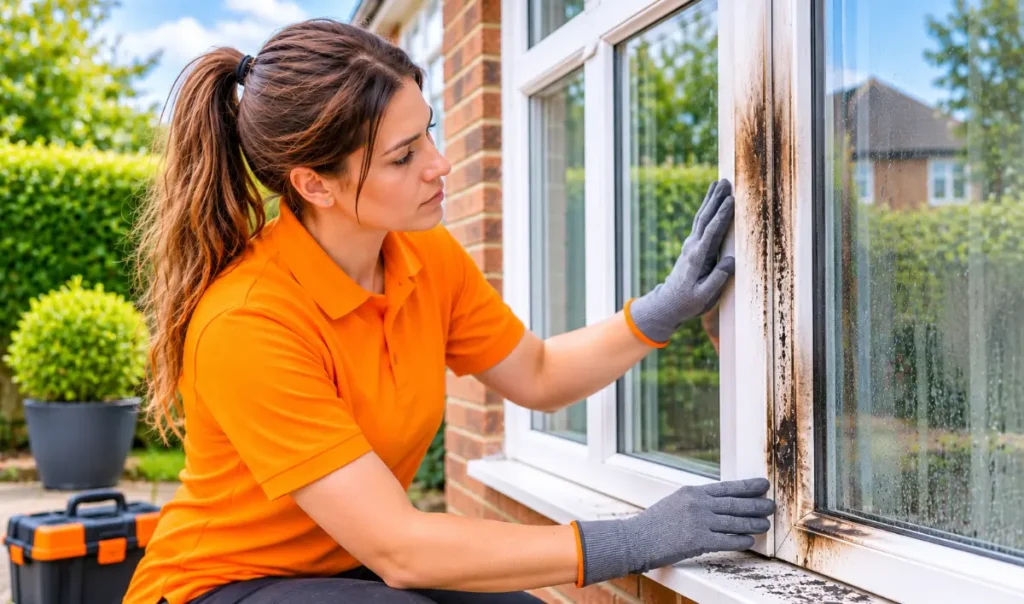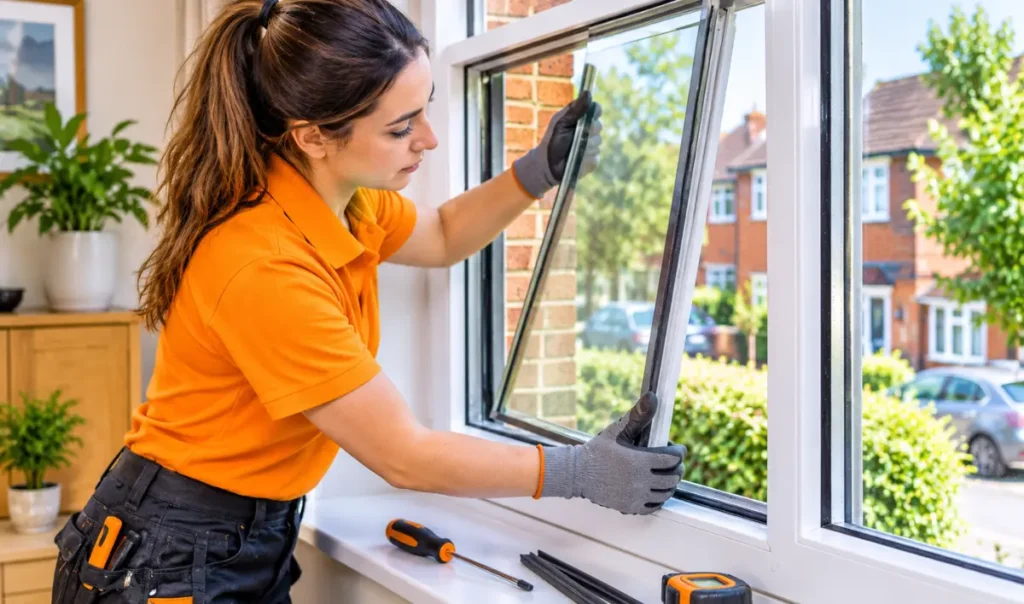

UPVC window and door repair in Winchester solves the vast majority of faults on modern replacement glazing without touching the wider question of what’s permitted on the property itself, which matters here more than almost anywhere else in the area, given how much of Winchester’s housing sits inside a conservation zone or carries a listed status. If your UPVC window won’t close, your door lock has failed, or a sealed unit has misted, repair is very often the straightforward answer, and it sidesteps a set of planning questions that only apply to full replacement.
Why repair is usually the more practical starting point in Winchester
A large share of Winchester’s housing is period property, much of it Georgian, Victorian or within a designated conservation area
Full glazing replacement on a listed or conservation property can trigger planning questions that a straightforward repair never touches
Existing UPVC units, wherever they were fitted, respond to the same repair techniques as anywhere else, locks, hinges, seals and hardware
A misted sealed unit or a failed lock is a repair job first, not automatically a reason to consider full replacement
Booking a repair is usually the fastest way back to a working window or door, without opening up a separate planning conversation
Two Different Questions That Often Get Confused
There are really two separate questions a Winchester homeowner ends up asking, and they get mixed up more often than they should. The first is “what’s wrong with my window or door, and can it be fixed.” The second is “what am I actually allowed to install if I replace it.” These have almost nothing to do with each other, and the second question only comes up once you’ve already decided a full replacement is necessary, which is far less often than people assume.
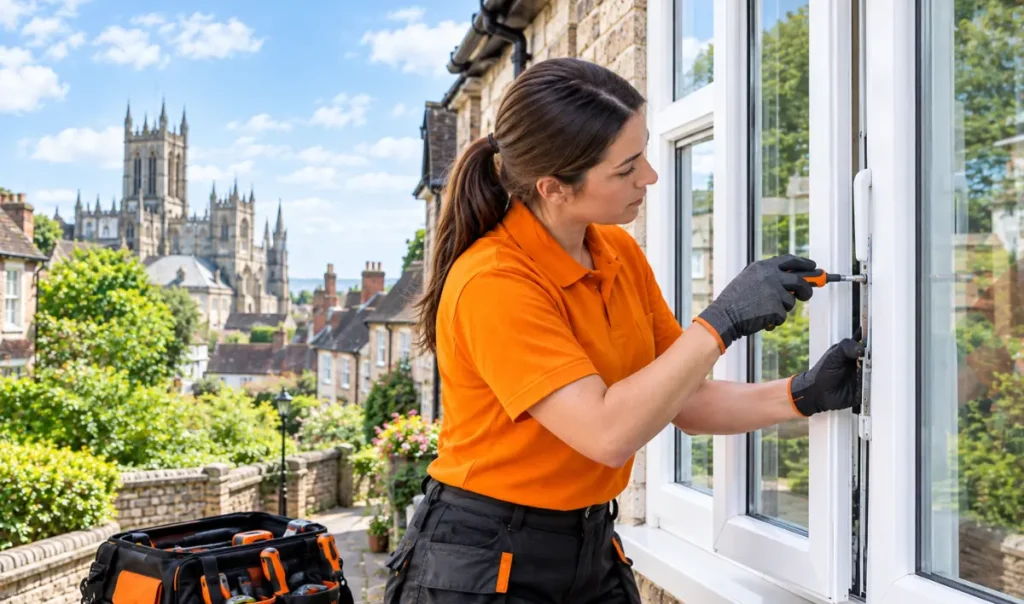
A stiff handle, a lock that won’t turn, a misted pane, a door that’s dropped slightly, none of these require any planning consideration at all, because you’re repairing what’s already there rather than changing the property’s appearance. Where Winchester genuinely differs from a newer town nearby is that the second question, the replacement and planning one, comes with far more weight attached when it does eventually arise, so it’s worth knowing which question you’re actually facing before assuming the worst.
What a Repair Actually Covers
Most of what goes wrong with a UPVC window or door falls into a small, well understood set of faults, and Winchester’s properties are no exception, whatever era the surrounding building happens to be.
A door that won’t lock properly. Usually a worn multipoint mechanism, a failed cylinder, or a door that’s settled slightly and no longer lines up with the keeps. All three are hardware fixes, not frame or planning issues.
A window that’s misted between the panes. This means the seal on the sealed unit has failed, letting moisture in. The unit itself is replaced, the surrounding frame stays exactly as it was.
A handle or hinge that’s stiff, loose or has stopped working. Straightforward hardware replacement in almost every case.
A door or window that’s difficult to open or close. Often alignment rather than anything more serious, correctable by adjusting the hinges rather than replacing anything.
Where the Conservation Question Actually Comes In
To be clear about where this stops applying: if you’re planning a full replacement rather than a repair, and your property is listed or sits in a conservation area, that’s a genuinely different conversation with different rules, and it’s worth having it properly rather than assuming either that nothing’s allowed or that anything goes. Our existing guide on secondary glazing as an alternative to full replacement goes into that specific situation in detail, including when a conservation officer might prefer a reversible option over a permanent one. Winchester City Council’s planning department is the right place to confirm what applies to a specific property before committing to any replacement work.
None of that changes anything about a repair. Fixing what’s already installed doesn’t alter the building’s appearance, so it sits entirely outside that conversation.
The Cost Question, Answered Honestly
Repair costs in Winchester follow the same pattern as anywhere else, driven by the fault itself rather than the property’s age or status. A lock or handle repair is a smaller job than a full sealed unit replacement, and a straightforward hinge adjustment costs less than either. What does occasionally add a small premium is sourcing a specific hardware match for an older UPVC installation where the original manufacturer’s parts are harder to find, though this is the exception rather than the rule for most faults.
Getting an assessment before assuming a cost is the most reliable way to know what you’re actually looking at, since a fault that sounds serious over the phone, a door that “won’t shut properly,” for example, is very often a smaller job once someone’s actually looked at it.
What We’re Set Up to Handle
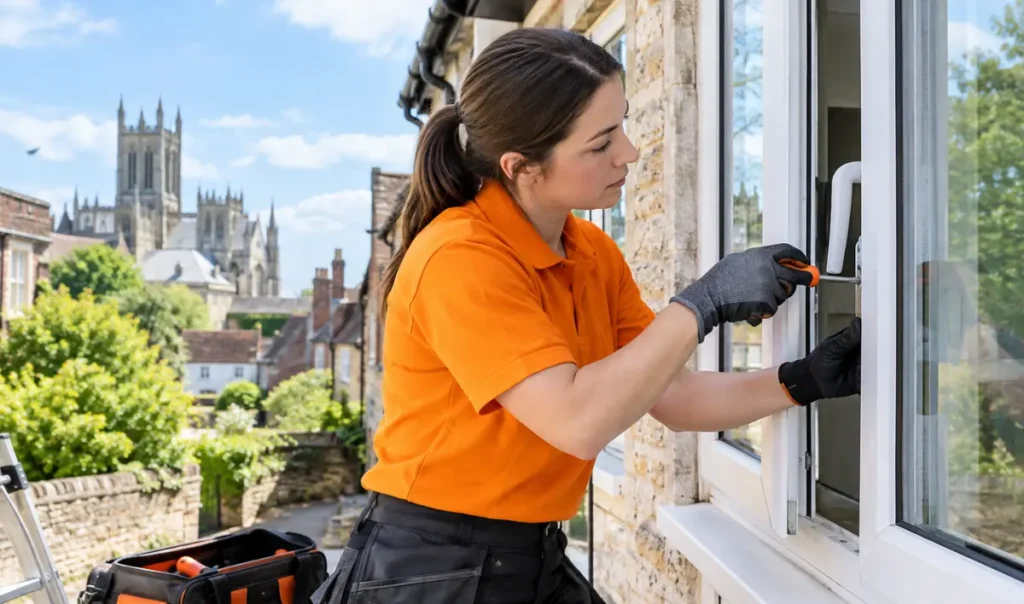
Repair work on UPVC hardware is a specific skill set, distinct from full installation, and it’s worth booking someone who does it regularly rather than treating it as a smaller version of a replacement job. Our team handles the full range of UPVC lock and hardware repairs day to day, across properties of every age and type, which means diagnosing a genuinely dropped door correctly rather than reaching for the most expensive fix first. The same applies to a misted or failed sealed unit, where correctly matching the replacement to the original specification matters more on an older installation than a newer one.
What to Check Before You Book
A few things are worth confirming before any repair visit, whatever the fault.
Whether the fault is genuinely hardware, lock, handle, hinge, or a sealed unit issue, misting, rather than something structural with the frame itself.
Roughly how long the fault has been present, since a gradually worsening issue diagnoses differently to a sudden failure.
Whether the property is listed or in a conservation area, purely so it’s on record, even though it won’t affect a straightforward repair.
What access looks like for the specific window or door, particularly on an older property where openings aren’t always standard sizes.
A Realistic Walkthrough of a Typical Repair Visit
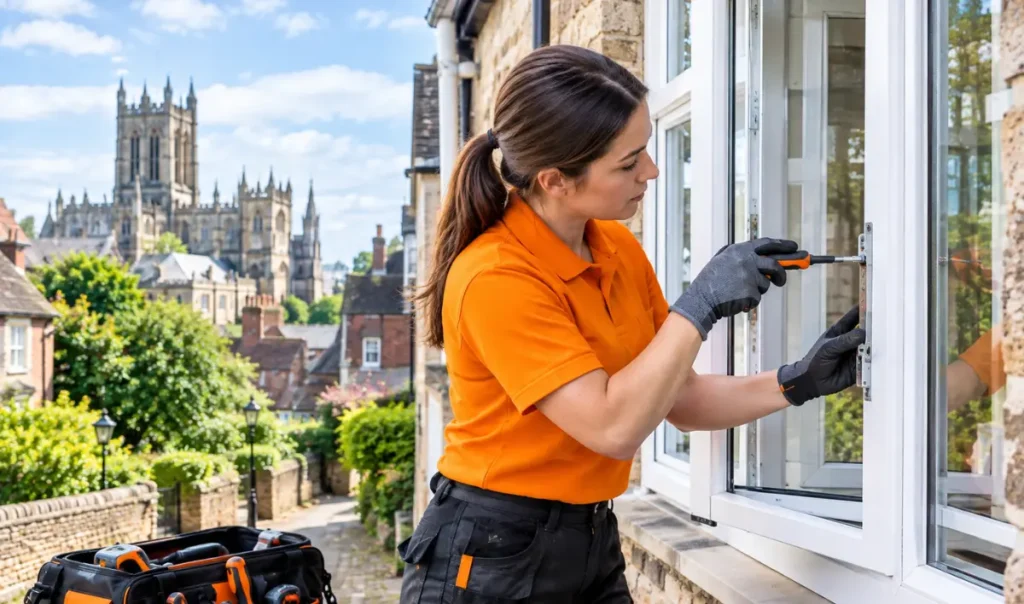
It helps to know roughly what to expect, since the uncertainty around an unfamiliar process is often what makes people put off booking in the first place. A technician arrives, looks at the actual fault rather than working from a description alone, and gives an honest assessment of what’s actually needed. For most hardware faults, that assessment and the repair itself happen in the same visit. For a sealed unit that’s misted, measurements are taken on site so the replacement matches the original specification, and in most cases that unit can be sourced and fitted within a short, clearly communicated timeframe rather than an open-ended wait.
Throughout that process, nothing about the property’s listed or conservation status comes into play, because nothing about its appearance is changing. The frame, the external profile, the colour, all of it stays exactly as it was. Only the specific failed component, the lock, the hinge, the sealed unit, is addressed.
Why This Distinction Saves Homeowners Real Time and Money
Treating every glazing fault as a potential replacement question, when it’s actually a repair question, tends to cost people twice over. It costs time, since researching planning requirements for a conservation area takes far longer than booking a straightforward repair assessment. And it can cost money too, since a full replacement quote is a different, larger figure to a repair quote, and requesting the wrong one means comparing costs that were never actually comparable in the first place.
Getting the right assessment from the start, a repair diagnosis rather than a general glazing quote, is the simplest way to avoid both of those costs.
Common Misunderstandings Worth Clearing Up
Assuming a period property automatically means full replacement is off the table entirely, when in reality most faults never reach that question because they’re repairable in the first place, is the most common one.
Assuming the opposite, that because it’s “just UPVC” the property’s listed or conservation status doesn’t matter at all, is the second, and it only becomes a problem the day someone books a full replacement without checking first.
Treating a repair quote and a replacement quote as answering the same question is the third. They’re not interchangeable, and asking specifically for a repair assessment, rather than a general glazing quote, gets you the more useful answer faster.
Frequently Asked Questions
Does my UPVC window or door need planning permission just to be repaired?
No. Repairing existing hardware, a lock, handle, hinge or sealed unit, doesn’t change the property’s external appearance, so it falls outside any conservation area or listed building consideration entirely. That question only applies to full replacement.
How do I know if my property is in a conservation area?
Winchester City Council’s planning department maintains records of conservation areas and listed buildings, and can confirm a specific property’s status. It’s worth checking before any full replacement work, though it makes no difference to a repair.
Is repairing an older UPVC installation more expensive than a newer one?
Not usually. Most faults, locks, hinges, handles, sealed units, are repaired using the same techniques and similar parts regardless of the property’s age. The occasional exception is a specific hardware match for an older or less common installation, which can add a small premium.
My window won’t close properly. Is that a repair or a replacement issue?
Almost always a repair issue, usually alignment or a hinge fault rather than anything requiring a new frame. It’s worth getting an assessment before assuming the worse, more expensive option.
Can secondary glazing be fitted without planning permission in Winchester?
Generally yes, since it sits inside the existing frame rather than altering the exterior, though listed buildings can occasionally still require notification. Our guide on secondary glazing as a conservation-friendly alternative covers this in more detail.
Final Thoughts
Most UPVC faults in Winchester, whatever the age or status of the surrounding property, come down to a repairable hardware or sealed unit issue rather than anything that touches the planning question at all. Knowing which of the two questions you’re actually facing, a repair or a full replacement, saves time and usually money too.
If something’s not working properly, get in touch with Glaze Repair Southampton and describe the fault. We’ll tell you plainly whether it’s a repair, and if it ever isn’t, we’ll say so rather than assume.