Double glazing that cracks with nothing hitting it is almost always caused by one of two things: thermal stress on ordinary float glass, or a nickel sulphide inclusion in toughened glass finally giving way. Both produce a crack that appears out of nowhere, but they look different, behave differently, and mean something different for what happens next.
Telling them apart isn’t guesswork. Each leaves its own signature in how the crack runs.
A single straight crack running in from the edge, at a right angle to it, is the classic signature of thermal stress on ordinary glass
A pane that shatters completely into small rounded pieces, rather than cracking in one line, points to toughened glass and a nickel sulphide inclusion
Thermal stress cracks are triggered by a temperature difference between the centre of the pane and its shaded edge, most often where a curtain, blind, or shadow covers part of the glass in strong sun
A nickel sulphide breakage can happen years after installation, with no trigger at all on the day it finally lets go
Neither cause is covered by most standard home insurance policies, since neither counts as sudden accidental damage from an external event
Thermal Stress The More Common Cause in Ordinary Windows
Glass expands slightly when it warms and contracts as it cools. On a normal day this happens evenly across the whole pane, and nothing comes of it. The problem starts when one part of the glass heats up faster than another part right next to it.
This happens most often when strong direct sun hits the centre of a pane while the edge stays cooler, shaded by a curtain, a blind pulled halfway, a frame overhang, or even just the edge of the glass sitting recessed slightly inside its frame. The warmer centre expands. The cooler edge resists. That mismatch creates tension exactly where the two zones meet, right at the edge of the glass, and if that tension builds past what the edge can take, it cracks.
Why the Edge Is Always Where It Starts
Glass is at its weakest right at the cut edge, where microscopic chips and imperfections from the manufacturing process sit even on a perfectly good pane. A temperature difference alone often isn’t enough to crack sound glass with a clean edge. Combine that difference with even a tiny pre-existing flaw at the edge, invisible to the eye, and that becomes the exact point where the stress concentrates and the crack begins.
This is why the same window can sit fine for years and then crack on one particularly hot, sunny day with nothing having touched it. The glass itself hasn’t changed. The combination of strong sun, a partial shadow, and a weak point at the edge simply lined up for the first time.
What a Thermal Stress Crack Actually Looks Like
A genuine thermal stress crack runs in a straight line from the edge of the pane, meeting that edge at roughly ninety degrees, before it can bend or wander further into the glass. It’s usually a single crack rather than a spider’s web of several, at least to begin with. Over the following hours or days, that original line can extend or branch slightly further, but the starting point and the initial straight run are the giveaway.
Nickel Sulphide Inclusions The Cause Unique to Toughened Glass
Toughened glass behaves completely differently, and the cause behind a spontaneous crack in toughened glass is almost always different too. During the toughening process, tiny impurities called nickel sulphide inclusions can end up trapped inside the glass, far too small to see with the naked eye and invisible to the manufacturer at the time.
These inclusions are essentially dormant when the glass is installed. Over time, sometimes taking years, the inclusion can slowly change its internal structure and expand very slightly. In toughened glass, which already holds significant internal stress as part of how it’s made stronger in the first place, that tiny expansion can be enough to trigger the entire pane to fail at once, seemingly on its own and with no external cause whatsoever.
Why It Looks So Different From an Ordinary Crack
Where a thermal stress crack is one line running from an edge, a nickel sulphide failure looks like the toughened glass doing exactly what it’s designed to do when it breaks, shattering across the whole pane into small, rounded, relatively blunt pieces rather than large sharp shards. This is the safety benefit of toughened glass working as intended, just triggered by an internal flaw instead of an impact.
The pattern often radiates outward from a single point on the pane in a shape sometimes described as a butterfly, rather than starting at the edge the way a thermal crack does. If you can see the point of origin sitting somewhere in the middle of the glass rather than at an edge, that’s a strong indicator of a nickel sulphide cause rather than thermal stress.
What to Do When You Find an Unexplained Crack
Don’t Assume It’s Safe to Leave
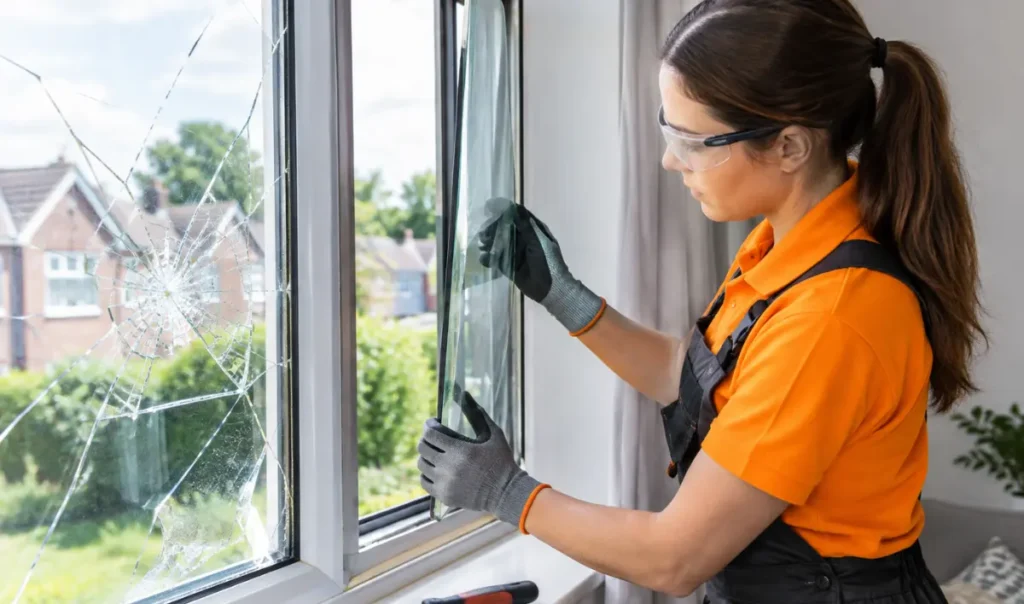
Whichever of the two causes is behind it, a cracked pane has lost its structural integrity, and that doesn’t reverse itself. A thermal stress crack that looks minor today can spread further with the next temperature swing, vibration from a slammed door nearby, or simple age. Get the cause assessed rather than watching and waiting.
Photograph the Crack Before It Changes Further
A clear photo showing where the crack starts and how it runs is genuinely useful, both for a glazier working out the cause and for any conversation you end up having with an insurer. A crack that’s already spread or shattered further by the time it’s looked at can make the original starting point much harder to identify.
Check What Was Actually Shading the Glass
If you suspect thermal stress, think back to whether a blind, curtain, or piece of furniture was partially covering the glass at the time, or whether the window had recently had something new fitted nearby that changed how the sun hit it, such as a new fence panel, an extension, or trellis casting a fresh partial shadow. This detail helps confirm the cause and, more usefully, tells you whether it’s likely to happen again to that same pane or a neighbouring one in similar sun.
Common Mistakes Homeowners Make With an Unexplained Crack
Assuming a crack with no visible impact means the glass must have been faulty from the start is a common but usually incorrect leap. Both thermal stress and nickel sulphide failures can happen in glass that was manufactured and installed correctly, since both are inherent characteristics of how glass and toughened glass behave rather than signs of a bad install.
Taping over a crack and leaving it, particularly on a sealed double glazed unit, does nothing to stop it spreading and can trap moisture at the crack line, which speeds up further deterioration of the seal around it. It’s a reasonable short term step to prevent injury from a sharp edge, never a substitute for a proper repair.
Reaching straight for an insurance claim without checking the policy first can waste time that would be better spent booking the actual repair. For general glazing insurance detail beyond this specific cause, our guide on whether home insurance covers double glazing repair in Southampton goes into what does and doesn’t typically qualify.
Frequently Asked Questions
Can a crack from thermal stress spread on its own?
Yes. Once the edge strength has been exceeded and a crack has started, it can continue extending with further temperature changes, vibration, or simple time, even without anything touching the glass again. It won’t heal or stabilise on its own.
Is toughened glass more likely to crack for no reason than ordinary glass?
Toughened glass is generally far stronger against impact and everyday stress than ordinary float glass, but it carries the specific and separate risk of a nickel sulphide inclusion, which ordinary annealed glass doesn’t have in the same way. Overall spontaneous failure in toughened glass remains uncommon, but it isn’t zero.
How long after installation can a nickel sulphide crack happen?
There’s no fixed timeframe. It can happen within the first year or not show up for well over a decade, since it depends entirely on the size and position of the specific inclusion within that particular pane, something that can’t be detected from outside the glass.
Does a thermal stress crack mean I need to replace the whole double glazed unit?
In most cases, yes, since a crack in either pane compromises the seal around the whole unit, not just the glass itself. A cracked pane inside a sealed double glazed unit isn’t something that can be replaced on its own without affecting the seal, unlike a single pane of glass fitted directly into a frame.
Will the replacement glass crack again in the same way?
If the original cause was a shadow from a fixed object like a fence, wall, or permanent piece of furniture, the same conditions can in theory affect a replacement pane too, though it’s uncommon for it to repeat. A broken window repair that identifies the actual cause first, rather than just fitting new glass, is worth having if you want to understand whether anything specific about that window makes it more exposed than the others in your home.
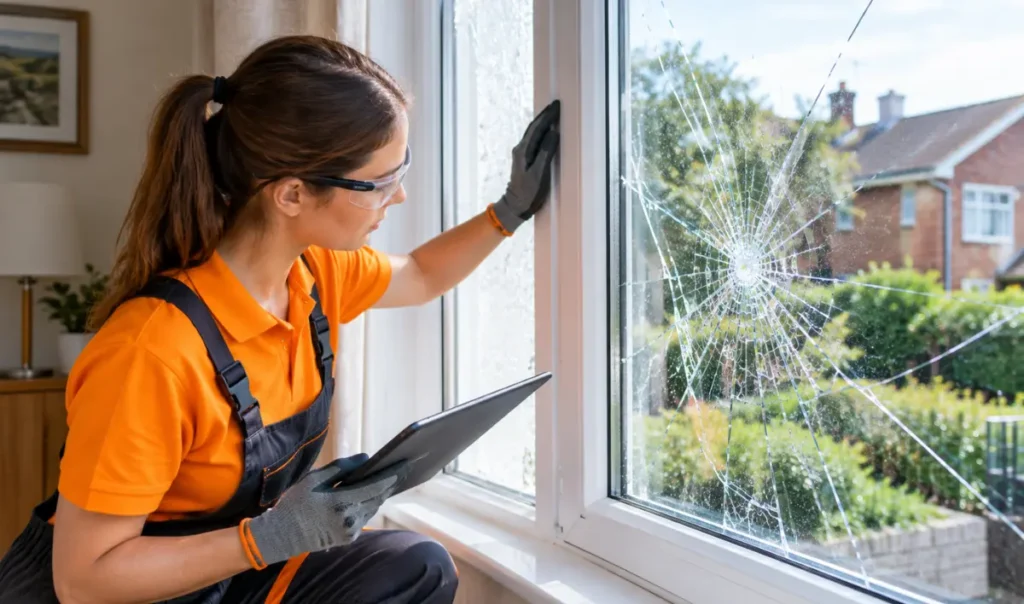
If you’ve found a crack with no obvious cause, it’s worth having someone confirm which of these two is behind it before deciding what happens next. Our broken window repair service can assess the crack pattern properly and get the right glass ordered for a lasting fix rather than a guess.