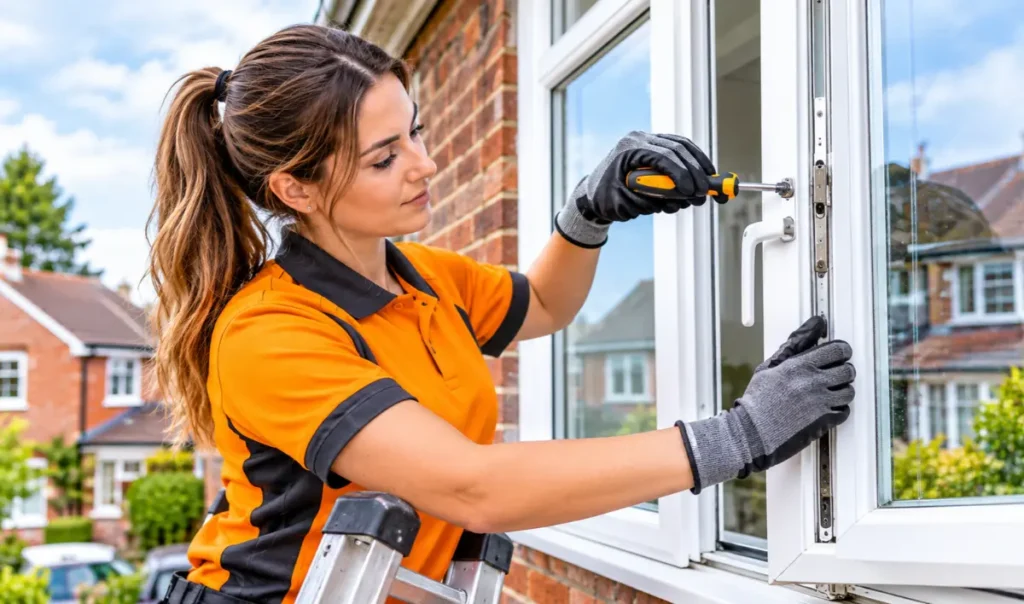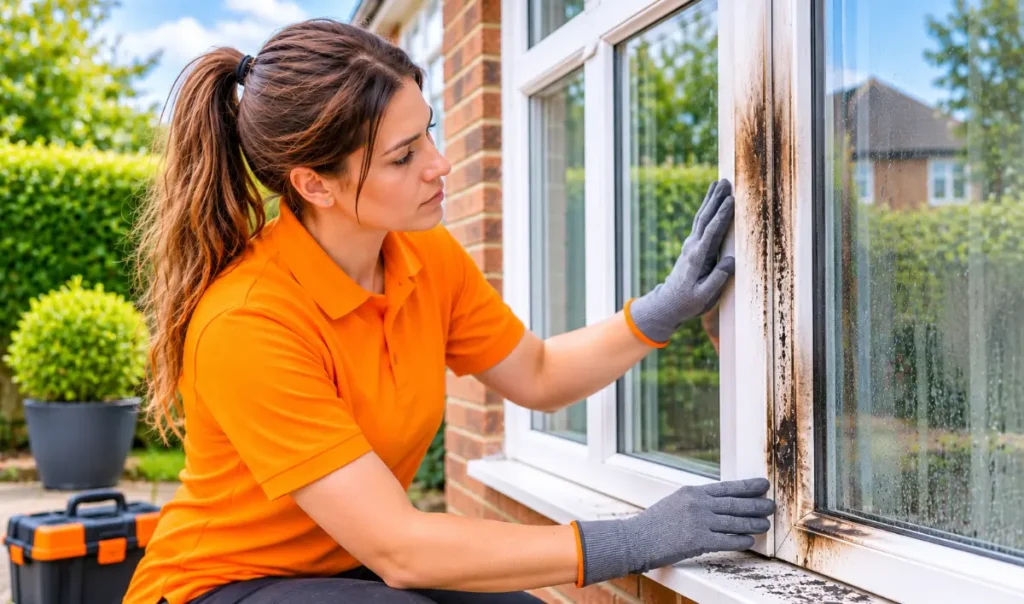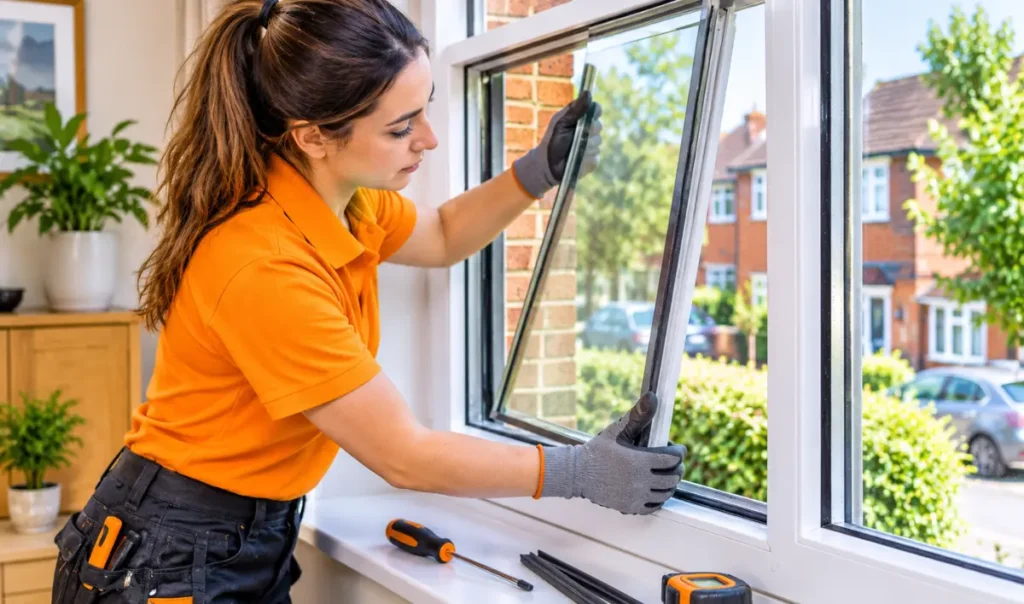

A window that won’t stay open, or one that blows shut in a breeze and slams closed on its own, is almost always down to worn or wrongly adjusted friction stays, the hinge mechanism that is supposed to hold a casement window at whatever angle you leave it. It is one of the few window faults you can often diagnose and even fix yourself with nothing more than a screwdriver.
Here is what usually causes it, and how to tell whether yours needs a quick adjustment or a full hinge replacement.
Friction stays lose grip gradually, so a window that used to hold firm can start drifting or slamming shut with no single obvious trigger
A window that blows open in the wind rather than staying put usually points to the opposite fault, hinges that have gone too loose rather than too stiff
Most friction stay hinges have an adjustment screw that can restore proper tension in a few minutes
A window that has been forced shut while stuck can bend the hinge arm, which adjustment alone won’t fix
Left alone, a loose casement window is a genuine safety risk, not just an annoyance
Why a Casement Window Stops Staying Open
Every uPVC casement window relies on friction stays, sometimes called friction hinges, fitted along the top or side of the sash. These are the metal arms that let the window swing out and then hold it at that angle through friction alone, rather than a separate catch or prop.
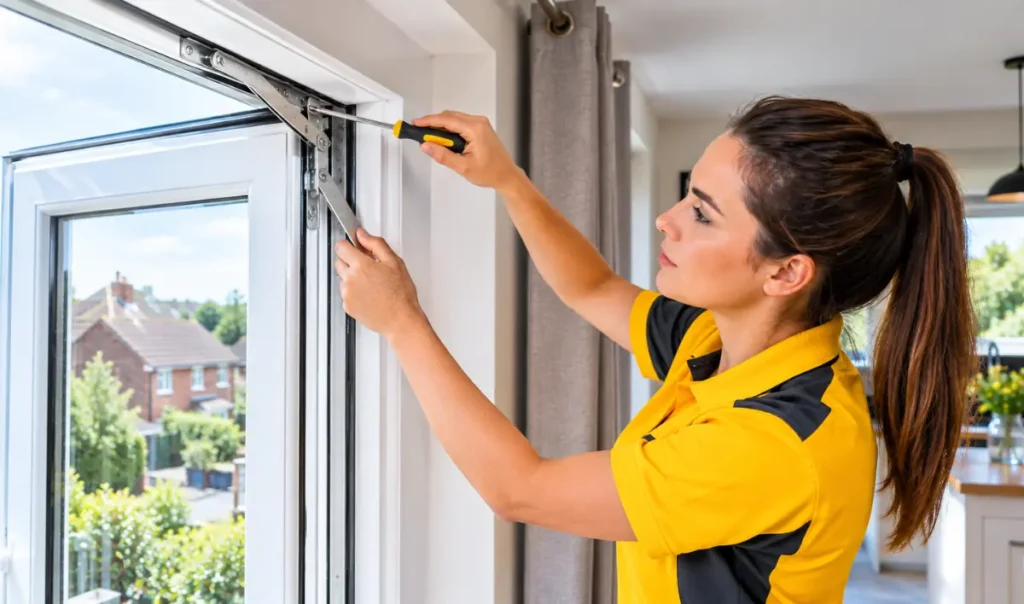
That friction comes from tension at the hinge’s pivot points, usually controlled by small screws that can be tightened or loosened. Over years of daily use, and especially after repeated exposure to sun, rain, and temperature swings, that tension wears down. The window starts drifting shut under its own weight, or in a stronger case, gets caught by a gust and swings shut hard enough to slam.
The Difference Between a Window That’s Too Stiff and One That’s Too Loose
These sound like opposite problems, and they are, but they come from the same part. A window that has gone too stiff to open, or feels like it’s fighting you the whole way, usually has hinges that have seized or tightened with grime rather than genuinely worn out. A window that swings freely and won’t hold position, or blows open and shut with the wind, has hinges that have lost their grip entirely.
Knowing which one you have changes the fix. A stiff hinge often responds to lubrication and a slight loosening of the adjustment screw. A loose one that won’t stay open needs that same screw turned the other way, tightened rather than backed off, and if turning it makes no difference at all, the hinge itself has likely worn past the point adjustment can help.
How to Adjust a Friction Stay Yourself
Most friction stay hinges are adjusted from a single small screw, usually near the pivot point closest to the window frame. With the window open, locate the screw on both the top and bottom hinge arms.
Turning the screw clockwise, generally, increases tension, which is what you want if the window is blowing open or won’t hold its position. A quarter turn on each hinge is usually enough to test, since going too far the other way just swaps one problem for its opposite, a window that’s now too stiff to move at all.
It is worth adjusting both hinges by roughly the same amount. Adjusting only one can leave the window sitting unevenly in its frame, which puts uneven strain on the good hinge and can accelerate wear on that side.
When Adjustment Alone Won’t Fix It
If turning the screw makes no noticeable difference, or the window still drifts shut within a few seconds of being propped open, the hinge has likely worn beyond what tension alone can restore. This is common on windows over ten years old, or ones that get heavy daily use, such as a kitchen window opened and closed several times a day.
A bent hinge arm is a separate issue from wear, and no amount of adjustment will correct it. This usually happens after a window has been forced shut while something was obstructing it, or after being caught hard by wind and slammed against its own frame. A visibly bent or misaligned arm needs replacing rather than adjusting, since forcing it back into shape tends to weaken the metal further.
Why a Window That Won’t Stay Open Is a Safety Issue, Not Just a Nuisance
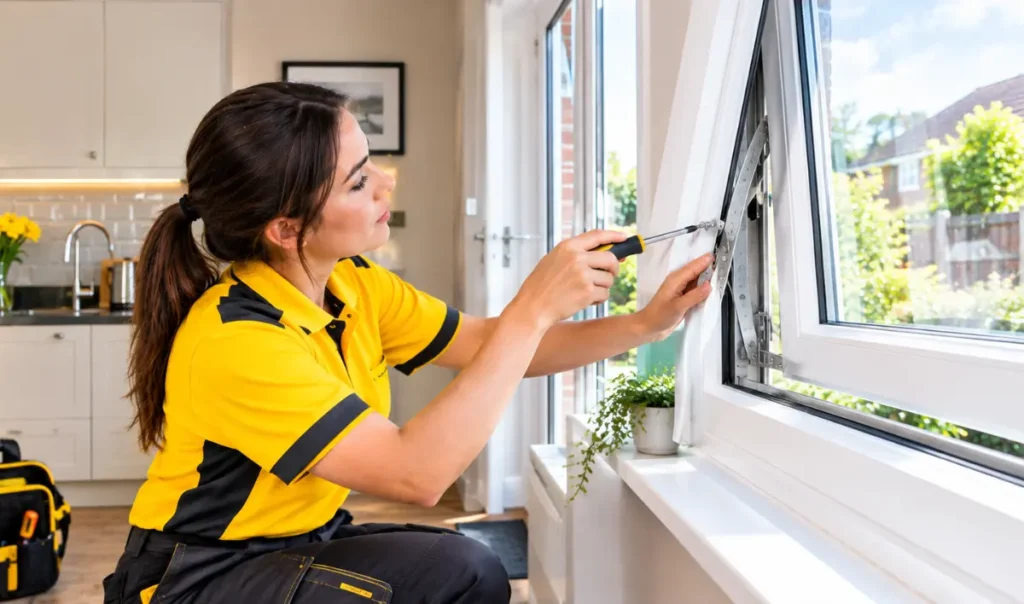
A casement window that swings shut unpredictably is a genuine hazard, particularly where children are around. The Royal Society for the Prevention of Accidents has raised trapped and crushed fingers from swinging doors and windows as a recurring pattern of injury in and around the home, and a window slamming shut on a hand resting on the frame or sill follows exactly that pattern.
It is also a security consideration. A window that won’t reliably hold itself closed, drifting or rattling in its frame rather than sitting flush, can sit slightly ajar without it being obvious from inside the room, which is not a risk worth living with long term.
Common Mistakes That Make the Problem Worse
Wedging something into the hinge or frame to hold the window open, whether that’s a bit of folded card or a stray object on the sill, treats the symptom without addressing the worn hinge underneath, and it tends to leave the window balanced in a way that makes it swing shut harder once the wedge shifts or falls out.
Spraying WD-40 or a similar general lubricant directly onto the hinge is another common fix that often backfires. It can loosen the mechanism further in the short term, which is the opposite of what a window that won’t stay open actually needs, and it attracts dust and grit that speeds up wear over time. A dry PTFE-based lubricant, used sparingly, is the safer choice if the hinge is stiff rather than loose.
Ignoring the problem because the window still technically opens and closes is the most common mistake of all. A friction stay that has gone from slightly loose to completely worn doesn’t happen overnight, but it also doesn’t reverse itself, and the window that’s mildly annoying today tends to become the one that won’t hold open at all within another year or two of regular use.
Frequently Asked Questions
Why does my window only blow shut when it’s windy?
A hinge with slightly reduced tension can still hold the window’s own weight on a still day, but loses out against a gust pushing against the full surface of an open pane. This is usually an early sign the friction stay needs adjusting before it gets bad enough to happen on calm days too.
Can I replace a friction stay hinge myself?
Adjusting the tension screw is a straightforward DIY job. Replacing the hinge itself involves matching the exact stack height and track length to the original, since uPVC window hinges come in several sizes and getting it wrong can leave gaps at the corner of the frame or a window that won’t sit flush when closed.
Is a window that won’t stay open covered under a standard guarantee?
This depends on the age of the installation and whether the fault is genuine hardware failure rather than accidental damage. Hinge wear from years of normal use often falls outside a guarantee’s original scope, in the same way ordinary lock wear does, though it’s always worth checking your paperwork before assuming it isn’t covered.
Does a loose hinge also cause draughts?
Yes, and it’s often the first sign something’s wrong before the window starts visibly failing to stay open. A casement that no longer sits perfectly flush against its seal, even by a small margin, lets air through in exactly the way a draughty uPVC window does, so a sudden draught from a window that used to seal well is worth investigating as a hinge issue before assuming the seal itself has failed.
How much does it cost to fix a window that won’t stay open?
A simple tension adjustment is often a low cost callout, sometimes resolved within the same visit. A full hinge replacement costs more, largely driven by the hinge type and whether both sides need replacing to keep the window sitting evenly, and it’s worth getting an exact figure for your specific window rather than assuming based on a general estimate.
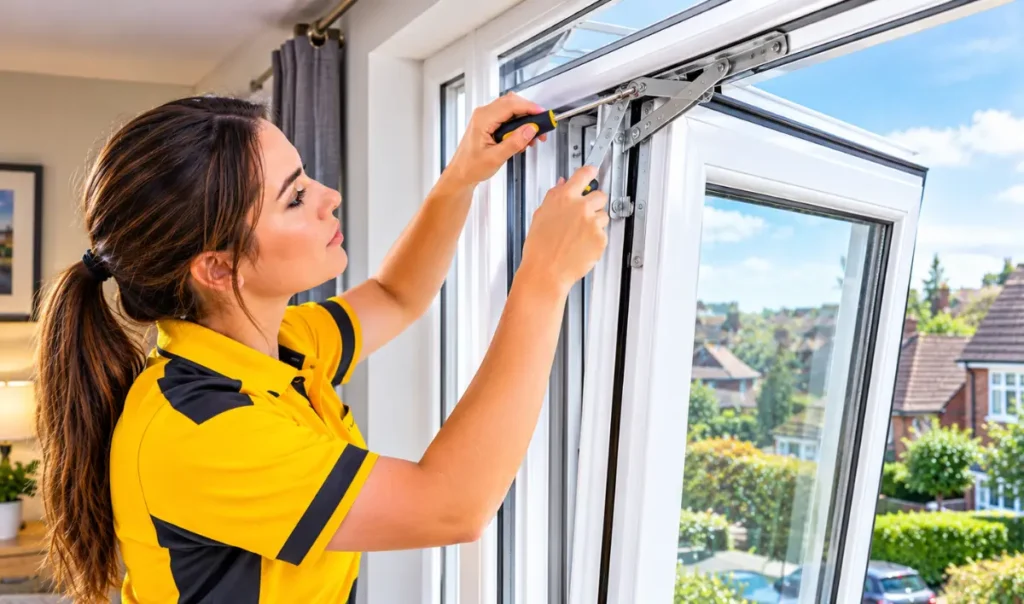
A window that keeps blowing shut, slamming, or refusing to hold position rarely fixes itself with time, and the longer worn hinges are left, the more likely they are to need full replacement rather than a simple adjustment. If yours has reached that point, our broken window repair service can assess whether it’s a quick fix or something more.