
Most smart locks and video doorbells can be retrofitted onto an existing UPVC door without replacing the door itself, provided the current hardware is compatible or gets swapped for a matching multipoint version first. The door does not need to be new. What matters is the lock mechanism already fitted, the depth of the door slab, and whether the frame has enough clearance for a doorbell unit to sit flush against the outer face.
That distinction, compatible hardware versus a full door replacement, is the single biggest source of confusion homeowners run into when they start researching this upgrade, so it’s worth settling early before any product gets bought.
What This Means for Your Door
- Most UPVC doors can take a smart lock if the existing mechanism is a standard European multipoint gearbox, since retrofit smart cylinders are built to match that format.
- Video doorbells generally mount to the door frame or the surrounding brickwork rather than the door itself, so door compatibility rarely blocks a doorbell installation the way it can with a smart lock.
- Older or non-standard gearboxes, common on doors fitted some years ago, sometimes need a straightforward mechanism swap before a smart cylinder will fit properly.
- A retrofit is almost always cheaper and quicker than a full door replacement, and in the large majority of Southampton call outs, it’s the only step actually needed.
How a Smart Lock Actually Attaches to a UPVC Door
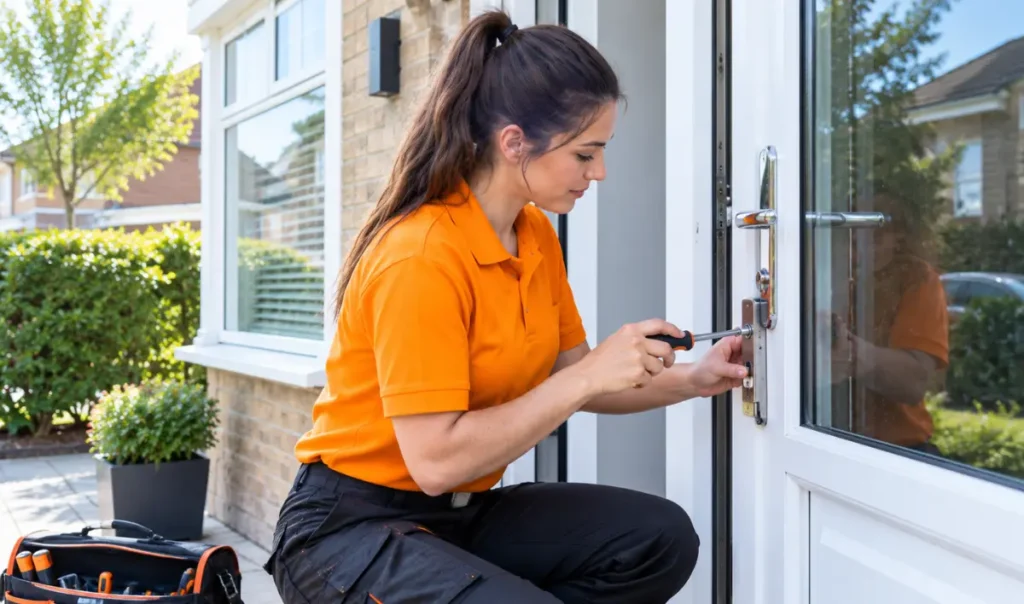
A UPVC door’s security comes from a multipoint locking mechanism, a gearbox running inside the door edge that throws hooks, bolts, or rollers into the frame at several points when the handle is lifted and the key is turned. A smart lock retrofit generally works by replacing the euro cylinder, the part the key turns, with a motorised version that can be operated electronically while still driving the same mechanical gearbox underneath.
This is different from how a smart lock works on a timber door with a simple nightlatch or deadbolt, which is part of why guidance written for American style doors often does not translate cleanly to a UK UPVC setup. The gearbox, not just the cylinder, is doing the structural locking work here, and any smart hardware fitted has to work with it rather than replace it outright.
Checking Whether Your Door Is Ready
Three things typically decide whether a straightforward cylinder swap will work or whether something more involved is needed. The cylinder format has to be a standard European profile, which covers the overwhelming majority of UPVC doors fitted across the UK. The gearbox itself needs to be in reasonable working order already, since a smart cylinder fitted to a gearbox that’s already stiff or partially failed will only make an existing fault harder to diagnose later. The door thickness and backset, the distance from the door edge to the centre of the cylinder, need to match what the chosen smart lock is designed for, since not every product on the market covers every backset measurement.
Where a door has an older or unusual gearbox that a modern smart cylinder was never designed to pair with, the fix is a mechanism swap first, which is a job we cover under our general UPVC door repair service across Southampton regardless of whether a smart lock ends up being fitted afterwards.
Fitting a Video Doorbell to a UPVC Door and Frame
Video doorbells sit in a simpler category than smart locks because most units mount externally to the frame, the brickwork beside the door, or a dedicated bracket, rather than needing to interact with the door’s internal mechanism at all. That means door compatibility questions come up far less often here than they do with smart locks.
The more common snag is power and mounting angle rather than compatibility. Battery powered doorbells avoid any wiring questions entirely but need regular charging, while wired units generally tap into an existing doorbell circuit if one is already there or need a new low voltage cable run if it isn’t. On UPVC porches and frames without much flat surface to mount against, angled mounting brackets solve most of the awkward positioning issues without needing to drill into the door panel itself.
What Southampton’s Housing Stock Means for This Upgrade
Southampton’s properties span a wide range of UPVC door ages, from doors fitted within the last few years through to ones original to houses built well before smart hardware existed as a category. Areas like Portswood and Shirley have a lot of older UPVC stock where the original gearbox predates the current wave of retrofit smart cylinders, which is where a mechanism check before ordering hardware genuinely pays off. Newer developments around Hedge End and Chandler’s Ford tend to run more current gearbox formats, so compatibility is rarely the blocker there, and the conversation is usually more about doorbell mounting angle on porches with limited flat brickwork.
Coastal exposure plays a role too. Salt laden air across areas closer to the water speeds up general wear on door hardware, and a gearbox that’s already working harder than it should because of corrosion is a poor candidate for a smart cylinder until that underlying issue is dealt with first. If a lock feels stiff or inconsistent before you’ve even considered adding smart hardware to it, our guide to why a UPVC lock jams or drags is worth reading before spending money on a retrofit device that will only inherit the same problem.
Common Mistakes Homeowners Make With This Upgrade
Buying a smart lock before confirming the gearbox is the most frequent and most expensive mistake, since a mismatched product either won’t fit at all or gets force fitted in a way that damages the cylinder housing. Checking compatibility first, ideally against the actual door rather than a generic spec sheet, avoids returning a product or paying twice for the same job.
Assuming a smart lock replaces the need for proper mechanical maintenance is another common misread. A smart cylinder still relies entirely on the multipoint gearbox underneath to do the actual locking, so a door with a tired or worn mechanism will still stick, drag, or fail to lock fully regardless of how modern the cylinder controlling it is. If a lock isn’t fully engaging or the door won’t latch properly, that’s a mechanical fault to resolve first, not something a smart lock upgrade fixes on its own.
Mounting a video doorbell at the wrong angle relative to the path leading to the door is a smaller but genuinely common issue, since a unit mounted flat against a recessed porch can miss the actual approach to the door entirely, capturing a narrow, mostly useless field of view.
What This Typically Involves Cost and Time Wise
A straightforward smart cylinder retrofit onto a compatible gearbox is usually a short job, often completed within the same visit once the correct cylinder length and format have been confirmed in advance. Where a mechanism swap is needed first because the existing gearbox is worn or the wrong format, that adds a separate stage to the job, though it’s still typically resolved without needing to touch the door panel or frame itself.
Video doorbell fitting tends to be quick regardless of door type, with wired installations taking a little longer than battery powered ones purely because of the cable run involved.
Security Standards Worth Knowing Before You Buy
Not every smart lock on the market meets the same physical security standard as the mechanical hardware it’s replacing, and this is worth checking before choosing a product rather than after. The UK’s Secured by Design initiative, the official police backed scheme for crime prevention through better product and building standards, publishes guidance on what genuinely tested home security hardware should meet, which is a useful reference point alongside anything a retailer’s marketing claims about a smart lock’s security rating.
Frequently Asked Questions
Do I need to replace my whole UPVC door to fit a smart lock?
No, in the large majority of cases. A smart lock retrofit generally involves swapping the euro cylinder, sometimes alongside the gearbox if it’s an older or non standard format, without touching the door panel or frame.
Will a smart lock work with my existing multipoint locking mechanism?
Usually yes, provided the cylinder format is a standard European profile and the gearbox itself is in reasonable working order. A worn or unusual gearbox may need attention first before a smart cylinder will pair with it properly.
Can a video doorbell be fitted without drilling into the UPVC door itself?
Yes, and this is actually the more common approach. Most video doorbells mount to the door frame, an angled bracket, or the surrounding wall rather than the door panel, which avoids the door compatibility questions that come up with smart locks.
Does adding a smart lock affect my UPVC door’s security rating?
It can, in either direction, depending on the product chosen. A smart cylinder tested to a recognised security standard maintains the door’s protection, while an untested or poorly rated product can genuinely weaken it, which is why checking the rating before buying matters more than most retail listings make clear.
What’s the most common reason a smart lock retrofit fails on a UPVC door?
A mismatched cylinder length or an incompatible gearbox format is by far the most common reason, usually because the product was chosen from a generic spec sheet rather than checked against the specific door.
Final Thoughts
The question homeowners usually start with, replace the door or add smart hardware to it, almost always resolves in favour of a straightforward retrofit once the gearbox and cylinder format have actually been checked. Getting a quick assessment before buying any hardware is the fastest way to avoid paying for a product that was never going to fit properly or missing a mechanical fault a smart lock would only mask rather than fix.