High level glass replacement in Southampton means fixing or replacing broken, cracked, or failed glazing that sits above ground floor reach, on shopfronts, office blocks, flats, or commercial façades, and the price and timescale are set mainly by how the glazier can safely reach the pane rather than by the size of the pane itself. A ground floor window and an identical one three stories up are not the same job once access, safety planning, and equipment hire enter the picture.
What Actually Counts as High Level Here
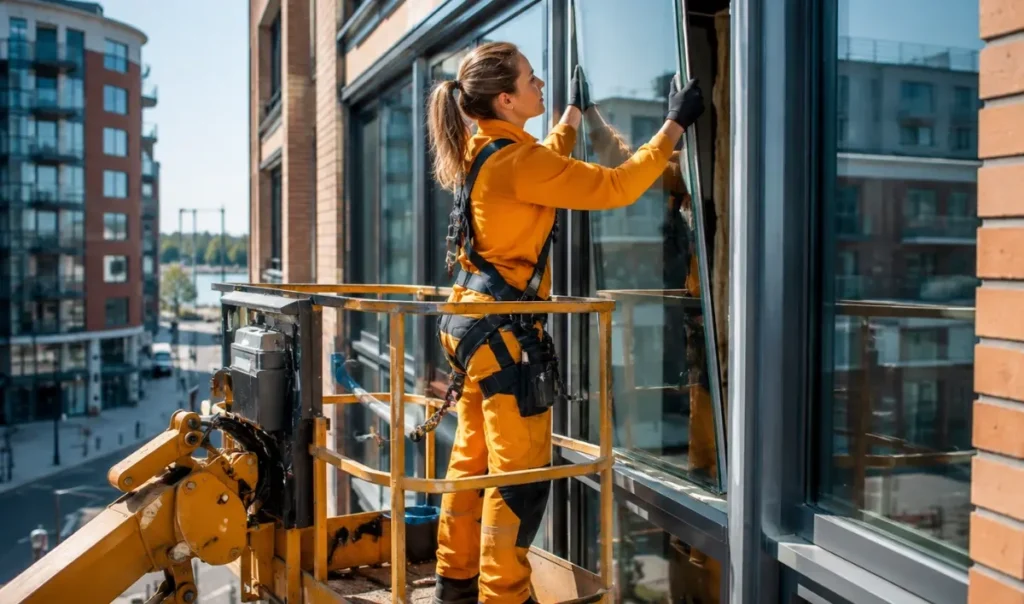
There is no fixed height where a job switches from a normal repair to a high level one. Under UK work at height law, any job where a fall could cause injury counts as work at height, whether that is one storey up or ten. In practice, for Southampton properties, “high level” usually means anything a standard extension ladder cannot safely reach: upper floor flats above shops in the city centre, office windows above ground floor around Ocean Village and the docks, shopfront fascia glazing on tall Victorian buildings, and glazed atriums or curtain walling on newer commercial developments.
The common thread is that a straightforward ladder job stops being appropriate once the fall risk, the weight of the glass, or the awkwardness of the reach makes it unsafe to handle from a standard platform.
Why Access Decides the Cost, Not the Glass
Ask two different glaziers to quote on the same broken pane at height and the biggest gap between their prices usually comes from how each plans to reach it, not from the glass itself. The main access methods used across Southampton commercial and residential work are:
Mobile elevated work platforms (MEWPs), often called cherry pickers or scissor lifts, which are hired in and set up on site. These work well where there’s ground space to position the platform, such as a shopfront on a wider street or a building with rear yard access.
Scaffold towers, still common where the job will take more than a day or where multiple panes need attention across a façade, since scaffold gives a stable working platform rather than a temporary lift.
Rope access, carried out by technicians trained to a recognised standard, used where MEWPs can’t get close enough or scaffold isn’t practical, such as glazing set back on a tight city centre frontage or a job above a busy pedestrian area that can’t be closed off for a lift.
A full breakdown of what drives glass replacement costs generally is a useful starting reference, but high level work adds equipment hire, extra labour for a banksman or second technician, and often a site survey before any quote can be finalised, all of which sit on top of the baseline glass cost.
The Safety Side Isn’t Optional Paperwork
This is the part that genuinely separates a proper high level glazing job from a corner-cut one. UK work at height law applies to any task where a person could fall and be injured, with no minimum height threshold written into it, meaning a job six feet up carries the same legal duties as one sixty feet up if there’s a real fall risk. Employers and contractors are required to avoid work at height where it’s reasonably practicable to do so, and where it can’t be avoided, to use the right equipment and a safe system of work rather than defaulting to the cheapest option available on the day.
For a Southampton building owner or facilities manager, that translates into a few practical checks before booking anyone in: ask whether the glazier plans a proper risk assessment and method statement for the job, whether the operatives are trained for the equipment they’re proposing to use, such as a PASMA card for tower scaffold or an IPAF licence for a MEWP, and whether replacement glass meets the correct safety classification for that location, since large or overhead glazing typically needs toughened or laminated glass rather than standard float glass.
None of this should add mystery to the quote. A glazier who takes access and compliance seriously will usually explain the plan in plain terms without being asked twice.
What Happens From First Call to Finished Job
Site survey first. For anything above easy ladder reach, a proper glazier will want to see the location, either from photos you send over or an in-person visit, before committing to a price. Sizes and angles from a photo alone rarely tell the whole story.
Access method agreed. Based on the survey, the glazier proposes MEWP, scaffold, or rope access, along with a rough idea of how long the equipment will be on site and whether any road or pavement space needs booking with the council.
Glass ordered to spec. Toughened or laminated glass for high level or public-facing locations is cut and prepared once measurements are confirmed, which is often the part that sets the timeline rather than the access work itself.
Installation day. Equipment goes up, the old unit comes out, the new one goes in, and sealing is checked before anything is packed away. Out-of-hours or early morning slots are common for shopfronts and offices so the work doesn’t interrupt trading.
Common Questions About High Level Glass Replacement
Does insurance cover high level glass damage the same way as ground floor?
Usually yes for the glass itself, but insurers commonly ask for photos, the access method used, and confirmation the replacement glass meets the correct safety standard before settling a claim, so it helps to use a glazier who documents the job properly from the start.
How long does a high level glazing job usually take in Southampton?
A single pane with straightforward MEWP access can often be done in a day, but scaffold-based jobs or anything needing a council permit for pavement or road space can take several days to a week once you include setup and take down time.
Can a normal domestic glazier handle upper floor flat windows?
Many can, provided the height and access are manageable with a tower scaffold or a small MEWP, but anything above a typical two storey house, or any commercial façade, generally needs a glazier who specifically works with height access equipment and trained operatives.
Why does a small crack sometimes cost more to fix at height than a much bigger ground floor pane?
Because the price is dominated by getting safely to the glass and back down again, not by the size of the crack, so a small job at height can end up costing more than a large ground floor replacement with easy ladder access.
Final Thoughts
High level glass replacement is one of those jobs where the cheapest quote is worth a second look rather than an instant yes, since access planning and safety compliance are exactly the things that get skipped to bring a price down. If you’re weighing up whether a repair is even worth it against replacing the unit outright, that’s worth working through with a glazier who can survey the access properly first, since the reach often changes the math more than the glass does. A Checkatrade listing is a reasonable starting filter for checking a contractor’s track record before you book height work.