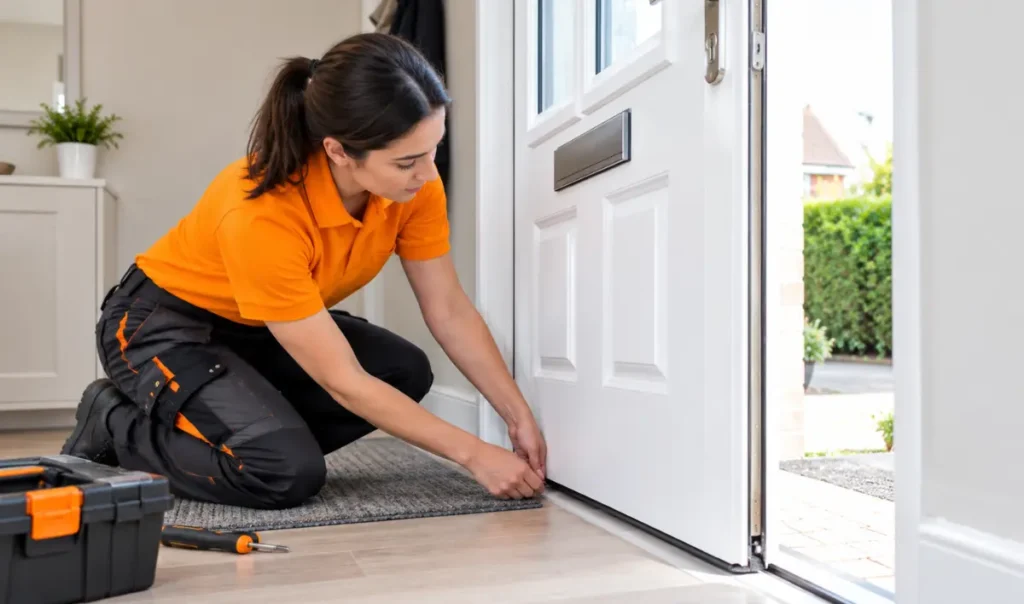
A door that drags on the frame, needs lifting to lock, or has started scraping the threshold almost always points to a hinge problem rather than a fault with the door itself. UPVC door hinge repair deals with the part of the door that carries its entire weight every single day, and in the vast majority of cases, the fix is a straightforward adjustment or part swap rather than a new door.
This guide covers why UPVC door hinges fail, how to tell a simple adjustment from a genuine replacement job, and what a fair price looks like in Southampton. If the hinge turns out to be one symptom among several rather than the whole story, our full diagnostic guide to UPVC door repair costs and fixes across the city covers the wider set of faults a door can develop at the same time.
What a UPVC Door Hinge Actually Does
A UPVC door is heavy. Between the glazed panel, the multipoint locking gear running through the frame, and the door leaf itself, most standard front and back doors weigh somewhere between 40 and 70 kilograms. All of that weight hangs from the hinge side, day after day, every time the door is opened, closed, or leaned on.
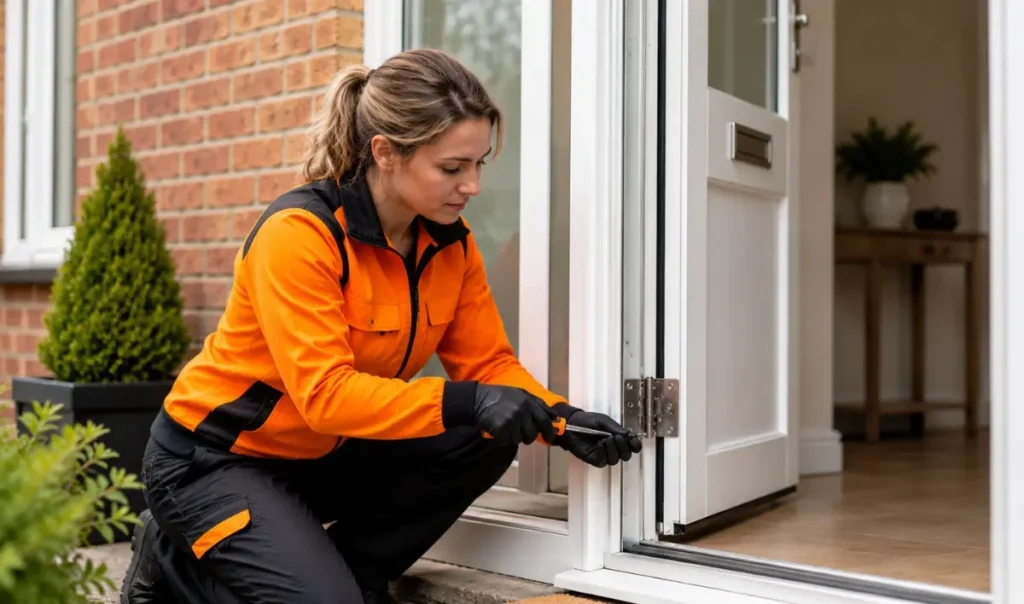
Modern UPVC doors are almost always fitted with adjustable hinges, most commonly a flag hinge design. A flag hinge allows a technician to make three separate adjustments without removing anything: raising or lowering the door vertically, shifting it side to side laterally, and adjusting how tightly the door compresses against the frame seal. Older UPVC doors sometimes use a butt hinge or a flush pivot hinge instead, both of which behave differently and are usually adjusted or replaced rather than fine tuned in place.
Knowing which type is fitted matters before any work starts, since parts and adjustment points are not interchangeable between the three designs.
Why UPVC Door Hinges Wear Faster Near the Coast
Southampton sits directly on the water, and that changes how door hardware ages compared with a property twenty miles inland. Fixing screws and hinge pins are usually a different metal to the hinge body itself, often steel set into a zinc or aluminium fitting, and wherever two dissimilar metals meet in the presence of salt laden moisture, a slow electrochemical reaction called galvanic corrosion sets in.
This doesn’t happen evenly across the door. It concentrates at the pivot points and fixing screws, the exact spots doing the most mechanical work, which is why a hinge can seize or start dropping years before the rest of the door shows any wear at all. Homes closer to the water, along stretches like Weston Shore, around Ocean Village, and through parts of Woolston that catch the wind straight off the Solent, tend to see this show up noticeably earlier than equivalent properties further inland around Bassett or Chandlers Ford.
It isn’t only salt doing the damage either. Southampton’s mix of wet winters and warm, humid summers means UPVC itself expands and contracts more across the year than it would in a drier inland climate, and that repeated movement gradually works fixing screws loose even before corrosion becomes visible.
The Most Common Hinge Faults We See
A Dropped or Sagging Door
This is the fault homeowners notice first and describe most often. The door starts catching on the frame at the top on the hinge side, or scraping the threshold at the bottom on the opposite side, because the hinge has allowed the whole panel to sink slightly out of square. It is almost always an adjustment job rather than a replacement, provided it’s caught before the door has been forced repeatedly.
A Stiff or Seized Hinge
Where a hinge has corroded internally rather than simply loosened, the door becomes physically harder to open and close, sometimes requiring real effort partway through the swing. Forcing it through that resistance is the single most common way a stiff hinge turns into a snapped one.
A Cracked or Snapped Hinge Arm
Less common but more serious, a visible crack in the hinge arm itself usually follows a period of the door being forced against resistance, or an impact such as the door being caught by wind and slammed hard against its stops. A cracked hinge arm needs replacing rather than adjusting, since the metal has already lost its structural integrity.
Loose Fixing Screws or a Stripped Hole
Repeated flexing eventually works the screws holding a hinge to the frame loose, and once a fixing hole has stripped, simply tightening the same screw back in stops holding. Left long enough, the widening hole can allow the entire hinge to shift under load.
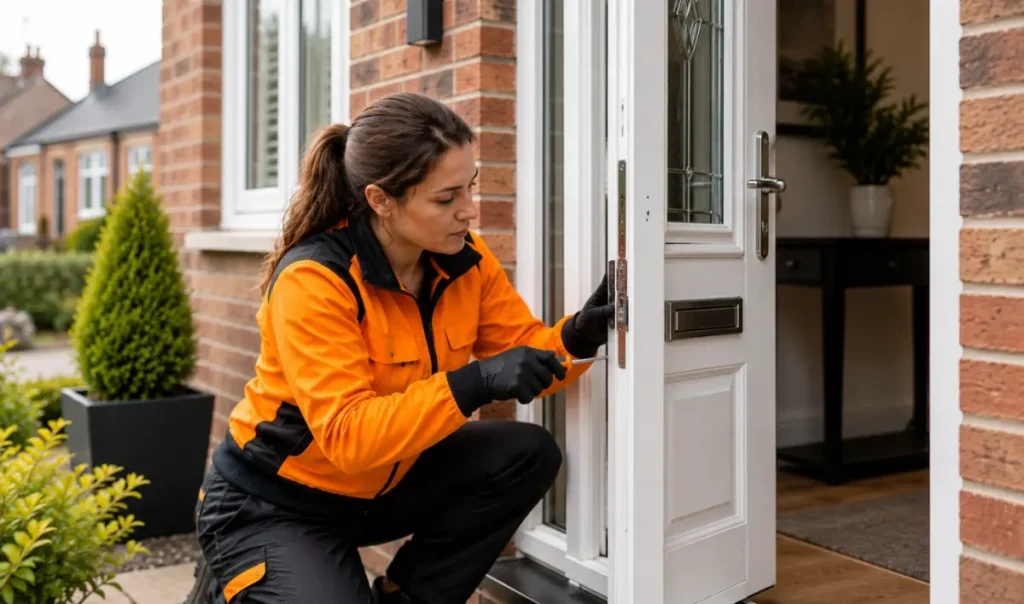
A Door Rubbing on the Frame or Threshold
A door that touches the frame or the seal along one edge, rather than sitting with an even gap all the way round, is showing the same underlying symptom as a dropped door, just at an earlier and more subtle stage. It’s worth acting on this before it develops into a full drop, since the fix at this stage is usually a five minute lateral adjustment rather than anything more involved.
If more than one of these is happening at once, it’s worth having the whole door looked at rather than booking a repair for a single symptom. You can check the full scope of window and door work our Southampton team covers, from a single hinge adjustment through to a full door replacement, before deciding what your situation actually needs.
Adjustment vs Replacement How a Glazier Decides
Most hinge faults are resolved with an adjustment, not a new part. A flag hinge’s built in vertical, lateral, and compression settings mean a technician can usually correct a dropped or rubbing door within a matter of minutes, using nothing more than an Allen key and a careful, incremental approach.
Replacement becomes the right call once the hinge itself has failed structurally rather than simply drifted out of alignment. A cracked arm, a pin that has corroded to the point of seizing completely, or a fixing point so stripped that no amount of adjustment holds the door square are all signs that adjustment alone won’t fix the underlying problem.
There’s a middle case worth knowing about too. Sometimes a hinge that looks fine is compensating for a different fault entirely, such as a frame that has shifted slightly in the wall, or a door leaf that has warped. In that situation, adjusting or even replacing the hinge only masks the real issue temporarily, which is exactly why a proper on site assessment matters more than guessing from the symptom alone.
DIY Checks Before You Book Someone
A few checks from your own front step can help you describe the fault accurately and speed up diagnosis on the day, even if the fix itself is best left to a professional.
Watch exactly where the door catches as you open and close it slowly. Resistance right at the very start of the swing usually points to the top hinge, while resistance only near full closure often means the compression adjustment has drifted rather than the door having dropped.
Run a finger along each hinge pin and fixing screw and feel for a rough, gritty texture, an early sign of corrosion starting at the pivot. Check whether the gap between the door and frame is even all the way round, or noticeably wider at one corner, since an uneven gap is usually the clearest visual sign of which direction the door has moved.
What’s worth avoiding entirely is forcing a stiff hinge through resistance, or reaching for a household oil based lubricant, since oil attracts grit and salt laden dust rather than repelling it, which speeds up exactly the corrosion process you’re trying to stop. A dry PTFE spray is the safer option if a hinge needs anything applied before a technician can get out to look at it properly.
What UPVC Door Hinge Repair Costs in Southampton
A straightforward hinge adjustment, correcting a dropped or rubbing door using the hinge’s existing settings, typically costs between £45 and £90, since no parts are ordered in advance and the job is usually completed in a single visit.
Where a hinge has corroded or worn beyond adjustment and needs replacing outright, expect somewhere in the region of £70 to £160 per hinge, depending on how easily a matching part can be sourced for the specific door system fitted. Older or less common hinge designs sometimes take slightly longer to source, which can push the upper end of that range.
A full hinge set replacement, generally recommended where one hinge has failed and the others are of similar age and wear, tends to run from £150 to £320 for a standard three hinge door, fitted in a single appointment. Fixing a stripped screw hole on its own, without a full hinge replacement, usually costs £30 to £70.
As with most glazing work, a firm figure depends on the exact door system and hinge type fitted to your property, since manufacturers use hardware that isn’t always interchangeable between brands. A technician can confirm the specific part and price once they’ve seen the door in person.
Choosing Someone Qualified to Work on Your Hinges
Not every handyman who can tighten a screw understands the difference between a flag hinge, a butt hinge, and a flush pivot design, and using the wrong adjustment approach on the wrong hinge type can make a fault worse rather than better. It’s worth asking directly whether whoever you book has worked on your specific door brand before booking anything more than a basic tightening job.
Where a repair does turn into a full hinge or door replacement, checking that the work is carried out to current UK building standards matters. The Glass and Glazing Federation, the UK’s leading trade body for the glazing industry, is a useful reference point for what a properly specified door installation should include, particularly around security hardware and fire door compliance where relevant.
Mistakes to Avoid
Ignoring an early rubbing or catching door is the most common mistake, since what starts as a two minute adjustment can turn into a full hinge replacement if the door keeps being forced shut against increasing resistance. The second is reaching for household oil on a hinge that feels stiff, which does more harm than good near the coast for the reasons already covered above.
The third is assuming every dropped door needs a new hinge. In most cases, particularly where the fault has been noticed early, the existing hinge simply needs recalibrating rather than swapping out, and paying for a full replacement when an adjustment would have done the job is money spent unnecessarily.
If your door’s problem turns out to be locking rather than swinging freely, that’s a different mechanism entirely. Our separate breakdown of what stops a UPVC door closing properly covers gearbox and frame related causes that can look similar to a hinge fault at first glance but need a different fix.
Frequently Asked Questions
Can a UPVC door hinge be repaired or does it always need replacing?
In most cases it can be adjusted rather than replaced, since UPVC doors use flag hinges designed with built in vertical, lateral, and compression settings specifically for this purpose. Replacement is only needed once the hinge has failed structurally, such as a cracked arm or a pin corroded beyond movement.
How do I know if my door needs a hinge adjustment or a full new door?
A single hinge fault on an otherwise sound door, even a dropped or stiff one, is almost always a repair rather than a replacement, since the door leaf and frame typically outlast every moving part attached to them. Full replacement only becomes worth considering once the frame itself has warped or the door has been forced repeatedly and sustained wider damage.
Why does my UPVC door only stick in certain weather?
This is usually a combination of temperature related expansion in the door material and humidity affecting a hinge that already has some wear or early corrosion, rather than a single isolated fault. A dry lubricant treatment and a compression adjustment often resolve it without needing any parts replaced.
How much does it cost to fix a dropped UPVC door in Southampton?
A standard hinge adjustment to correct a dropped or rubbing door typically costs between £45 and £90. If the hinge itself has corroded or worn beyond adjustment and needs replacing, expect closer to £70 to £160 per hinge depending on the part required.
How often should UPVC door hinges be checked or serviced?
Checking hinges once a year, or as soon as you notice a door starting to catch or feel stiffer than usual, keeps small issues from developing into a full replacement job. Properties closer to the Southampton waterfront benefit from checking slightly more often given the faster rate of salt related wear.
Final Thoughts
A UPVC door that drags, sticks, or needs lifting to lock is rarely a sign the door has reached the end of its life. In the overwhelming majority of cases the hinge itself, not the door leaf or the frame, is doing the struggling, and a proper adjustment or targeted part swap puts it right without the cost of starting over.
Southampton’s coastal air does put extra strain on hinge hardware compared with properties further inland, but catching the early signs, a slight catch, an uneven gap, a hinge that feels gritty under a finger, keeps the fix small. If your door has started fighting you every time you use it, getting the hinge looked at now is worth far more than waiting for it to seize completely.