
A UPVC window lock repair fixes the espagnolette mechanism, handle, or keep inside a window that will not lock, feels stiff to turn, or locks in one spot but not the others, and in most cases a glazier can diagnose and fix it in under an hour without replacing the glass or the frame. Homeowners often assume a window that will not lock properly needs a full replacement, but the lock hardware sits separately from the glass and the UPVC profile, so a targeted repair is almost always the faster and cheaper route.
What a Window Lock Repair Actually Involves
UPVC windows use a locking system called an espagnolette, a metal bar running vertically inside the frame that drives multiple locking points at once when you turn the handle. That single mechanism is what makes a UPVC window feel secure compared with an older style catch, but it also means one worn or misaligned part can affect the whole window rather than just a single point.
A repair addresses the mechanism itself, the keeps it locks into, or the handle that drives it, while the glass and frame stay untouched. If your window has actually been damaged rather than just failing to lock, our guide to broken window repair costs and what happens after a call out covers that separate scenario in more depth. This piece is specifically about the locking hardware, which is a mechanical fault rather than a glazing one, and one that gets misdiagnosed more often than it should.
Signs Your UPVC Window Lock Needs Attention
The Handle Feels Stiff or Won’t Turn Fully
A handle that needs extra force, or one that stops halfway through its turn, is usually the first sign the espagnolette bar is binding somewhere along its run. Left alone, the resistance tends to get worse rather than better, since the parts inside are metal on metal and wear accelerates once they start to catch.
The Window Locks in Some Spots but Not Others
If the top or bottom locking point engages but the middle one does not, or the reverse, that points to the mechanism itself rather than the handle. This is one of the clearest signs of a genuine lock repair need, since a healthy espagnolette bar drives every point at the same time.
The Window Rattles or Feels Loose When Shut
A window that closes but still moves slightly in the frame is not sealing at every locking point, which is both a security gap and a draught source. Homeowners sometimes assume this means the frame has warped, when in most cases the actual cause is a keep or striker that has shifted or worn down.
The Key Won’t Turn in a Locking Handle
Locking window handles use a small key operated cylinder, and grit or corrosion inside that cylinder is a common reason it becomes stiff or stops turning altogether, particularly on windows facing the street or exposed to weather.
Common Causes of Window Lock Failure
A Worn Espagnolette Mechanism
The internal gearing that drives the locking points wears down gradually with years of daily use, and once the teeth inside start to slip, the handle can feel loose even while some locking points still engage. This is a like for like part swap in most cases rather than a full hardware overhaul.
A Corroded or Misaligned Keep
The keep is the small metal plate fixed to the frame that the locking point drives into, and it can shift slightly over time or corrode enough to stop gripping properly. A technician checking keep alignment before assuming the mechanism itself has failed will often save a homeowner the cost of a full espagnolette replacement.
Handle Wear and Loose Fixings
The handle itself sits on two or three screws into the sash, and repeated use loosens those fixings gradually, creating play that makes the whole mechanism feel worse than it actually is. Tightening or replacing the handle base is frequently a same visit fix.
Debris and Lack of Lubrication
Dust, old paint, and dried lubricant inside the track can slow the bar enough to feel like a mechanical failure when the real fix is a clean and re-grease. This is the cheapest possible outcome of a lock call out, and a competent glazier will always rule it out first.
Window Lock Repair Versus Door Lock Repair
Window and door locking hardware share the same espagnolette principle, but they are different parts, different failure patterns, and different jobs on the invoice. Door locks carry the added weight and daily use of a full door leaf, and typically involve the euro cylinder and multipoint gearbox rather than the simpler mechanism found in a window. For faults specific to a UPVC door rather than a window, our breakdown of UPVC lock repair faults and pricing covers that side in full, including the gearbox and cylinder issues that window locks do not usually face.
Treating the two as interchangeable is one of the more common mistakes homeowners make when searching for a fix, and it can lead to booking the wrong type of callout or being quoted for parts that were never actually needed.
What a UPVC Window Lock Repair Costs in Southampton
Straightforward jobs such as re-greasing a stiff mechanism, tightening a loose handle, or realigning a keep typically fall at the lower end of a glazier’s call out rate, since they involve no parts and only a short visit. Replacing an espagnolette bar or a handle assembly costs more, largely driven by the part itself, and prices vary depending on the window brand and how easily the existing hardware can be matched.
Southampton glaziers generally price window lock work lower than the equivalent door lock job, since the parts are smaller and the labour is quicker, but an accurate figure always depends on the specific fault. A phone description rarely tells the full story, which is why most reputable local glaziers offer a free or low cost assessment before quoting a fixed price.
Anti-Snap and Security Upgrades Worth Knowing About
Window locking hardware has improved considerably over the past decade, and older espagnolette systems can sometimes be upgraded to hardware with better resistance to forced entry during a repair visit rather than waiting for a full replacement. This is particularly worth asking about on ground floor windows or those on less visible sides of a property, where forced entry risk is naturally higher.
It is not always necessary, and a glazier assessing a genuine mechanical fault will tell you honestly whether an upgrade adds real value or simply adds cost. Asking the question at the point of repair costs nothing and occasionally uncovers a cheap, worthwhile improvement.
Why This Fault Shows Up Faster on Southampton Windows
Properties across Portswood, Bitterne, Woolston, and along the waterfront toward Weston and Netley deal with a steady mix of salt carried air and high humidity coming off Southampton Water, which speeds up corrosion inside window locking hardware compared with homes further inland in areas like Swaythling or Bassett. A mechanism that seems to be failing early is frequently just the reality of coastal exposure rather than a sign of poor original fitting.
Homes further from the water, across Shirley, Millbrook, Totton, and Hedge End, and postcodes from SO14 through SO19, still see the same faults over time, just on a slower timeline. The underlying mechanism and the fix are identical wherever the property sits in the city.
DIY Checks Versus Calling a Glazier
A light spray of silicone based lubricant into a stiff mechanism, and a visual check that screws around the handle and keeps have not worked loose, are both safe for a homeowner to try before booking anyone out. If the handle still will not turn smoothly, or the window locks unevenly across its points, that is the point to stop and call a professional rather than force the mechanism, since forcing a binding espagnolette bar can snap internal parts and turn a cheap repair into a full replacement.
Choosing Who to Call
A glazier who asks specific questions about which locking points engage and how the handle feels before quoting a price is generally more trustworthy than one offering a fixed figure over the phone. It is also worth confirming they are checked through a recognised scheme such as FENSA, the competent person scheme covering window and door compliance in England, particularly if a repair visit reveals that full replacement hardware is genuinely needed rather than a straightforward part swap.
If your window lock issue turns out to be part of a wider fault across several windows in the property, it is worth seeing the complete range of glazing repairs we cover across Southampton rather than booking separate call outs for each one.
When the Problem Isn’t the Lock at All
Not every window that feels difficult to close is actually a lock fault, and ruling out the alternatives before booking a repair can save an unnecessary callout. A sash that has dropped slightly in its frame will often bind against the keep even with a perfectly healthy mechanism, which feels identical to a worn espagnolette from the homeowner’s side but needs a different fix entirely. Warm weather swelling around the seal, particularly on older units, can also make a window feel stiffer to close without the lock itself being at fault.
The simplest way to tell the difference is to watch what happens as you turn the handle. If the handle turns smoothly and the resistance only appears as the sash meets the frame, the issue is more likely alignment than the locking hardware. If the handle itself is the part that feels stiff or catches partway through its turn, regardless of whether the window is fully closed, that points back to the mechanism. A glazier will check both in the same visit, so misdiagnosing it yourself before calling is not something to worry about, it simply helps set expectations for the visit.
What to Expect During a Repair Visit
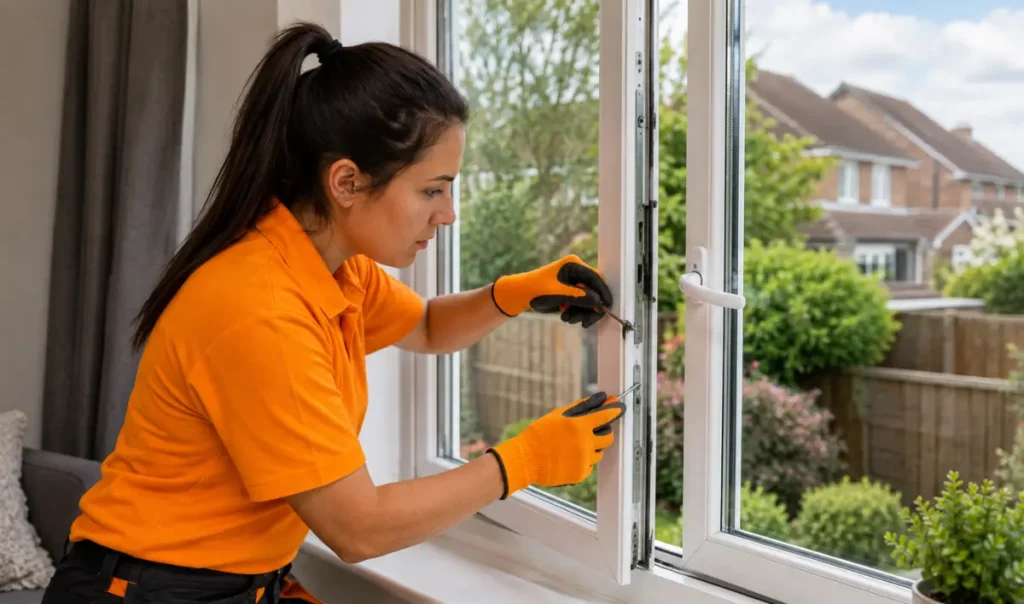
A typical callout starts with the glazier operating the handle themselves to feel exactly where the resistance or failure occurs, rather than taking a description at face value, since two faults can present almost identically from the outside. From there, the mechanism is usually accessed by removing a cover strip along the edge of the sash, which exposes the espagnolette bar and its connecting gearbox without needing to take the sash off its hinges.
Straightforward faults such as a stiff mechanism or a misaligned keep are typically resolved on the same visit. If a specific part needs replacing and is not a common stock item, most Southampton glaziers will order it and return within a few working days rather than leaving a window insecure in the meantime. Asking whether a temporary security measure is available for that gap is a reasonable question if the window in question is on an accessible ground floor.
A Note for Landlords and Rental Properties
Window lock faults are one of the more common maintenance requests that come through from tenants, and they carry a slightly different urgency than most other repairs, since a window that will not lock properly is both a security issue and, depending on the tenancy agreement, potentially a habitability concern. Diagnosing the fault correctly the first time matters more in a rental context, since a second visit for a missed cause costs both time and goodwill with the tenant.
Landlords managing several properties across Southampton often find it worthwhile to use the same glazier consistently for lock related callouts, since a technician who already knows the building’s window brand and age can usually diagnose faults faster on repeat visits than a different contractor starting from scratch each time.
Frequently Asked Questions
Can a UPVC window lock be repaired without replacing the whole window?
Yes. The locking mechanism, handle, and keeps are all separate components from the glass and frame, so a repair addresses only the faulty part rather than the window as a whole.
Why does my window handle feel stiff but the window still locks?
This usually points to a mechanism that is beginning to bind internally, often from a lack of lubrication or early wear on the gearing. It is worth having it checked before it progresses to a point where a locking point stops engaging altogether.
How long does a UPVC window lock repair take?
Most straightforward repairs, including handle replacement, keep adjustment, and mechanism lubrication, are completed within an hour on a single visit, since no glass removal is involved.
Is a window lock repair covered under a manufacturer warranty?
It depends on the age of the window and the original installer’s terms, so it is worth checking any paperwork from the original fitting before paying for a repair, particularly on windows under ten years old.
Do all UPVC windows use the same type of lock?
No. Espagnolette systems vary by manufacturer and by the age of the window, which is why matching the correct replacement part matters and why a glazier will usually confirm the exact hardware brand before ordering parts.
Final Thoughts
A window that will not lock properly is rarely a sign that the window itself has failed, and treating it as a mechanical fault rather than a reason to replace saves most Southampton homeowners both time and money. If your window lock is sticking, rattling, or locking unevenly, getting it looked at before the mechanism wears further is the more affordable path in almost every case.