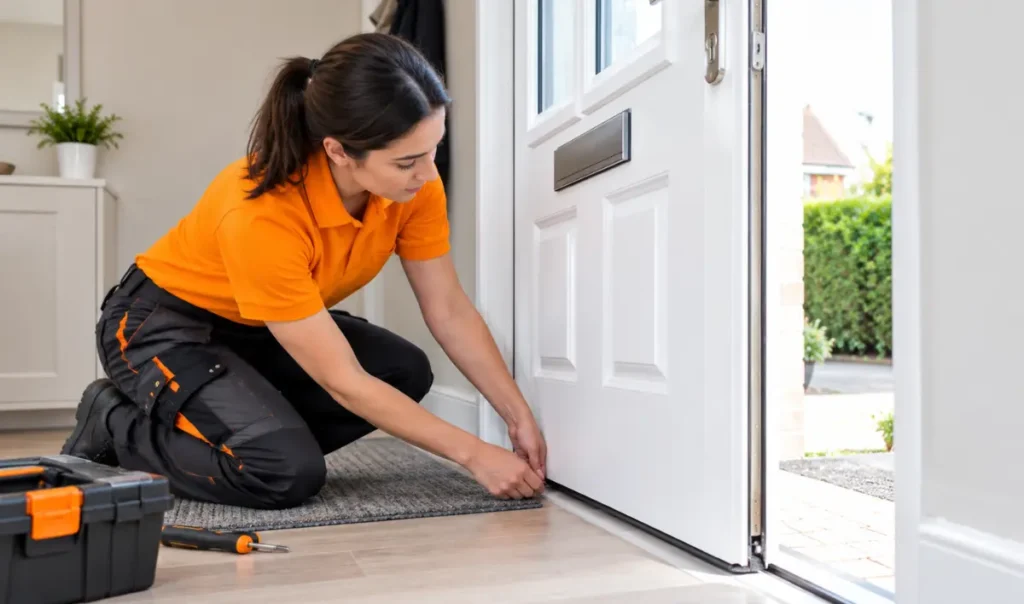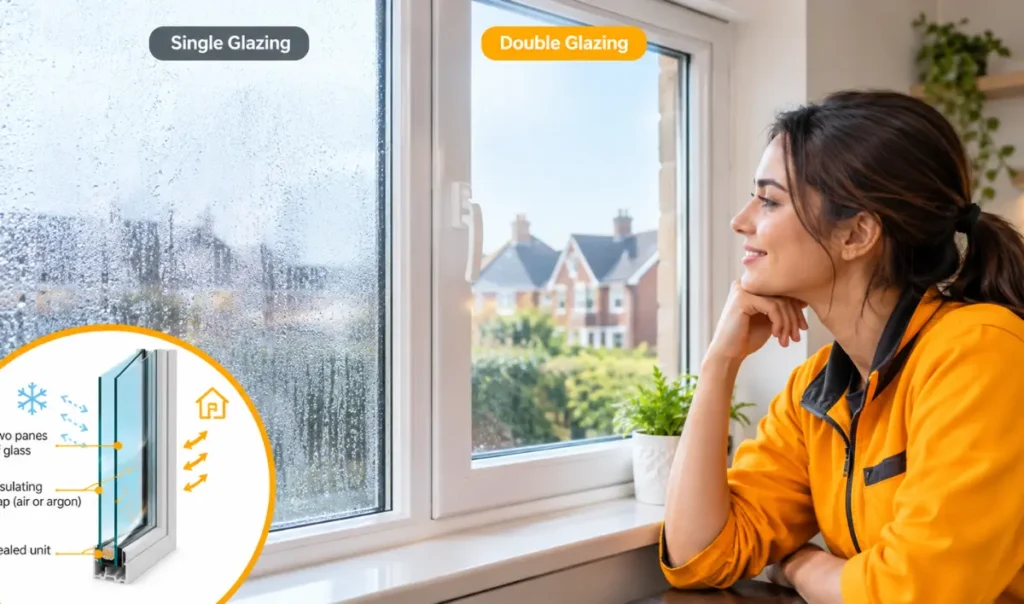
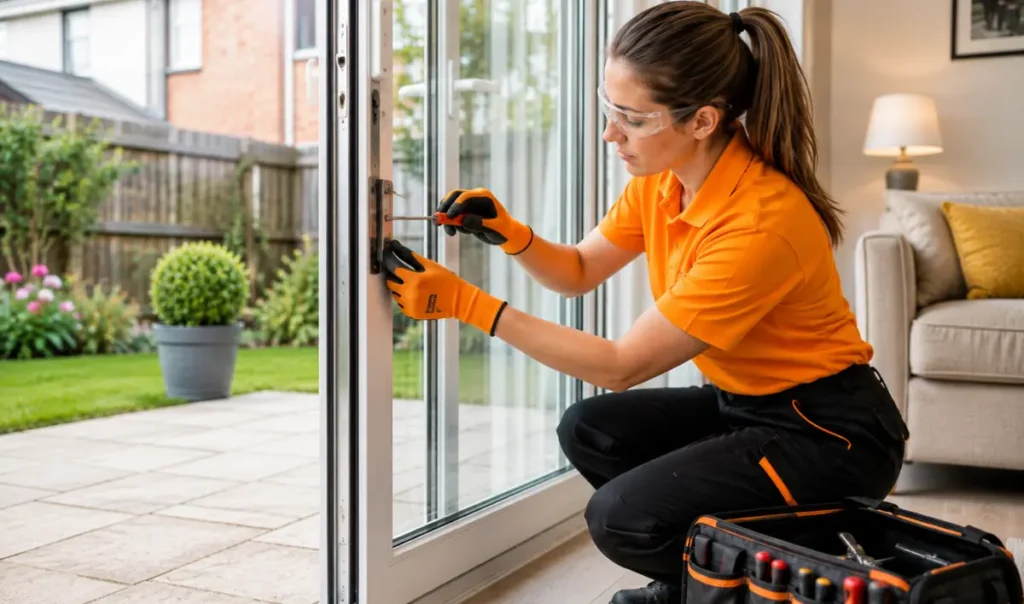
A composite door repair in Southampton fixes the specific fault on a composite, French, or patio door, whether that is a dropped hinge, a misaligned multipoint lock, a failing slider track, or a perished seal, without the cost of a full replacement. These three door types are built differently from a standard UPVC door, so they wear differently too, and a repair that works on one type will not always translate to another. This guide covers what actually goes wrong with each, what it costs to fix in Southampton, and how to tell whether a repair or a replacement is the right call.
If your door is a standard UPVC panel rather than composite, French, or patio, our wider guide to double glazed door repairs across the city covers hinges, seals, and locking hardware in more depth. This guide focuses specifically on the three door types that get grouped together but actually behave quite differently once something goes wrong.
What Makes These Three Door Types Different
Composite, French, and patio doors are all common across Southampton homes, but each is built around a different mechanism, and that changes what fails first.
A composite door is built from a solid core, usually insulating foam wrapped in a GRP or timber composite skin, rather than the hollow multi-chamber profile used in a standard UPVC door. That solid core makes it heavier and more resistant to warping, but it also means the door relies entirely on its hinges and multipoint lock to stay aligned, since there is no flexible frame material to absorb small movements the way UPVC sometimes can.
French doors are a pair of hinged doors that meet in the middle rather than a single leaf, which introduces an extra point of failure most homeowners do not think about until it goes wrong, the meeting point where the two leaves interlock. If that alignment drifts even slightly, both doors can start catching, rattling, or failing to lock at the same time even though each door individually still looks fine.
Patio doors are almost always sliding rather than hinged, which means the fault pattern is completely different again. Instead of hinges and gearboxes, the moving parts are rollers, tracks and a latching mechanism, and most patio door problems trace back to one of those three rather than anything resembling a typical door repair.
Common Composite Door Faults in Southampton Homes
Dropped or Misaligned Panel
Composite doors are noticeably heavier than UPVC or timber equivalents, and that weight puts more strain on the hinges over years of daily use. A composite door that has dropped tends to show it as a gap along the top of the frame on the hinge side or a handle that needs lifting before the multipoint lock will engage. Because the panel itself does not flex the way UPVC does, the fix is almost always a hinge adjustment rather than anything more involved.
Multipoint Lock Not Engaging Fully
The same gearbox and hook mechanism used in UPVC doors is fitted into composite doors too, and it wears the same way, gradually, through daily use. A key that turns but does not fully throw the hooks, or a handle that feels stiff partway through its travel, usually points to a worn gearbox rather than a fault with the door panel itself.
Weatherstrip and Threshold Wear
Composite doors sit on a threshold that takes constant foot traffic, and the weatherstripping along the bottom edge wears faster here than on a standard window. A draught specifically along the floor of the doorway, rather than around the sides, is usually a threshold seal issue rather than anything to do with the panel or the lock.
Common French Door Faults in Southampton Homes
Misaligned Meeting Stiles
The point where the two leaves meet, known as the meeting stile, is the part of a French door most likely to drift out of alignment first. A gap appearing between the two doors when closed, or one leaf needing to be pulled slightly to let the other latch, is a classic sign the meeting styles have shifted rather than either door individually failing.
The Inactive Leaf Not Locking at Top or Bottom
Most French door installations use one active leaf that carries the main lock and one inactive leaf that is secured separately at the top and bottom using flush bolts or shoot bolts. If these bolts are not engaging cleanly, the inactive leaf can feel secure to the eye while actually offering very little resistance, which is a security issue worth acting on quickly rather than assuming it is a minor inconvenience.
Uneven Wear Between the Two Leaves
Because one leaf typically gets opened far more often than the other, hinges and hardware on the active leaf tend to wear noticeably faster. It is common for a French door repair callout to find one leaf in good condition and the other needing attention, rather than both wearing evenly.
Common Patio Door Faults in Southampton Homes
Worn or Dislodged Rollers
A sliding patio door that has become heavy to move, drags along the bottom of the track, or occasionally jumps slightly off its path almost always comes down to worn rollers rather than a problem with the glass or the frame. Rollers carry the full weight of the door every time it opens, and years of that load eventually wears the wheel surface flat.
Debris and Damage in the Track
Grit, sand, and general outdoor debris settle into a patio door track over time, and in coastal parts of Southampton, salt can accelerate corrosion along the track itself. A door that grinds or catches at a specific point along its travel, rather than feeling uniformly stiff, often has a track obstruction or corrosion at that exact spot.
Latch Not Catching Cleanly
Patio doors typically use a hook latch rather than a multipoint gearbox, and that latch relies on the door sitting at exactly the right height and alignment within the track to catch properly. A door that slides smoothly but will not latch is usually an alignment issue rather than a fault with the latch hardware itself.
Why Southampton’s Coastal Conditions Affect These Doors Differently
Properties near the water in Woolston and Weston and along the waterfront face a steady combination of salt laden air and high humidity coming off the Solent, and each of these three door types responds to that differently. Composite doors resist the corrosion better than most, since the core and skin are not metal, but the hinges and gearbox hardware inside still corrode at the same accelerated rate as any UPVC door in the same location.
Patio doors are hit hardest by coastal exposure of the three, since the track sits low to the ground and collects both salt residue and general debris blown in off the water. A patio door in Woolston or Weston is likely to need track cleaning and roller attention noticeably sooner than the same door would need it a few miles inland in an area such as Chandlers Ford or Bassett.
French doors sit somewhere in between, since the meeting stile hardware is more exposed to weather than a standard single leaf door but less exposed than a ground level sliding track.
Repair or Replace: How to Decide for Each Door Type
A composite door with a single fault, a dropped hinge, a worn gearbox, or a failing threshold seal, is almost always worth repairing rather than replacing, since the solid core itself rarely fails and the working parts are the same hardware used across most door types. Replacement only becomes the sensible option once the panel itself has been damaged structurally, which is uncommon given how the core is built.
French doors are usually repairable too, provided the fault sits with alignment, hinges, or the locking bolts rather than the frame itself. Where a frame has genuinely warped, which is more common on older timber framed French door installations than modern UPVC or composite versions, replacement of that specific leaf or frame section is often more practical than repeated realignment.
Patio doors have the widest gap between a cheap fix and a costly one. Roller replacement and track cleaning are inexpensive and solve the vast majority of sliding door complaints. Full patio door replacement only becomes worth pricing up once the track itself has corroded beyond cleaning, or the glass unit has failed alongside the mechanical fault, since fixing one without the other rarely makes financial sense.
What a Professional Repair Involves
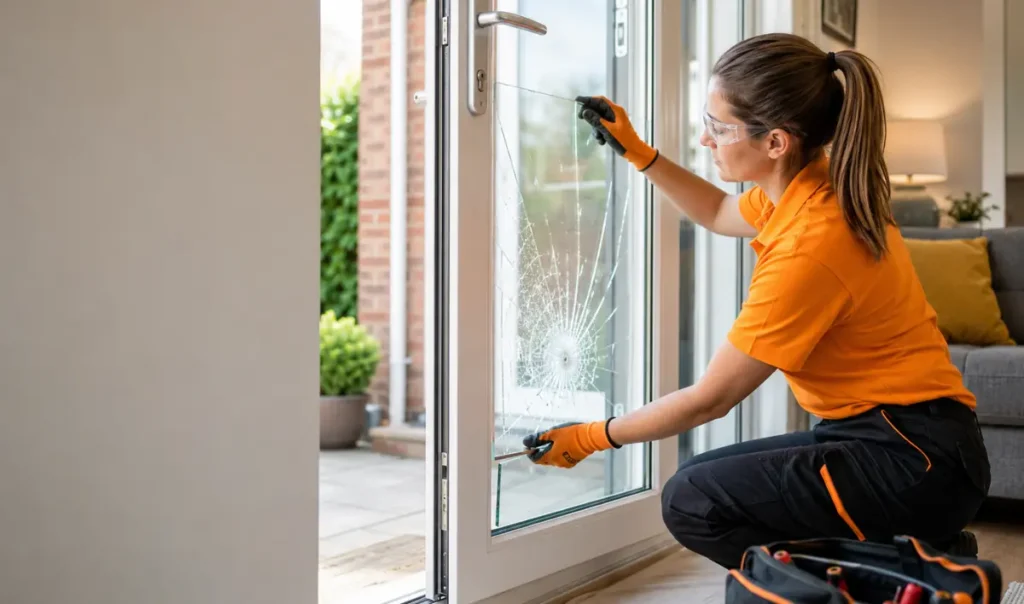
A technician starts by identifying which of the three door types is involved and testing the specific failure points relevant to that mechanism, hinges and gearbox for a composite door, meeting stile alignment for French doors, or rollers and track condition for a patio door, rather than applying a generic door inspection to all three. Since double glazed glass thickness also varies between these door types, particularly on French and patio doors where larger glazed panels are standard, this is checked before any glass related repair is ordered.
Once the fault is confirmed, the correct part is sourced to match the existing hardware, since composite door gearboxes, French door flush bolts and patio door rollers are rarely interchangeable between manufacturers. The door is tested through a full open and close cycle after the repair, and for French and patio doors specifically, both leaves or the full track length are checked together rather than just the section that was originally reported as faulty.
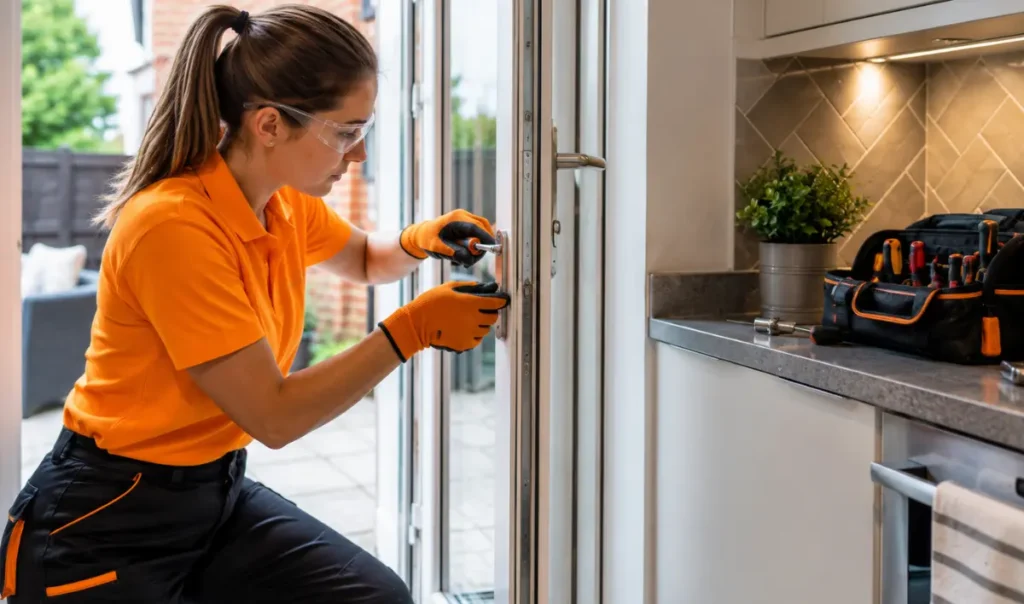
Composite, French and Patio Door Repair Cost in Southampton
Pricing depends on the door type and which component has failed, but the ranges below reflect what Southampton homeowners are typically quoted after an assessment.
Composite door hinge adjustment: roughly £55 to £130
Composite door gearbox or lock repair: roughly £70 to £190
French door meeting stile realignment: roughly £60 to £150
French door flush bolt repair or replacement: roughly £50 to £120
Patio door roller replacement: roughly £75 to £180
Patio door track cleaning and adjustment: roughly £50 to £110
A firm price is only possible once the fault has been assessed in person, since two doors showing an identical symptom can involve very different parts and labour depending on the manufacturer and how long the fault has been left. As a general guide, call outs for door repairs across Southampton typically start from around fifty five pounds, with the final figure confirmed once the fault has been identified on site.
Common Mistakes Homeowners Make With These Door Types
Assuming a heavy or dragging patio door needs replacing rather than a roller swap is one of the most common and expensive mistakes, since roller replacement is a fraction of the cost of a new door and resolves the vast majority of sliding complaints on its own.
Forcing a French door leaf that will not latch is another frequent error, since pushing or pulling harder puts uneven strain on the meeting stile and can worsen the misalignment rather than fixing it. A short hinge or bolt adjustment usually resolves the issue without any force being needed at all.
Ignoring a composite door that needs lifting to lock is the third common mistake. Left unaddressed, the extra strain on a partially engaged gearbox tends to accelerate wear on the mechanism, turning an inexpensive hinge adjustment today into a full gearbox replacement within a year or two.
Areas Across Southampton We Cover
Composite, French and patio door repairs are carried out across Southampton and the surrounding areas, including Portswood, Bitterne, Woolston, Shirley, Bassett, Swaythling, Millbrook and Weston, along with nearby towns such as Totton, Hedge End and Netley. A same day assessment is usually possible for genuine faults anywhere within the city and its immediate surrounding areas.
Frequently Asked Questions
Can a composite door be repaired instead of replaced?
Yes, in almost every case. Composite doors have a solid core that rarely fails structurally, so most faults trace back to the hinges, the gearbox, or the threshold seal, all of which can be repaired individually without touching the door panel itself.
Why does one leaf of my French doors not lock properly?
This is usually the inactive leaf, secured by flush or shoot bolts at the top and bottom rather than a handle operated lock. If these bolts are not engaging cleanly, the leaf can look closed while offering very little actual security, and it is worth having checked promptly.
Why has my patio door become hard to slide?
Worn or dislodged rollers are the most common cause, followed by debris or corrosion inside the track. Both are straightforward repairs that avoid the cost of a full patio door replacement in the vast majority of cases.
How much does patio door roller repair cost in Southampton?
Roller replacement typically costs between £75 and £180 depending on the door manufacturer and how many rollers need replacing, with a firm price confirmed once a technician has seen the door and track condition in person.
Do composite, French and patio doors need different maintenance?
Yes. Composite doors benefit most from occasional hinge and gearbox lubrication, French doors from checking meeting stile alignment, and patio doors from keeping the track clear of debris, since each door type wears at a different point in its mechanism.
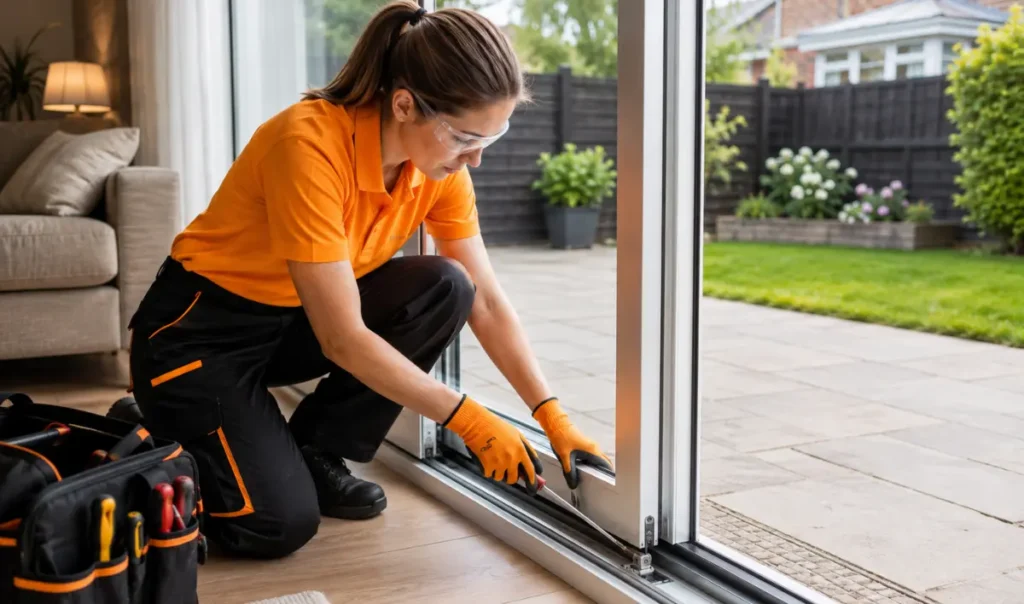
Final Thoughts
Composite, French and patio doors each fail in their own particular way, and treating them with a one size fits all door repair approach is how a simple fix sometimes gets missed or misdiagnosed. Whether it is a composite door needing a hinge adjustment, French doors drifting out of alignment at the meeting stile, or a patio door dragging on worn rollers, the right repair almost always costs a fraction of a full replacement.
If you have a composite, French, or patio door in Southampton that is sticking, dropping, or refusing to lock properly, you can browse our full range of glazing and door repair services to see how we can help or get it assessed before the fault has a chance to spread. Any replacement work carried out to current UK building regulations should always go through a FENSA registered installer, which is worth confirming if a repair is not possible and replacement becomes the better route.