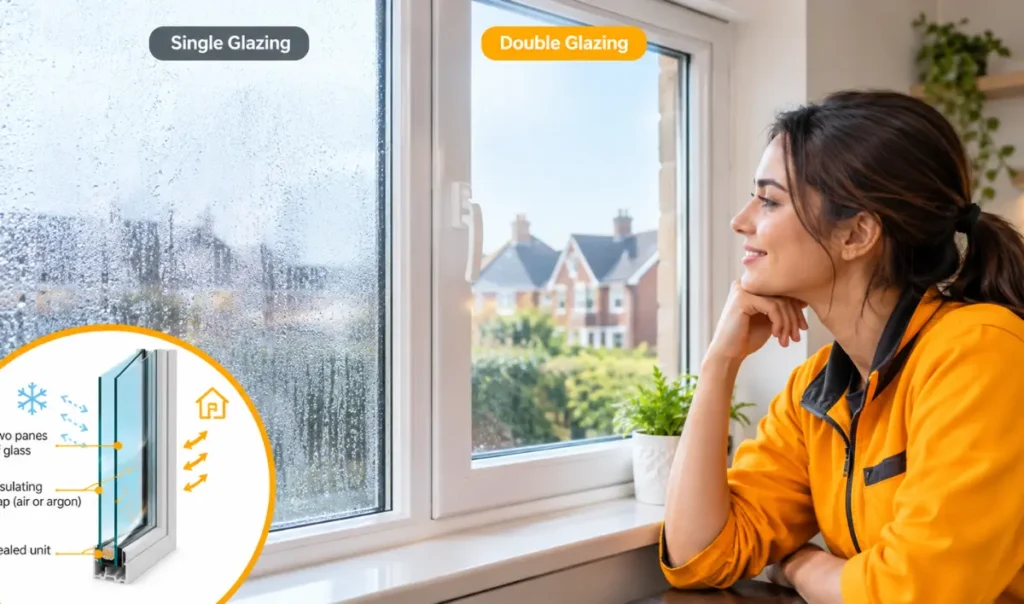
A UPVC door repair fixes the specific fault on a door, whether that is a dropped hinge, a sticking frame, a cracked panel, or a failing seal, without the cost of a full new door. Most faults trace back to one worn or misaligned part rather than the whole unit failing at once, so a targeted repair is almost always the first and cheapest option worth trying.
If you are searching for UPVC door repair Southampton because your front or back door has started sticking, dropping, or letting in draughts, you can see the full range of glazing and door services we provide across the city before deciding what your door actually needs.
What Counts as a UPVC Door Repair
UPVC door repair covers any fix carried out on the working parts of a door, the hinges, the locking gearbox, the seals, the handle, and the panel, rather than removing and replacing the whole unit. Southampton properties commonly use UPVC because of its low maintenance and decent insulation, but the moving parts inside still wear with daily use, weather exposure, and time.
A repair usually means one component is swapped or adjusted while the frame, glass, and the rest of the door stay exactly as they are. That keeps the job quicker, cheaper, and less disruptive than fitting a new door, and it is the reason most Southampton homeowners call a glazier before assuming a full replacement is needed.
It also means the door does not need to be removed from its opening in most cases, so the surrounding brickwork, plaster, and paintwork are left untouched. For a household relying on that door for daily access and security, avoiding a full removal and refit is often the deciding factor in choosing a repair.
Common UPVC Door Problems in Southampton Homes
Most call outs for UPVC door repair in Southampton fall into a small number of recurring faults. Knowing which one matches your door helps set expectations before a technician even arrives.
Sagging or Dropped Door
A door that scrapes the floor, needs lifting to close, or sits slightly crooked in its frame has usually dropped on its hinges. UPVC doors are heavy, and the hinges that carry that weight can loosen or wear unevenly over years of daily opening and closing.
In most cases the fix is a hinge adjustment rather than a replacement. A technician loosens the hinge screws, repositions the door within the frame, and retightens everything so it hangs square again. It is a quick job when caught early, but a door left dragging on the floor for months can wear the frame itself, which turns a simple adjustment into a bigger repair.
Sticking or Hard to Close Door
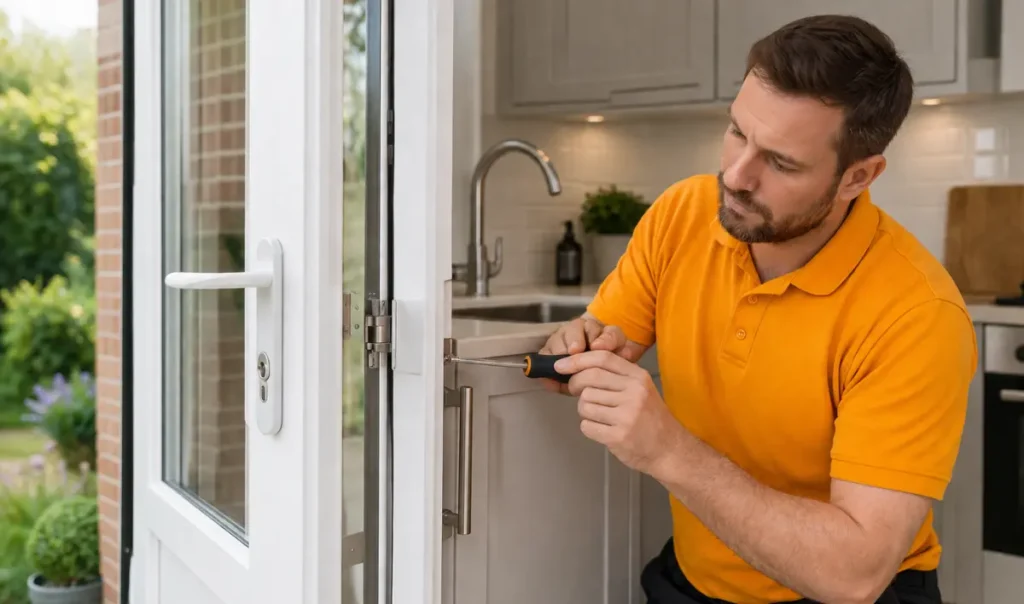
A door that catches on the frame or needs a shoulder to shut properly is often out of alignment rather than damaged. This can come from a dropped hinge, a swollen frame after wet weather, or a locking mechanism that is not lining up with the keep in the frame.
Forcing a sticking door tends to make things worse, since it puts extra strain on the gearbox and the frame itself. A short adjustment to the hinges or the keeps usually solves it, and it is worth having looked at before the door stops closing altogether.
Cracked or Damaged Door Panels
Impact damage, old age, or a poor original fit can leave a UPVC door panel cracked, warped, or dented. Unlike misted glass, this is not something that clears up on its own or can be safely ignored, since a compromised panel affects both security and insulation.
Where the frame is otherwise sound, a damaged panel can usually be replaced on its own rather than swapping out the whole door. This keeps costs down and avoids disturbing the surrounding brickwork, which is often the more disruptive part of a full door replacement.
Worn Weather Seals and Draughts
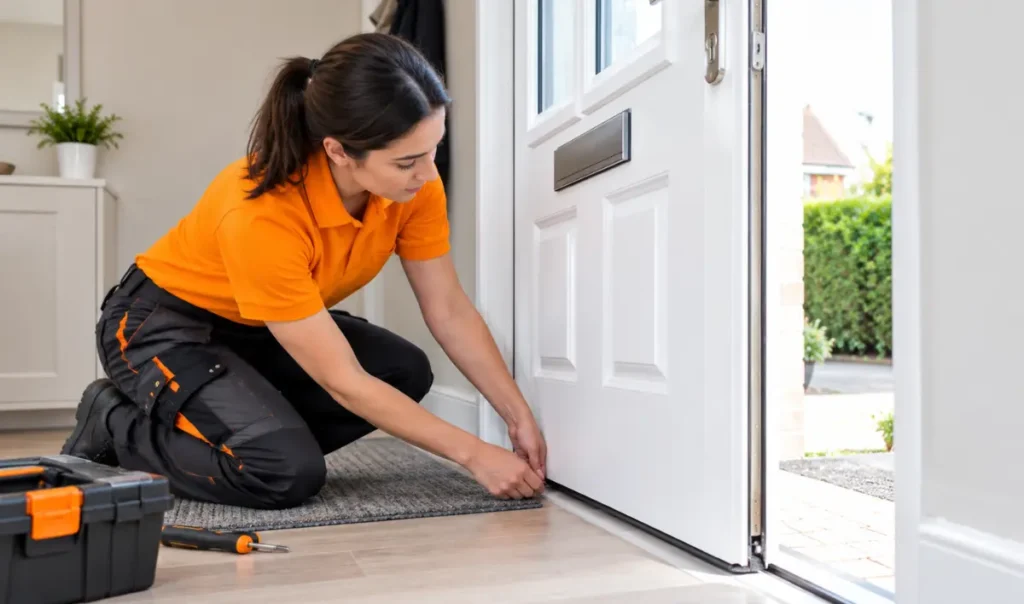
Cold air creeping in around the edges of a closed UPVC door is almost always down to a perished seal rather than a fault with the glass itself. Rubber and silicone seals harden and shrink over years of exposure to sun, rain, and temperature swings, and once they lose their flexibility they stop compressing properly against the frame.
Replacing the seal is a straightforward fix that restores the airtight fit without touching the door panel or the frame. Left unaddressed, a failed seal drives up heating costs and lets damp air settle around the door reveal, which can affect the plaster and paintwork nearby.
Loose or Misaligned Hinges
Hinges carry the full weight of a UPVC door every time it opens and closes, so they are one of the first parts to show wear. A hinge that has loosened slightly can cause the door to swing unevenly, catch on the frame, or feel heavier to open than it should.
Tightening or replacing a worn hinge is usually a fast repair, and doing it before the door starts dragging on the floor avoids the frame damage that comes with prolonged misalignment. It remains one of the more affordable fixes available for a UPVC door.
Why UPVC Doors Wear Differently Through the Seasons
UPVC expands slightly in warm weather and contracts again once temperatures drop, and that small seasonal movement is often behind doors that only stick during summer or only feel loose in winter. A door that closes fine in April can bind against the frame by August simply because the material has expanded with the heat.
Over several years, this repeated expansion and contraction can gradually shift hinge screws and loosen the fixings holding the frame square, even on a well fitted door. It is a slower, less obvious cause of wear than an accident or heavy daily use, which is why some doors develop faults gradually rather than all at once.
Southampton’s mix of warm summers and damp, mild winters keeps this cycle fairly consistent year on year compared with parts of the country that see harsher frosts. It is worth having hinges and alignment checked occasionally even if the door has not caused an obvious problem yet, since small seasonal shifts are far easier to correct early than after they compound over several years.
Repair or Replace: How to Decide
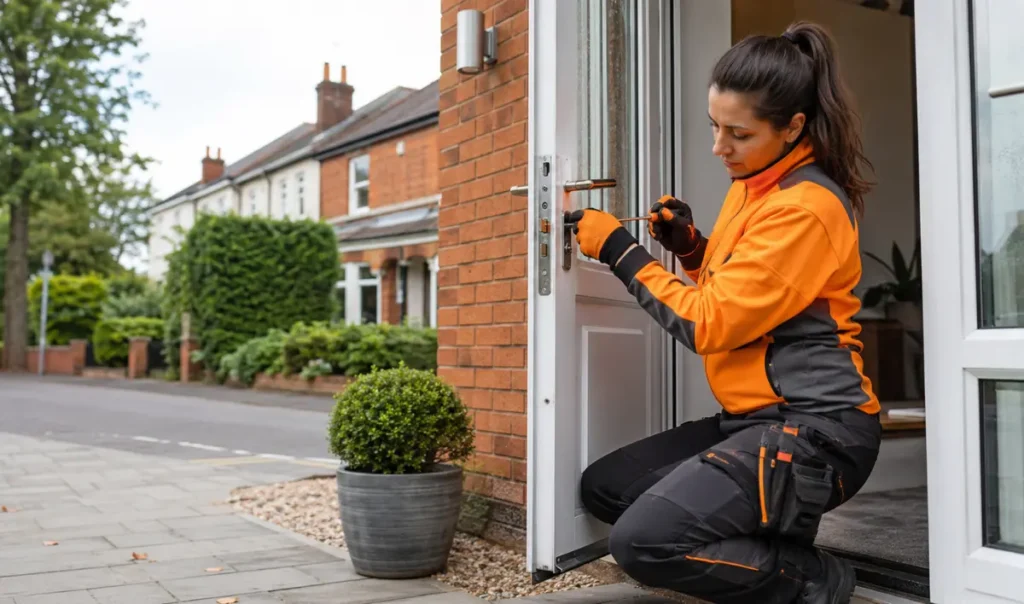
Most single faults, a dropped hinge, a stiff lock, a perished seal, are worth repairing rather than replacing, since the rest of the door is unaffected and the cost is a fraction of a new unit.
A professional UPVC door repair service addresses the specific worn part while leaving the panel, glass, and frame exactly as they are, which is why it remains the starting point for most faults we see across Southampton.
Replacement becomes the more sensible option when several faults appear together, when the frame itself has warped or cracked, or when the door is old enough that matching parts are becoming hard to source. A door that has been patched more than once in quick succession is often signalling that it is close to the end of its practical lifespan.
The clearest way to decide is an on site assessment. A technician can usually tell within a few minutes whether a fault sits with one component or whether the door as a whole is working against itself, and that assessment costs far less than guessing wrong and paying twice.
What a Professional UPVC Door Repair Involves
A technician will start by testing the door through a full open and close cycle, checking the hinges, the locking points, and the frame alignment together, since one symptom can point to more than one underlying cause. Where the fault is not obvious straight away, this diagnostic step is what prevents unnecessary parts being replaced.
Once the fault is confirmed, the correct part, whether that is a hinge, a seal, a keep, or a panel, is sourced to match the existing door, since UPVC hardware varies between manufacturers and does not always fit universally. The old component is removed, the replacement fitted, and the door is tested again under normal use before the job is signed off.
Most single component repairs are finished within an hour or two, and the surrounding frame, brickwork, and plaster are left completely undisturbed. There is no need to vacate the property or plan around extensive building work, which is one of the main advantages a repair has over a full replacement.
UPVC Door Repair Cost in Southampton
Pricing depends on which part has failed and how accessible it is, but most single fault repairs, a hinge adjustment, a seal replacement, or a keep realignment, sit at the lower end of the cost scale compared with a new door. More involved jobs, such as a panel replacement or a combined gearbox and hinge repair, cost more but are still generally cheaper than fitting a full replacement unit.
A firm price is only possible after the fault has been assessed in person, since two doors with the same symptom can have different root causes and different parts involved. Getting an accurate quote before work begins, rather than a rough estimate over the phone, is the best way to avoid surprises once the job is underway.
As a general guide, Southampton glazing and door repair call outs typically start from around fifty five pounds, with the final figure confirmed once the fault has been identified on site. Homeowners comparing quotes should ask exactly which parts are included, since a like for like hinge or seal swap is a very different job from a full gearbox and keep replacement, even though both can be loosely described as a door repair.
Common Mistakes Homeowners Make With a Sticking or Faulty Door
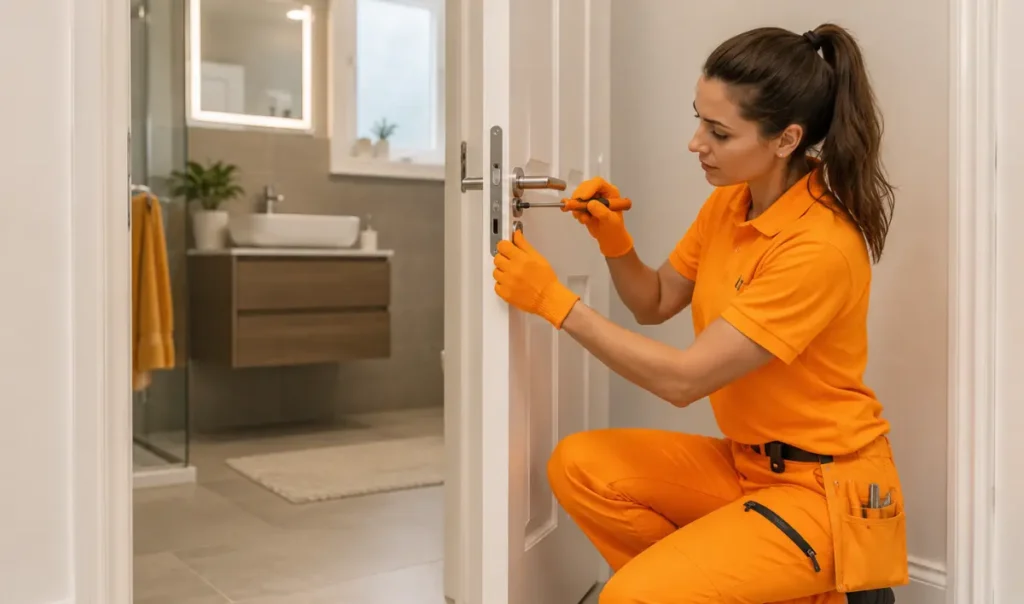
Forcing a door that sticks or catches is one of the most common mistakes, since it puts pressure on the hinges and the gearbox that often turns a minor fault into a bigger one. Lifting, slamming, or shouldering a door shut treats the symptom rather than the cause.
Spraying general purpose oil into a lock or gearbox is another frequent habit that tends to do more harm than good, since it can attract dirt and grit that clog the mechanism further over time. A dry, PTFE based lubricant is a safer short term measure, though it will not fix a genuinely worn part.
Waiting too long before calling for a repair is the third common mistake. A door that only needs a hinge adjustment today can develop frame damage or a failed gearbox within a matter of months if the underlying cause is left unaddressed, turning an affordable fix into a much larger job.
Where a door is dropping, catching, and letting in draughts all at once rather than showing a single isolated fault, it is often more than a hinge or a seal on its own.
In that situation our double glazed door repair service covers hinges, panels, seals, and locking hardware together, so every worn part is addressed in a single visit rather than several separate call outs.
Frequently Asked Questions
How long does a UPVC door repair take
Most single fault repairs, such as a hinge adjustment or a seal replacement, are completed within one to two hours. More involved jobs, like a panel replacement, may take longer depending on part availability. The door remains fully functional and secure once the work is finished.
Can a sagging UPVC door always be fixed without replacing it
In most cases yes, provided the frame itself has not warped or cracked. A hinge adjustment or replacement usually resolves the sag, and the rest of the door is left untouched. Full replacement is only needed when the frame or several components have failed together.
Is a draughty UPVC door a sign it needs replacing
Not necessarily. A draught is usually caused by a worn seal or a misaligned locking point, both of which can be repaired on their own. Replacement is only the better option when the frame itself is old, warped, or affected by damp.
Do I need a certificate for a UPVC door repair
Repairs to hinges, seals, locks, or panels do not require building regulations certification, since the door itself is not being replaced. Full replacement doors with a glazed area over fifty percent do fall under UK building regulations, and it is worth checking current FENSA guidance if a straightforward repair is not possible and replacement becomes the better route.
What areas of Southampton do you cover for UPVC door repair
We repair UPVC doors across Southampton and the surrounding areas, including Portswood, Bitterne, Woolston, Totton, and Hedge End, along with nearby towns such as Netley and West End. Response times vary depending on location and the nature of the fault.
Final Thoughts
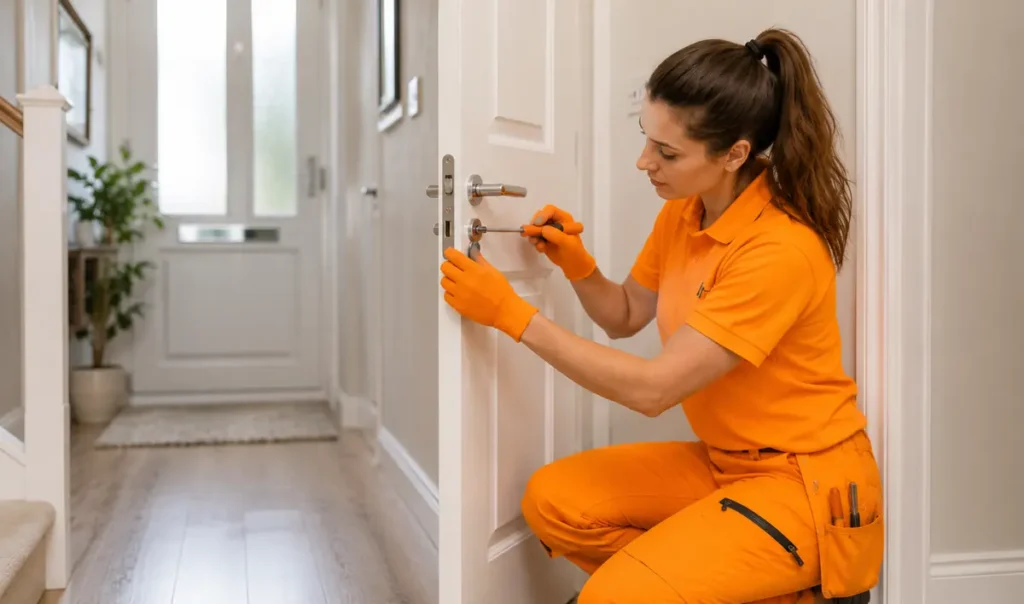
Most UPVC door problems, whether that is a drop, a stick, a draught, or a cracked panel, come down to one worn part rather than a failing door. Catching the fault early keeps the fix simple, quick, and considerably cheaper than letting it run on until a full replacement becomes the only option left.
A short assessment is usually enough to confirm what a door actually needs, and in most cases that turns out to be far less work than homeowners expect. If your door in Southampton is sticking, dropping, or letting in the cold, it is worth having it looked at before the fault has a chance to spread.