Yes. Under the Decent Homes Standard for windows and doors, a single window or external door in poor repair can be enough to make a rented home fail the standard on its own, because both are treated as key building components. The standard is not yet enforceable against private landlords, but it is on its way, and any Southampton landlord with tired glazing should know what an inspector would actually look for.
What the Standard Asks of Windows and Doors in Plain Terms
Windows and external doors are key components, so one in disrepair can cause a failure by itself.
The test is condition rather than age, so an old window that still works properly is not marked down for being old.
Where an upper window presents a fall risk, a child resistant restrictor that an adult can override is expected.
Glazing or doors so poor that the home is easy to break into can count as a serious hazard.
Thermal comfort is part of the standard, which brings draughts and heat loss through windows into the picture.
Councils will enforce the standard in private rentals, and ignoring a council notice is a criminal offence.
Most landlords hear the words Decent Homes and think of kitchens, bathrooms and damp. Glazing gets far less attention, yet a window or door is one of the few parts of a rental that a tenant touches every single day, and one of the first things an inspector will test with their own hands.
Where the Standard Stands for Private Landlords Right Now
The reformed standard has been confirmed as government policy for both social and private rented homes, with a long lead in period before it is enforced against private landlords. That gap is deliberate. It gives landlords time to plan works and budgets, and the government has been clear that leaving everything until the last moment is a poor strategy. The detail will arrive through regulations and guidance, so check the current position before relying on any single summary, including this one.
None of that leaves a landlord free of obligations in the meantime. Landlords already have to keep the structure and exterior of a rented home in repair, which includes windows and external doors, and they already must not let a home contain a serious hazard. The repair duties landlords already carry under existing law are the reason a failing window can cause real trouble today. The new standard makes those expectations more specific and easier for a council to test.
Enforcement in the private rented sector will sit with local councils. In Southampton that means the city council’s housing enforcement function, the same team that already investigates complaints about disrepair and hazards in rented homes. Councils will have a duty to act on the most serious hazards and a power to act on the other failings, and failing to comply with an enforcement notice is a criminal offence that can lead to fines or prosecution.
The Five Criteria and Which Ones a Window or Door Can Trip
The standard is built from five criteria, and the Chartered Institute of Housing’s summary of the final standard sets them out in plain terms. Windows and doors touch more of them than most landlords expect.
Criterion A: Serious Hazards
The first criterion asks whether the home contains a Category 1 hazard, which is the most serious class under the hazard rating system that councils use to assess housing. Glazing can feed into several of those hazards. A window that cannot be closed properly lets in cold. A door or window that leaves the home easy for an intruder to get through can be rated as a serious hazard in its own right. An openable window with a long drop outside and nothing to limit how far it opens is a fall hazard.
These are exactly the faults a council officer treats seriously, because the risk lands on the people living in the home rather than on the building.
Criterion B: Reasonable State of Repair
This is the criterion where windows matter most. A home fails if one key building component is not in reasonable repair, or if two or more other components are not. Windows and external doors sit on the key list alongside the roof, the walls, the kitchen and the bathroom, which means a single bad window carries more weight than, say, a worn internal fitting.
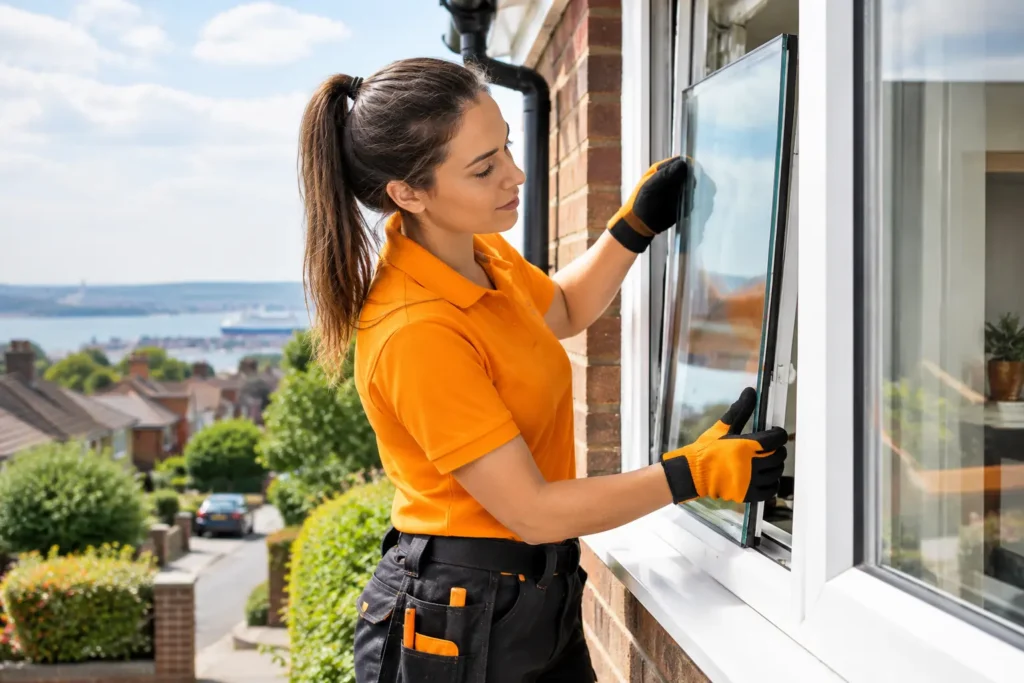
In practice, disrepair in glazing looks like a cracked or broken pane, a frame that has warped so the sash will not close, hinges that have dropped so a door drags on the floor, a lock that no longer engages, or a sealed unit that has failed and clouded over. In many of these cases the fix is small, with a failed glass unit swapped without touching the frame, rather than a full replacement.
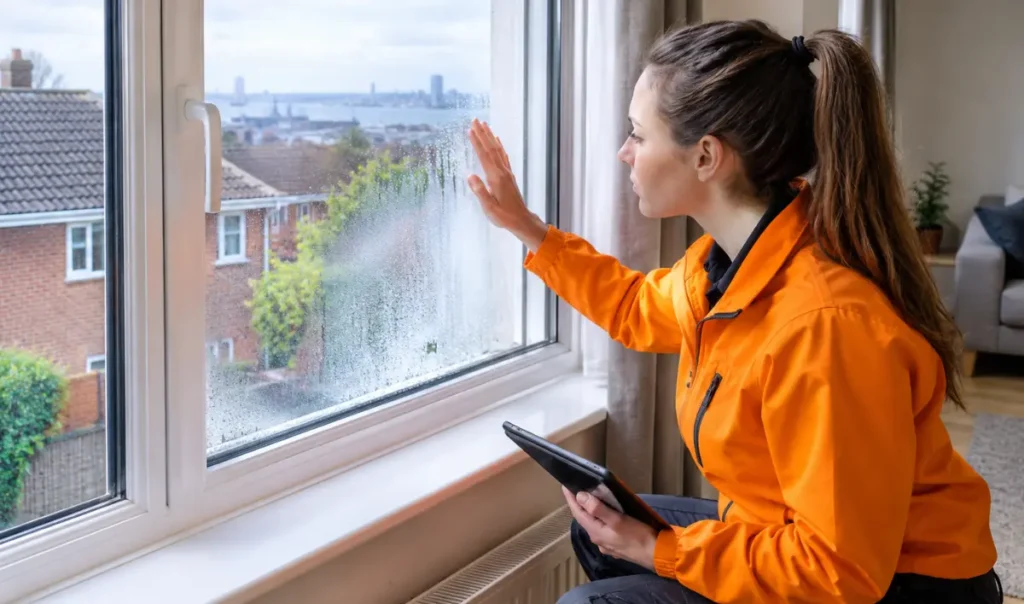
Whether a given misted unit would be counted as disrepair will depend on the assessor and on guidance still to come. It is safer to treat a failed unit as a repair job than to hope nobody notices it.
Criterion C: Facilities and Services
This criterion deals mainly with kitchens and bathrooms, but external noise insulation is one of the facilities a home can be assessed on, and glazing does most of that work. It relates to the environment the home sits in, such as a busy road, rather than to noise passing between neighbours inside a block of flats. The other way windows enter this criterion is through restrictors, which get their own section below.
Criterion D: Thermal Comfort
The thermal comfort criterion requires the home to be heated adequately throughout and links in the energy efficiency rules for rented homes. Windows contribute through heat loss and draughts, though they rarely decide the outcome alone. Landlords weighing up an upgrade should read how far new glazing moves a rental’s energy rating before committing to a large spend, because other measures often do more for the money.
Criterion E: Damp and Mould
Damp and mould now have a criterion of their own, with an emphasis on spotting problems early and acting on them. Windows connect to this in a few ways. A frame that lets rain in, a sill that leaks, or a seal that has pulled away from the wall creates the wet patches that mould feeds on. A window that cannot be opened, or trickle vents that have been blocked or painted shut, removes an easy form of ventilation. Neither of these is the whole story behind a mould complaint, but both are the sort of detail an inspector will note.
Condition, Not Age: Why an Old Window That Works Can Still Pass
Under the older version of the standard, a building component generally had to be both old and in poor condition to count as failing. The reformed standard drops the age element and looks only at condition. That cuts both ways for landlords.
On one hand, sound older windows are not forced out simply because of how long they have been in place. A landlord with sturdy frames, working hinges and sealed units that are still clear has no need to replace them on age grounds. On the other hand, a recently fitted window that has failed counts just the same as an ancient one. Being new offers no protection if the glass has misted or the hinges have given way.
The practical lesson is that repair becomes the sensible default. If a repair restores a window to good working order, the condition test is met and the landlord has avoided the cost of a full replacement that did not need to happen.
Child Resistant Restrictors and the Fall Risk Test
Windows that present a fall risk to children are expected to carry a child resistant restrictor that an adult can still override. The standard describes a window as unsafe when four things are all true at once:
The drop between the inside floor level and the ground outside is more than 600mm.
The window can be opened by more than 100mm.
The guard height is below 1100mm above the internal floor.
There is no working restrictor in place.
In everyday terms, this points at upstairs windows and low sills, especially in bedrooms. The restrictor stops the window opening beyond a small gap unless an adult releases it, which means the window can still be opened fully for cleaning or ventilation by someone who knows how.
Restrictors fail in ordinary ways. They get painted over, snapped, removed by a previous tenant or never fitted in the first place. A landlord who checks them during routine visits will catch most of these before an inspector does.
What Was Left Out on Security, and What Still Counts
The government considered adding enhanced security requirements, such as mandatory double locks on doors, and decided against including them in the final standard. Those ideas may appear instead as best practice guidance for landlords who want to go further.
That does not make security irrelevant. External windows and doors are key components, and if their condition leaves the home vulnerable to intruders, that can be classed as a serious hazard under the first criterion. A sash that will not shut tight, a handle that spins without gripping, or a door that closes but does not truly lock all fall into that territory. Sorting out locks and handles that no longer hold the sash shut is usually a quick job and removes the risk entirely.
A Window and Door Walk Round Before an Inspector or a Tenant Does One
A short, structured check of each property is the cheapest protection a landlord has. It takes a few minutes per room and shows up most problems before they become complaints.
Check Every Window Opens, Closes and Locks
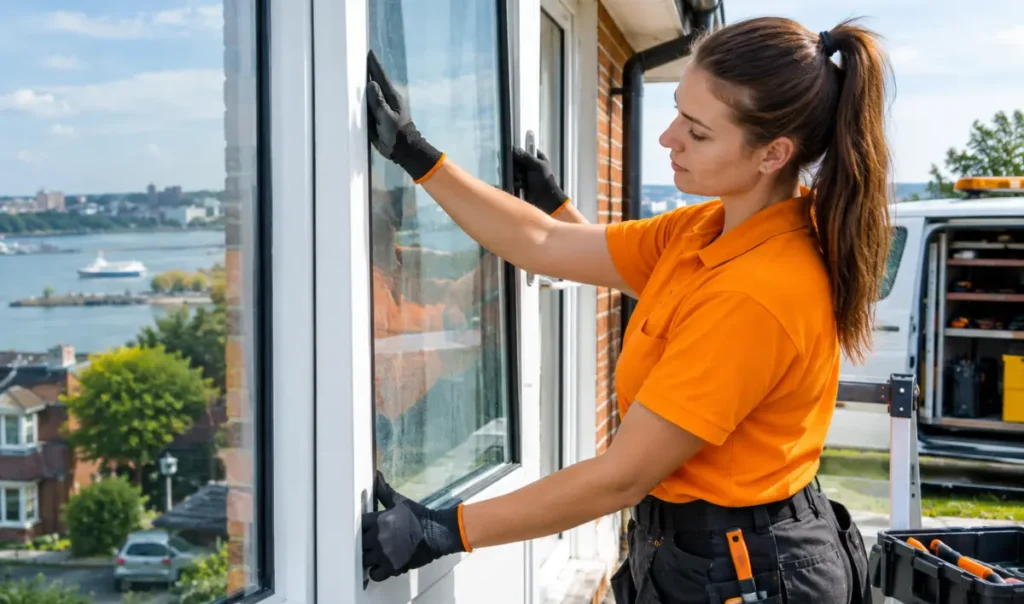
Open each window fully, close it, and lock it. Watch for sashes that drag, handles that feel loose and locks that need force. A window that closes but will not lock is a security issue, and one that will not open is a ventilation and escape issue.
Look for Misting, Cracks and Failed Seals
Look at each pane in daylight from inside and outside. Cloudy patches or droplets trapped between the panes mean a failed seal. Hairline cracks often start at corners and spread, so a small one now can become a broken pane later.
Test Every External Door
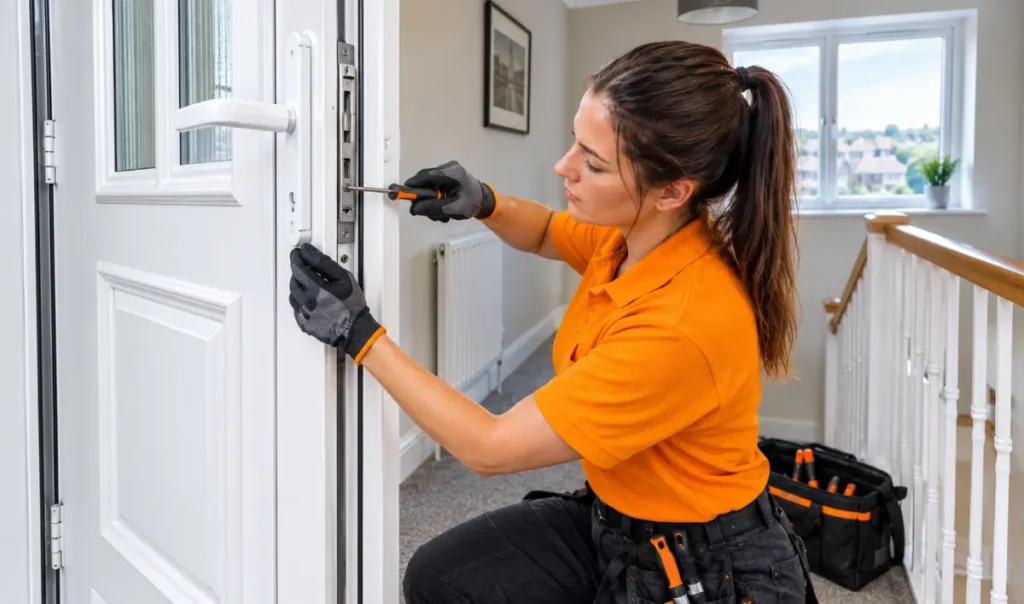
Open and close each external door and turn the key in the lock. A door that needs lifting to lock, drags on the threshold or leaves a visible gap at the frame is showing wear in its hinges or its alignment. These faults get worse, not better, with use.
Check Restrictors on Upper Windows
On every window that could present a fall risk, confirm a restrictor is fitted, works, and can be released by an adult. Replace any that are missing or broken.
Look for Water Around Frames and Sills
Check for staining, soft sealant, peeling paint and dark patches around frames and under sills. Water getting in at the frame is a separate problem from condensation and needs a different fix.
Keep a Simple Record
Photograph each window and door at the start of a tenancy and after any repair, and keep the invoice with the photos. If a council ever asks what was done and when, a tidy record is far more persuasive than a recollection.
Mistakes That Cost Landlords Money
Replacing a whole window when a single glass unit swap would have restored it to good condition.
Treating a tenant report as cosmetic because the fault looks minor from the outside.
Fitting restrictors that an adult cannot easily release, which defeats the purpose of the requirement.
Relying entirely on a letting agent without asking to see written repair records.
Leaving small glazing faults to build up, so that two or more components fail together and the home fails the standard.
Frequently Asked Questions
Does the Decent Homes Standard apply to private landlords in Southampton yet?
Not as an enforceable standard for private rented homes. The reformed standard has been confirmed as policy for private rentals, with a long lead in period before enforcement begins. Landlords still have existing duties now, including keeping windows and external doors in repair and avoiding serious hazards, so there is little reason to wait.
Is an old single glazed window an automatic failure?
No. The reformed standard looks at condition, not age, so an old window in good working order is not marked down simply for being old. Thermal comfort is a separate criterion, though, so a home that is cold and draughty because of poor windows may still struggle on that front.
Does a misted double glazed unit make a rental non decent?
A failed sealed unit is a form of disrepair in a window, and windows are key components. Whether it triggers a failure depends on the assessor and the guidance still to be published. The safe approach is to repair or replace the failed unit promptly rather than rely on it being overlooked.
Who enforces the standard in a private rental?
Local councils. In Southampton that means the city council’s housing enforcement function. Councils must act on the most serious hazards and can act on other failings, and ignoring an enforcement notice is a criminal offence.
Do window restrictors have to be fitted to every window?
No, only where a window presents a fall risk under the test set out in the standard, which looks at the drop outside, how far the window opens, the guard height and whether a restrictor is already in place. Where one is needed, it must be child resistant and release by an adult.
Final Thoughts
For most landlords, the Decent Homes Standard will not demand anything dramatic from windows and doors. It asks that they open, close, lock and keep the weather out, and that any window with a fall risk has a working restrictor. A routine check and prompt small repairs cover nearly all of it.
If a walk round turns up a misted unit, a dropped door or a lock that has stopped holding, the team at Glaze Repair Southampton can look at it and tell you honestly whether it needs a quick repair or something bigger.