
If an aluminium window in your home has started sticking, letting in a draught, or refusing to lock properly, it is very rarely the frame itself that has failed. Aluminium window repair in Southampton almost always comes down to a worn hinge, a perished gasket, a misaligned sash, or corrosion on the hardware rather than the metal frame, which is one of the most durable materials used in glazing. A glazier can usually confirm which of these it is within minutes and fix it without replacing the window.
This guide covers why aluminium windows develop faults in Southampton specifically, what separates a repair from a genuine replacement job, and what it actually costs to put right.
What Makes Aluminium Windows Different to UPVC
Aluminium frames are built from a metal core, often with a thermal break, a strip of insulating material running through the frame that stops heat and cold transferring straight through the metal. The frame itself is usually powder coated, which gives it colour and a protective outer layer that resists weathering far longer than untreated metal would.
Because the frame doesn’t expand and contract with temperature the way UPVC does, aluminium windows tend to hold their shape and alignment for decades. When you can look through the full list of repair work we carry out across Southampton, you’ll notice aluminium call outs are a smaller share of the total than UPVC, but the ones that do come in tend to be hardware related rather than frame related, which is a useful thing to know before you assume the worst.
Why Aluminium Windows Fail Differently Near the Coast
Southampton’s position on the Solent means every type of window hardware takes a harder hit from salt laden air than an equivalent property inland, but aluminium reacts to that environment in a different way to UPVC. UPVC mainly suffers seal failure and plastic degradation. Aluminium, being a metal, is more prone to a process called galvanic corrosion, where two different metals in contact with each other, such as a steel screw fixed into an aluminium frame, react in the presence of salt moisture and slowly corrode at the point where they meet.
This shows up first at fixing points and hinge pivots rather than across the whole frame, which is why a window can look perfectly fine from a distance while a specific hinge or handle spindle has already started seizing underneath. Properties along Weston Shore, Woolston, and the waterfront developments near Ocean Village tend to see this hardware corrosion appear several years earlier than equivalent windows in Bassett or Chandlers Ford, simply because of how much airborne salt those properties are exposed to day to day.
The Most Common Aluminium Window Faults We See
A Stiff or Seized Sliding Sash
Aluminium sliding and tilt turn windows run on a track and roller system, and grit or dried out lubricant is the most frequent reason a sash that used to glide now needs real effort to move. Left unaddressed, the rollers themselves can wear flat, at which point cleaning alone won’t fix it and the rollers need replacing.
A Handle That Turns But Doesn’t Lock
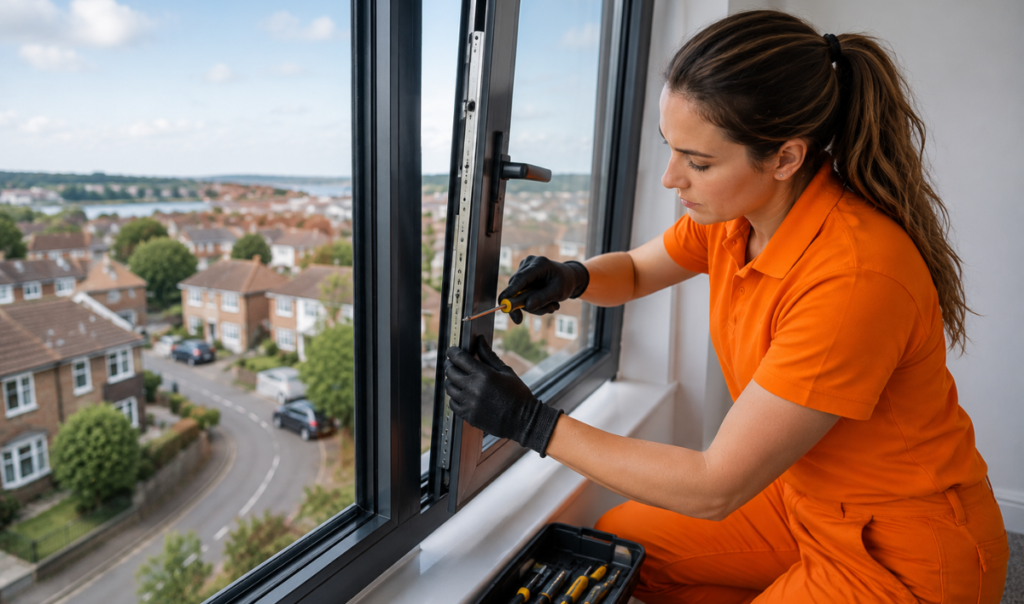
Aluminium windows commonly use an espagnolette style multipoint handle similar in principle to UPVC systems. When the handle spins freely but the window doesn’t lock, the spindle connecting the handle to the locking bar has usually sheared or come loose, which is a straightforward part swap rather than a frame issue.
Corroded or Seized Hinges
This is the fault most specific to Southampton’s coastal exposure. A hinge pin that has corroded where it meets a dissimilar metal fixing will bind and eventually seize completely if it isn’t cleaned and treated early. Once seized, forcing the sash risks bending the hinge arm, which turns a simple service job into a parts replacement.
Gasket and Seal Wear
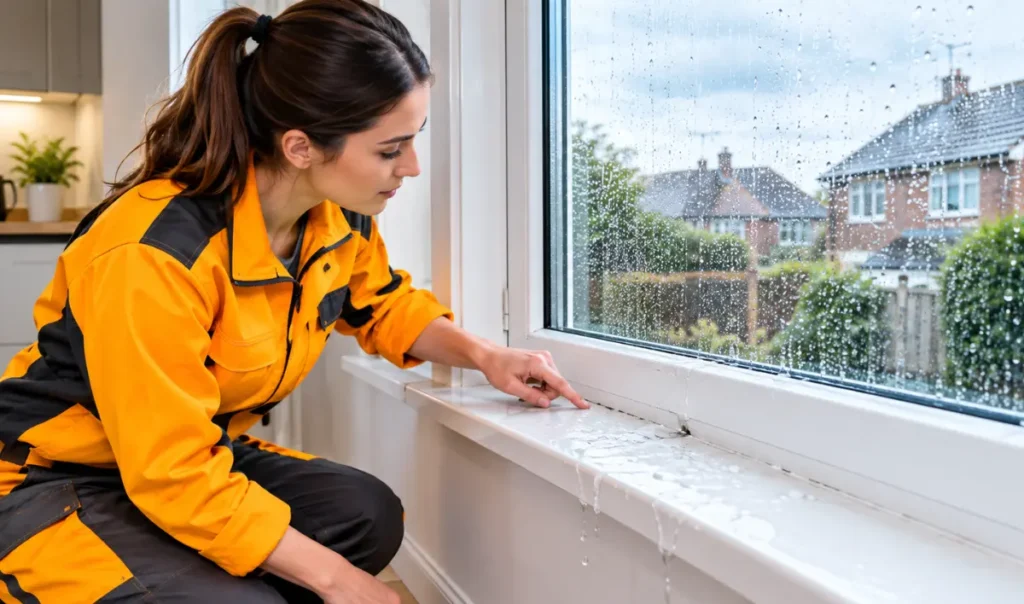
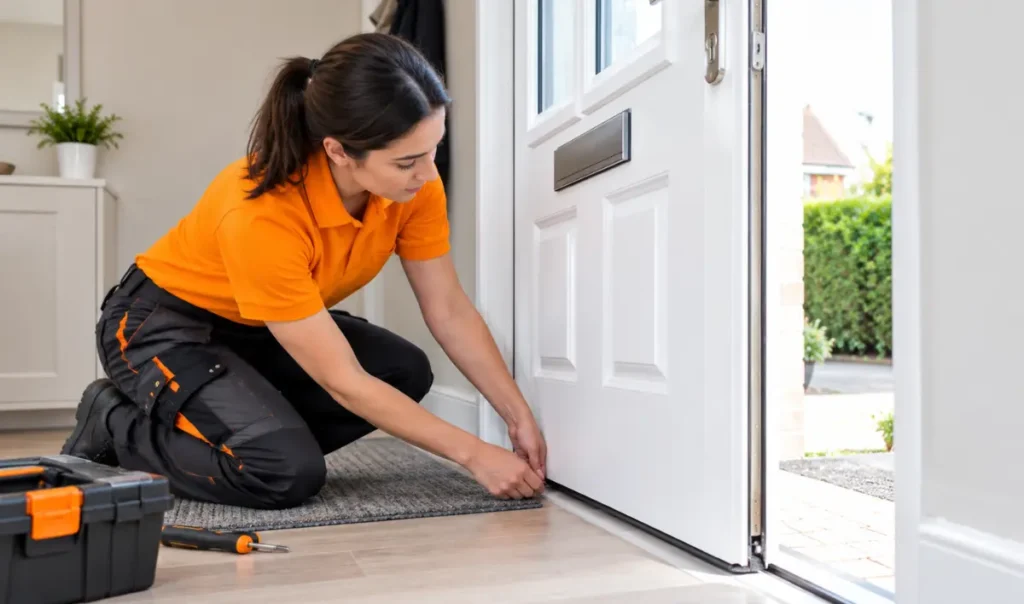
The rubber gasket that seals an aluminium sash against the frame hardens and shrinks with UV exposure over time, the same way it does on any window material. A draught around the edge of an otherwise solid feeling aluminium window is almost always this, rather than anything wrong with the frame or the glass unit inside it.
Condensation Between the Panes
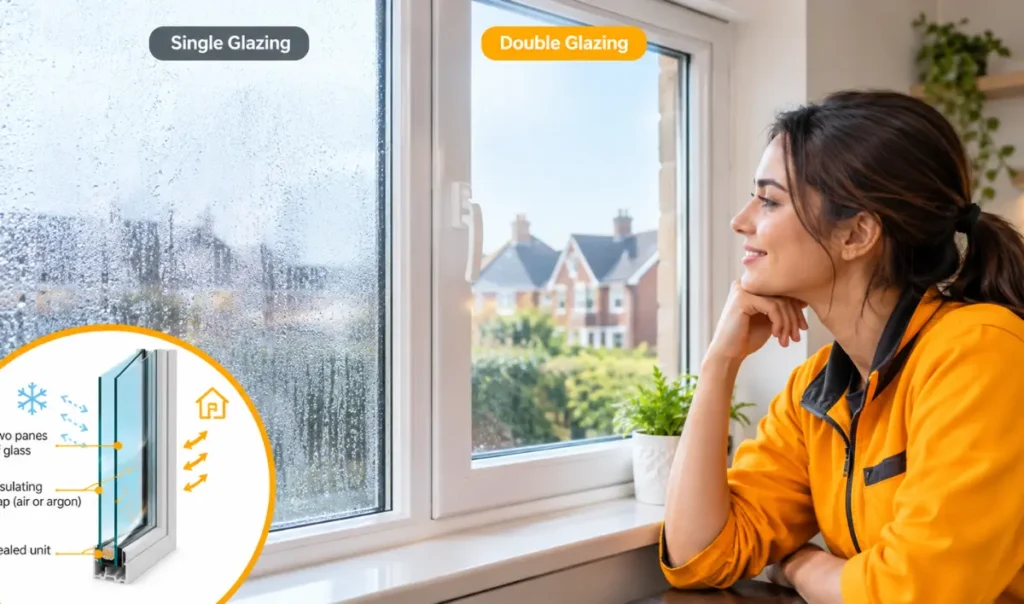
Aluminium windows fitted with a sealed double glazed unit can mist up for exactly the same reason a UPVC window does, the perimeter seal around the glass has failed. If that’s the fault you’re actually dealing with rather than a frame or hardware issue, our deeper look at when a sealed unit needs swapping rather than resealing covers the glass side of this in more detail.
A Quick Way to Work Out What You’re Dealing With
Before booking anyone, a few checks from inside the room narrow this down considerably. Run a finger along the hinge side and feel for a rough or gritty texture, a sign of corrosion starting at the pivot point.
Open and close the sash slowly and note exactly where it resists. Resistance right at the very start of the movement usually points to a seized hinge, while resistance partway along a sliding track points to worn rollers or grit in the channel.
Turn the handle without forcing it and watch the locking bar rather than the handle itself. If the handle turns smoothly through its full range but nothing visibly moves along the frame edge, the spindle has most likely disconnected from the mechanism.
What to Avoid Doing Yourself
Household oil based lubricants are the most common mistake homeowners make with aluminium hardware, since oil attracts salt laden grit rather than repelling it, which speeds up the exact corrosion process you’re trying to prevent. A dry PTFE spray is the safer option for hinges, tracks, and locking points.
Forcing a seized hinge or a stuck sliding sash is the other frequent error, and it’s the one most likely to turn an affordable service call into a hinge or roller replacement. If a sash won’t move freely within a reasonable amount of gentle pressure, it’s worth stopping and getting it looked at rather than pushing harder.
Repair or Replace: How to Decide
A single hardware fault on an otherwise sound aluminium window is almost always worth repairing rather than replacing, since the frame itself, the part that’s genuinely expensive to renew, typically outlasts every moving component fitted to it. Powder coated aluminium frames commonly last 30 to 40 years with basic upkeep, so a hinge, roller, or gasket issue at year 12 is a maintenance job, not a sign the window is failing.
Replacement becomes worth pricing up when the frame itself has been dented or bent, usually from impact rather than wear, or when the thermal break inside the frame has degraded to the point where condensation forms on the inside face of the frame itself rather than just the glass. That’s a less common fault but one that genuinely can’t be repaired on site.
Aluminium Window Repair Cost in Southampton
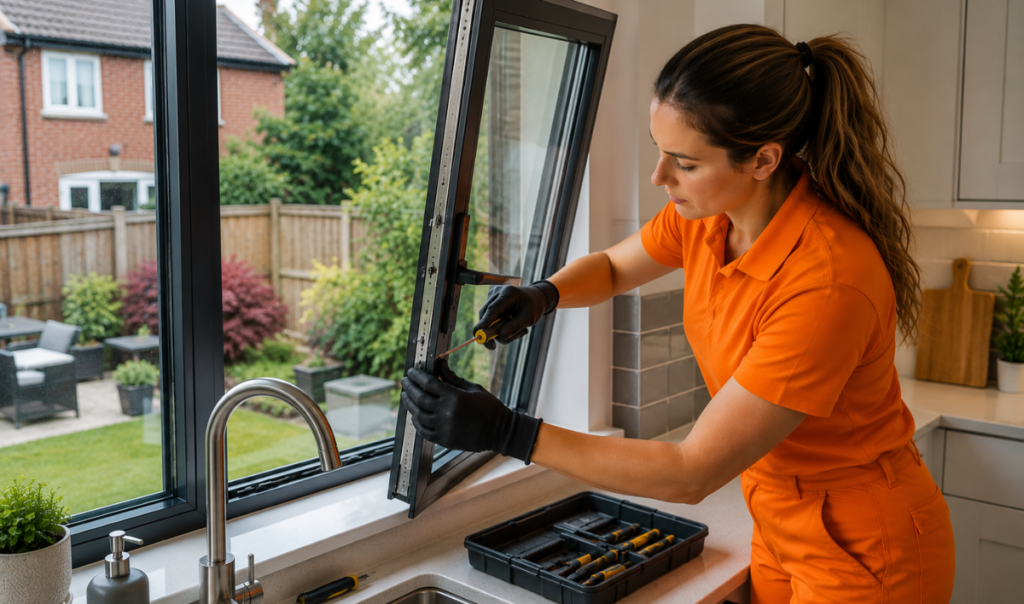
A hinge clean, treatment, and adjustment typically runs from £40 to £85, since it’s a straightforward job with no parts ordered in advance. Where the hinge has corroded beyond saving and needs replacing outright, expect closer to £70 to £150 depending on how easily a matching part can be sourced for the specific window system fitted.
Roller replacement on a sliding sash sits in a similar range to a hinge swap, usually £50 to £120 per roller pair. A handle and spindle repair, where the mechanism itself is sound but the connecting spindle has failed, tends to cost £45 to £100. Gasket and seal replacement runs from £35 to £90 per window depending on the length of gasket needed.
As with most glazing faults, a firm figure depends on the specific aluminium system fitted to your property, since different manufacturers use different hardware that isn’t always interchangeable. A technician can confirm the exact part and price once they’ve seen the window.
Choosing Someone Who Actually Understands Aluminium Systems
Not every glazier who works confidently on UPVC has the same familiarity with aluminium hardware, and the two systems use genuinely different parts and fixing methods. It’s worth asking directly whether the person quoting has worked on your specific window brand before, since aluminium systems vary more between manufacturers than UPVC tends to.
Checking that whoever you book is a FENSA registered installer, the competent person scheme covering window and door compliance in England, is a reasonable baseline to work from, particularly if a repair turns out to need a replacement part fitted to current building standards rather than a simple service.
Frequently Asked Questions
Can aluminium windows be repaired or do they always need replacing?
In almost every case they can be repaired. The frame material itself is extremely durable, so faults nearly always sit with the hinges, rollers, handle, or seals rather than the aluminium structure, and these are all straightforward parts to service or swap.
Why does my aluminium window feel stiff only in certain weather?
This is usually salt and grit build up at the hinge or track combining with humidity, rather than the metal itself expanding the way UPVC does. A clean and dry lubricant treatment often resolves it without needing any parts replaced.
Do aluminium windows get condensation the same way UPVC windows do?
Yes, if they’re fitted with a sealed double glazed unit, since the misting happens in the glass seal rather than the frame material. A properly maintained thermal break also means aluminium frames are less prone to frame level condensation than older, poorly specified systems.
How much does it cost to fix a seized aluminium window hinge in Southampton?
Cleaning and treating a hinge that hasn’t fully seized typically costs £40 to £85. A hinge that needs full replacement runs closer to £70 to £150 depending on how the part matches your specific window brand.
How long do aluminium windows last in a coastal city like Southampton?
The frame itself commonly lasts 30 to 40 years even with regular salt air exposure, provided hardware is serviced periodically. Hinges, rollers, and gaskets tend to need attention well before the frame itself shows any real sign of wear.
Final Thoughts
An aluminium window that’s stiff, seized, or refusing to lock properly is very rarely a sign the window has reached the end of its life. Southampton’s salt air does affect aluminium hardware faster than it would inland, but that’s a hinge, roller, or gasket problem far more often than a frame problem, and all of those are quick, affordable fixes.
If a window in your home has started fighting you every time you open or close it, getting the hardware looked at before it seizes completely keeps the job small and keeps the frame itself, the part actually worth protecting, in good working order for decades to come.