A cracked shopfront pane or a failed sealed unit in an office reception isn’t just an inconvenience the way it might be at home it’s a security risk, a trading interruption, and sometimes a health and safety liability all at once. Commercial glazing repair in Southampton covers everything from retail shopfronts and office partitions to warehouse units and communal entrance doors, and it comes with a different set of pressures than a domestic repair: tighter timeframes, insurance requirements, and often work that has to happen before opening hours or after close rather than whenever suits the household.
What Counts as Commercial Glazing Repair
Commercial glazing spans a wider range of glass and frame types than most homeowners ever deal with. Shopfront toughened or laminated glass, aluminium framed office windows, fire-rated glazing in communal corridors, automatic entrance doors, curtain walling on larger units, and internal partition glass all fall under the commercial umbrella. The common thread isn’t the glass type, it’s the context: the repair has to account for footfall, staff safety, and business continuity in a way a household window repair simply doesn’t.
Southampton’s commercial stock ranges from Victorian shopfronts in the city centre to modern retail units near the waterfront and industrial glazing on the business parks around Millbrook and Totton, so the right repair approach depends heavily on the age and type of the building, not just the glass itself.
Common Commercial Glazing Problems in Southampton
Shopfront and Retail Glass Damage
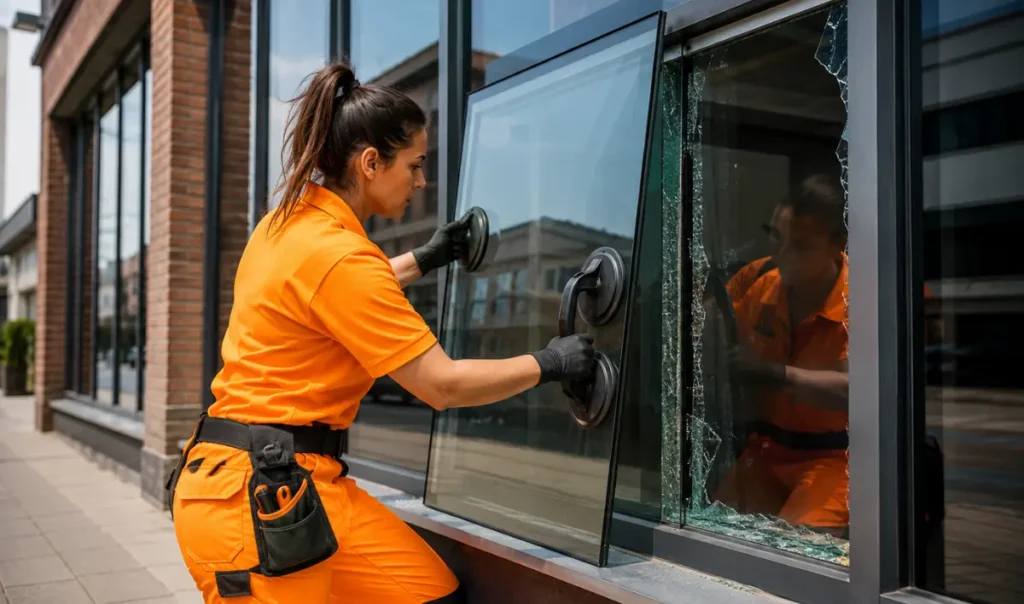
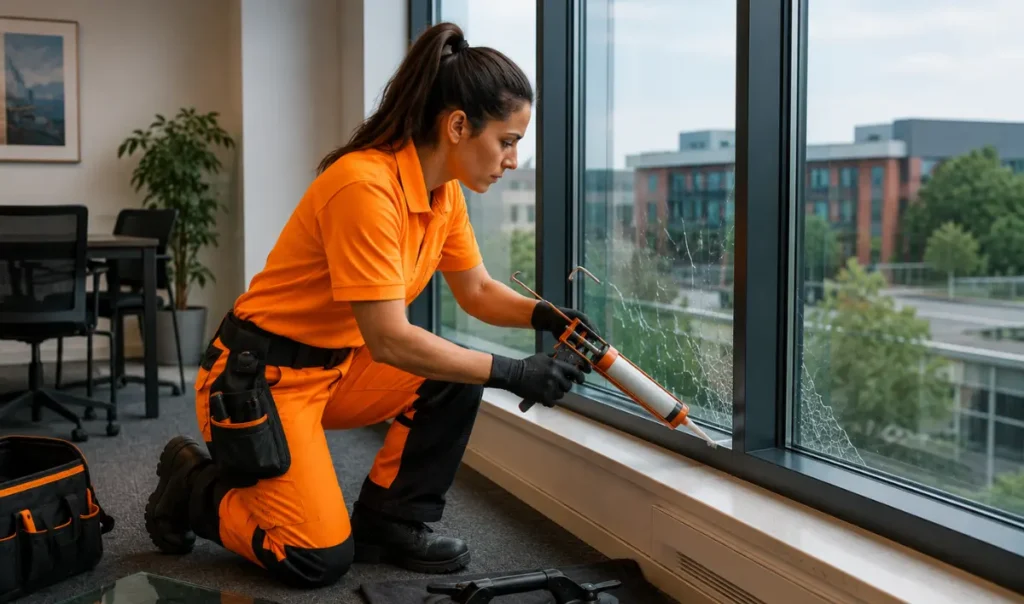
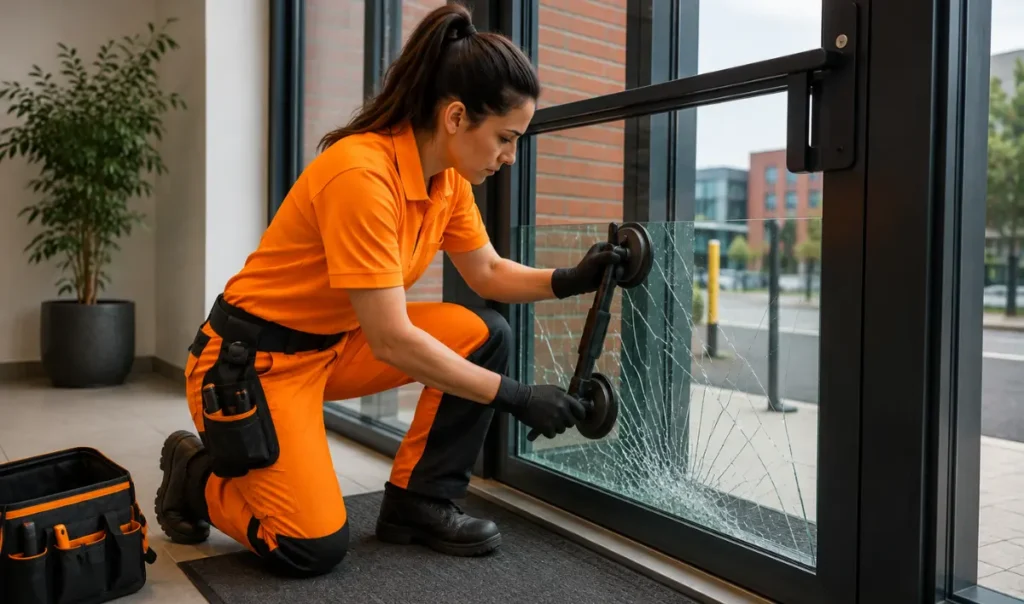
Shopfront glass takes more physical risk than domestic glazing simply through footfall, deliveries, and exposure to the street. Cracked or smashed shopfront panes need same day attention in most cases, both for security and because an open shopfront is a liability the moment trading stops for the day.
Failed Sealed Units in Offices and Reception Areas
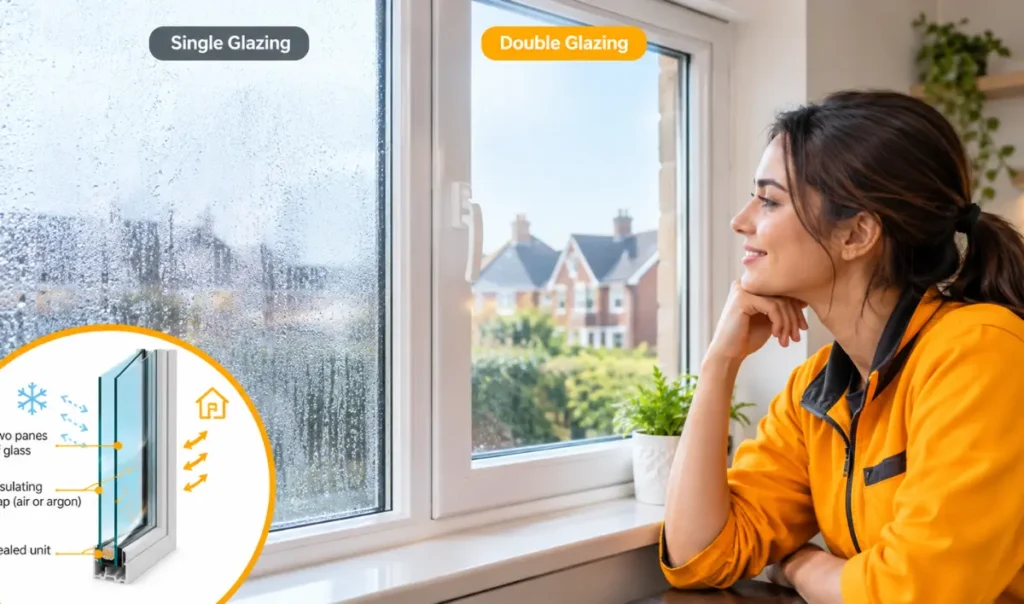
Misting and seal failure affect commercial glazing the same way they affect domestic double glazing, but a fogged-up reception window or meeting room panel reflects directly on how a business looks to clients and staff. Southampton’s coastal humidity accelerates seal breakdown in exactly the same way here as it does in residential properties.
Faulty Automatic and Manual Entrance Doors
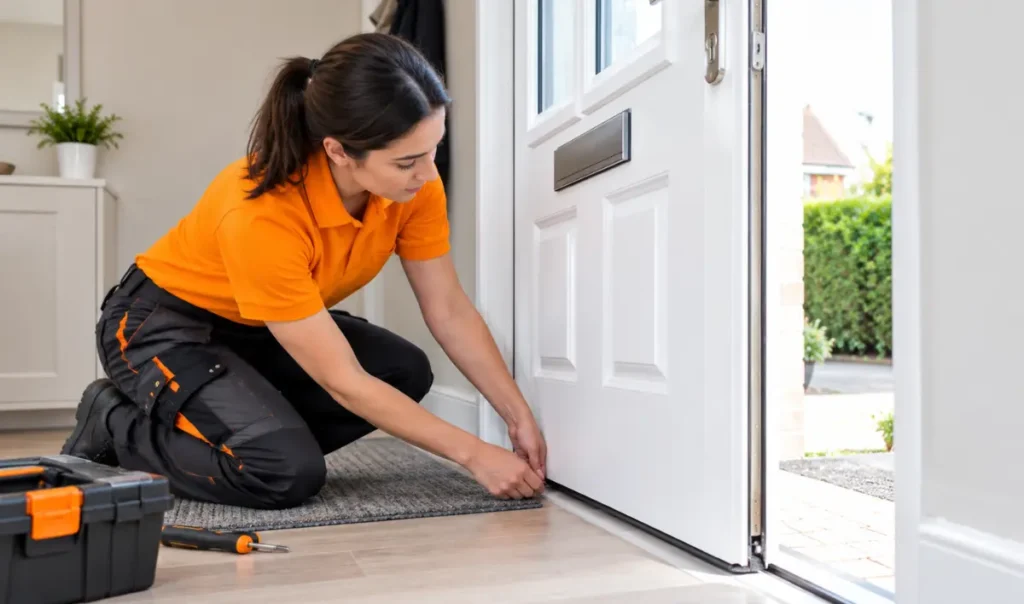
Automatic doors that stick, fail to seal, or trip their sensors create both an accessibility problem and a heat-loss problem. Manual commercial doors with worn multipoint mechanisms face the same wear patterns as domestic UPVC doors, just under far heavier daily use.
Security Glazing and Anti-Vandal Damage
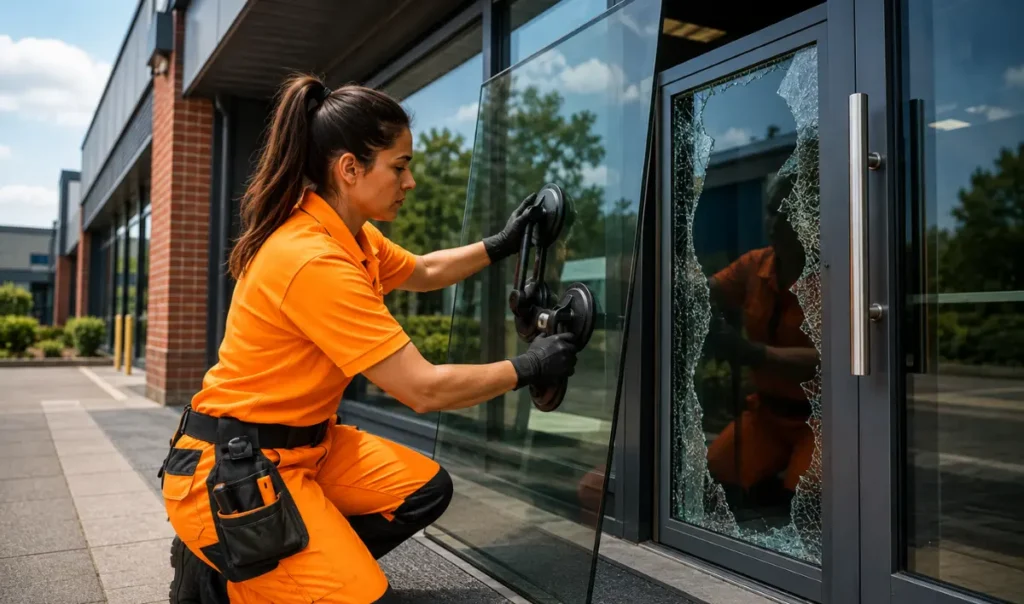
Commercial premises are more exposed to attempted break-ins and vandalism than most homes, and security-rated glass that’s been damaged or compromised needs replacing with matching-spec glazing, not a generic pane, or the security rating is lost.
Water Ingress Around Larger Glazed Units
Bigger commercial glazing spans, particularly curtain walling and large shopfront frames, are more prone to seal and drainage failures that let water track in around the frame. Left unaddressed, this causes damage well beyond the glazing itself.
Why Commercial Glazing Needs a Different Approach
Domestic and commercial glazing repairs use a lot of the same core skills, but the surrounding requirements diverge sharply. Commercial work usually has to happen around trading hours, sometimes early morning or after close, so the repair doesn’t interrupt customers or staff. Damaged commercial glass in a publicly accessible space is also a more immediate safety and liability concern than the equivalent domestic issue, since it’s the business, not just the property owner, carrying the risk until it’s fixed.
Insurance is another factor that rarely comes up in a domestic repair conversation but matters constantly in commercial work. Many commercial insurance policies specify that repairs must be carried out by an accredited installer and that replacement glass must match the original safety and security specification, particularly for shopfronts and fire-rated internal glazing. Booking a repair that doesn’t meet the original spec can create a gap in cover that only becomes obvious after a second incident.
Emergency Commercial Glazing: What Happens When You Call
A damaged shopfront or entrance door out of hours is treated differently to a routine repair booking. The priority on the first call is making the premises secure, whether that means boarding, temporary glazing, or a stop-gap fix that holds until permanent glass can be sourced and fitted. For a fuller breakdown of how that initial call-out and make-safe process works step by step, see what actually happens when you call an emergency glazier in Southampton, since the same sequence applies whether the property is residential or commercial, just with a business’s opening hours added into the timing.
Once the premises is secure, the permanent repair or replacement is scheduled around the business’s trading pattern rather than the glazier’s, which is one of the clearest differences between domestic and commercial callouts.
Commercial Glazing Repair Cost in Southampton
Commercial glazing repair costs vary more widely than domestic repairs because of the range of glass types and frame sizes involved, but a few patterns hold generally. A standard shopfront pane replacement typically costs more than an equivalent-size domestic window because the glass itself is thicker, often toughened or laminated, and access equipment may be needed for upper-floor or larger units. Automatic door mechanism repairs sit in a similar bracket to a full domestic UPVC lock replacement, but with the added cost of specialist parts specific to the door manufacturer. Fire-rated and security glazing replacements carry a premium over standard glass because the specification has to be matched exactly, not approximated.
For an accurate figure, a glazier needs to see the exact glass type, frame condition, and access requirements on site, since commercial glazing rarely fits a single standard price the way a domestic window repair often can. The full breakdown of glass replacement costs and what drives them gives a useful starting reference point, even though commercial jobs typically sit at the higher end of that range due to glass specification and access.
Choosing a Commercial Glazing Contractor
Accreditation matters more in commercial work than almost anywhere else, since insurers, landlords, and sometimes local licensing bodies will ask for proof that work was carried out to a recognised standard. Look for a contractor registered with a body such as TrustMark, the UK government endorsed quality scheme, which checks installers against site inspections, financial stability, and insurance coverage rather than relying on reviews alone. A contractor who can provide a written, itemized quote and confirm the exact glass specification before work starts is a safer choice for commercial premises than the lowest quote in a search result, particularly where an insurance claim may depend on that paperwork later.
It’s also worth confirming whether the contractor can work flexible hours around trading patterns, since a glazier who can only work standard daytime hours may not be a practical fit for a retail unit that can’t close for a repair.
Common Mistakes Businesses Make With Commercial Glazing
A frequent and costly mistake is accepting a generic replacement pane after damage rather than confirming it matches the original safety or security rating, which can quietly invalidate insurance cover. Another is treating a slow automatic door fault as a minor annoyance rather than getting it checked promptly, since a failing sensor or mechanism tends to worsen quickly with continued daily use. Businesses also sometimes delay a repair to avoid disrupting trading hours, which usually ends up costing more once the damage spreads, whether that’s water ingress around a failed seal or a crack that runs further across a pane.
Areas We Cover for Commercial Glazing
We carry out commercial glazing repairs across Southampton and the surrounding business districts, including Portswood, Bitterne, Woolston, Shirley, Bassett, Swaythling, Millbrook, Weston, Totton, Hedge End, and Netley, covering postcode areas SO14 through SO19.
Frequently Asked Questions
Is commercial glazing repair more expensive than domestic?
Generally yes, mainly because commercial glass is often thicker, security or fire-rated, and may need out-of-hours access, all of which add to the base cost compared with a standard domestic window.
Can a damaged shopfront be boarded up overnight and repaired properly later?
Yes. Making the premises secure is the immediate priority, with the permanent repair scheduled once the correct matching glass has been sourced.
Do commercial glazing repairs need to match the original security rating?
In most cases, yes. Using a lower-spec replacement pane can affect insurance cover, particularly for shopfronts and fire-rated internal glazing.
Can commercial glazing work be done outside trading hours?
Many glaziers, including our team, can schedule commercial repairs before opening or after close specifically to avoid disrupting the business day.
Does a commercial glazing repair need a certificate?
Straightforward repairs to hardware, seals, or glass panels don’t usually require certification. Full replacement of glazing in a way that affects the building’s fire or safety rating may need to meet Building Regulations, which is worth confirming with your contractor before work starts.
The Bottom Line
Commercial glazing repair carries the same underlying skills as domestic work, but the surrounding requirements around timing, insurance, and specification make it a different job in practice. Getting it fixed properly the first time, with the right glass specification and a contractor who understands trading-hours constraints, saves far more than the cost of a rushed generic replacement. If your business premises in Southampton has damaged, failed, or malfunctioning glazing, you can see the full range of residential and commercial glazing work we cover or get it assessed against your original specification before booking.