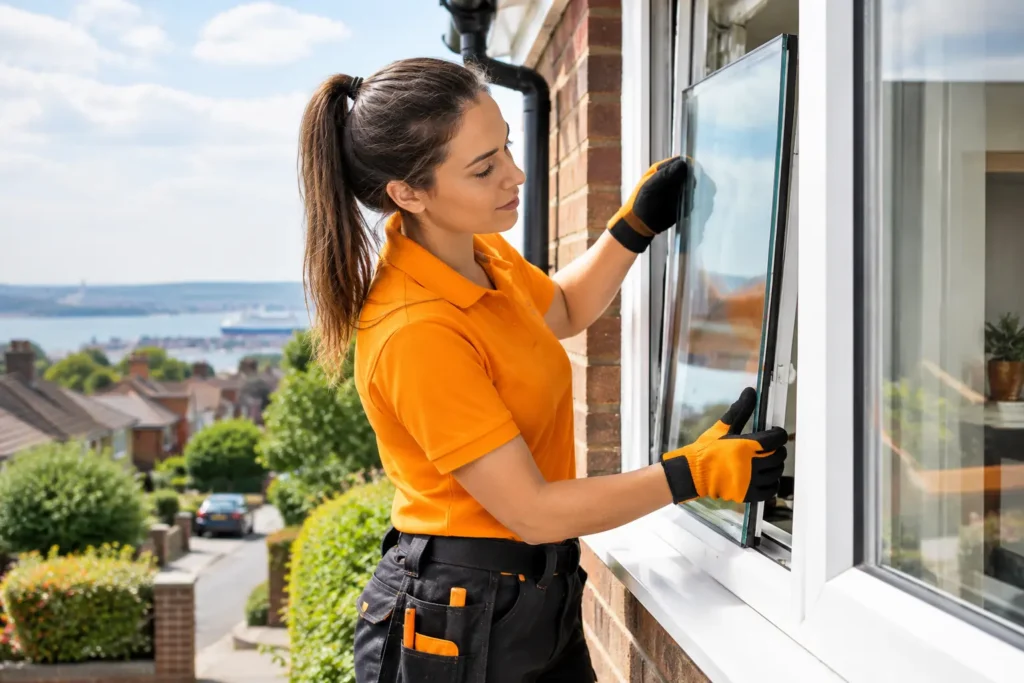

Double glazing repair in Fareham before you list your home is worth doing for the faults a buyer or surveyor can spot in minutes: misted sealed units, windows that will not lock, doors that drop or jam, and cracked glass.
Those are small jobs on their own. Left alone, they tend to turn into bargaining points once an offer is on the table, and a modest repair bill becomes a request for a price reduction that is bigger than the repair would ever have cost.
This guide is for owners across Fareham, Portchester, Titchfield, Locks Heath, Warsash, Stubbington and Whiteley who are preparing to sell. It covers what buyers notice first, how a survey treats windows and doors, which repairs earn their cost before you list, how to time the work around photographs and viewings, and what to ask a glazier before you book.
The Faults a Buyer Notices Within Minutes of Walking In
Viewers do not carry a checklist, but they do carry eyes and hands. These are the problems that get noticed almost immediately:
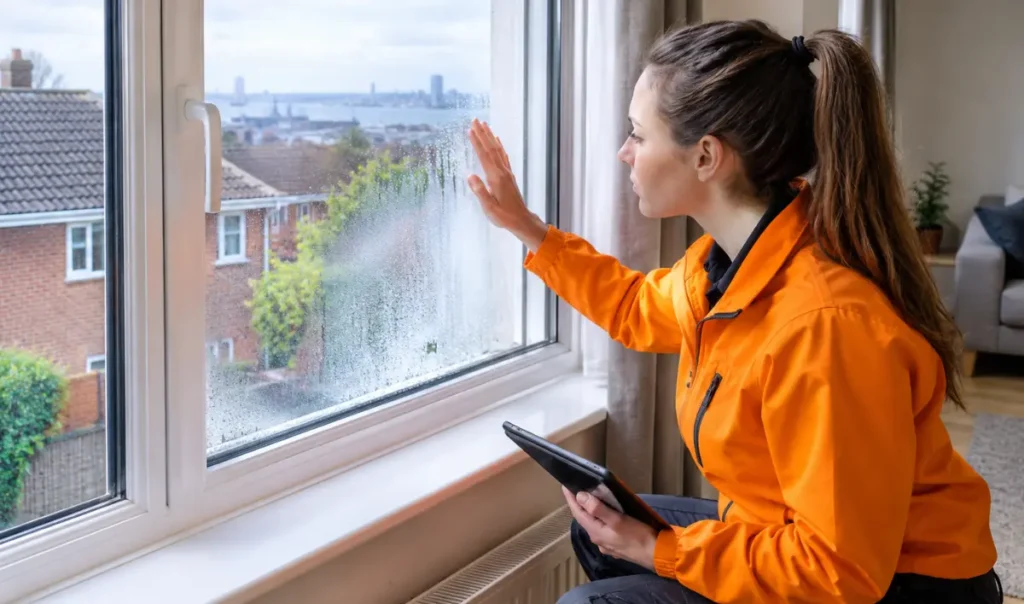
A foggy or cloudy sealed unit, where moisture has got between the two panes and will not wipe away
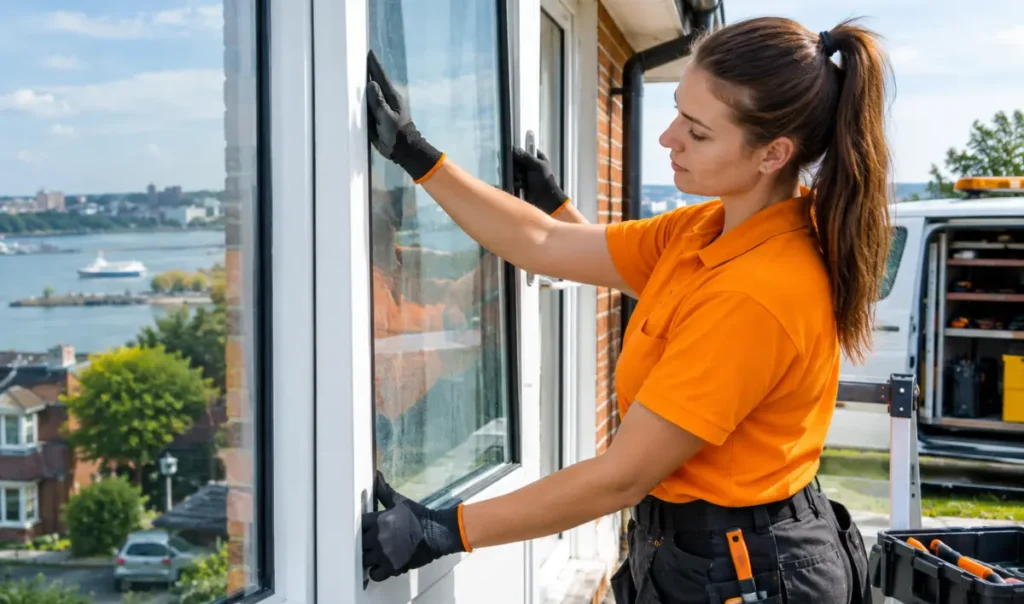
A window that feels loose, drops when opened, or will not lock
A front or back door that needs a lift or a shove to close
A handle that spins freely or a key that turns stiffly
A cracked, chipped or scratched pane
A cold draught at the edge of a frame when someone stands close to it
Each one tells a buyer something beyond the fault itself. A misted pane suggests a seal has gone, and a buyer will wonder how many others are about to follow. A stiff lock hints at a house that has not been looked after. None of this is fair, but it is how viewings work.
The good news is that every item on that list is usually a repair, not a replacement, and most are quick. A frame that is straight and sound rarely needs to be touched.
How a Buyer’s Survey Treats Windows and Doors
Many buyers commission a survey before they commit, and windows and external doors are normally part of what the surveyor looks at. The surveyor does not carry out repairs and does not put a price on any work. What they do is give each part of the property a condition rating.
The ratings follow a simple scale. One means no repair is currently needed. Two means there are defects that need repairing or replacing but are not serious or urgent. Three means the defects are serious or need to be repaired, replaced or investigated. How RICS home surveys grade each part of a property is set out publicly, and it is worth reading before you decide what to fix.
Here is why that matters to a seller. A surveyor rarely says what a repair costs, so the buyer is left holding a rating and a question mark. Their solicitor or agent often responds by asking for a reduction, and a figure picked in a hurry tends to be generous. A seller who has already repaired the fault, and can hand over an invoice, takes that question mark away.
Whether a particular surveyor rates a given fault as a two or a three depends on the inspection, so nothing here is a promise. The sensible aim is simply to give a surveyor as little as possible to write down about your windows and doors.
Repairs That Earn Their Cost Before You List
Not every fault deserves money before a sale. These are the ones that usually do, in rough order of how much a buyer is likely to care.
Misted or Blown Sealed Units
A misted unit is the most photographed glazing fault there is. It shows up in listing pictures, it is obvious on a bright viewing day, and it is the first thing a buyer reads as a failing window.
The fix is normally to swap the sealed unit and keep the frame. If your frames are sound, misted window repair before a sale costs far less than new windows and leaves the exterior looking exactly as buyers saw it online. For orientation, a standard sealed unit in a small to medium window often sits between £60 and £150, while a larger or upgraded unit more commonly falls between £150 and £280. Those are guide figures rather than quotes, and the final price depends on size and specification.
If several windows are affected, say so when you ask for a price. One callout that covers several units is usually better value than separate visits.
Locks, Handles and Hinges
A window that will not lock is a security point as well as a cosmetic one, and buyers and their insurers both notice. A door that scrapes the floor or needs lifting to lock is the same story.
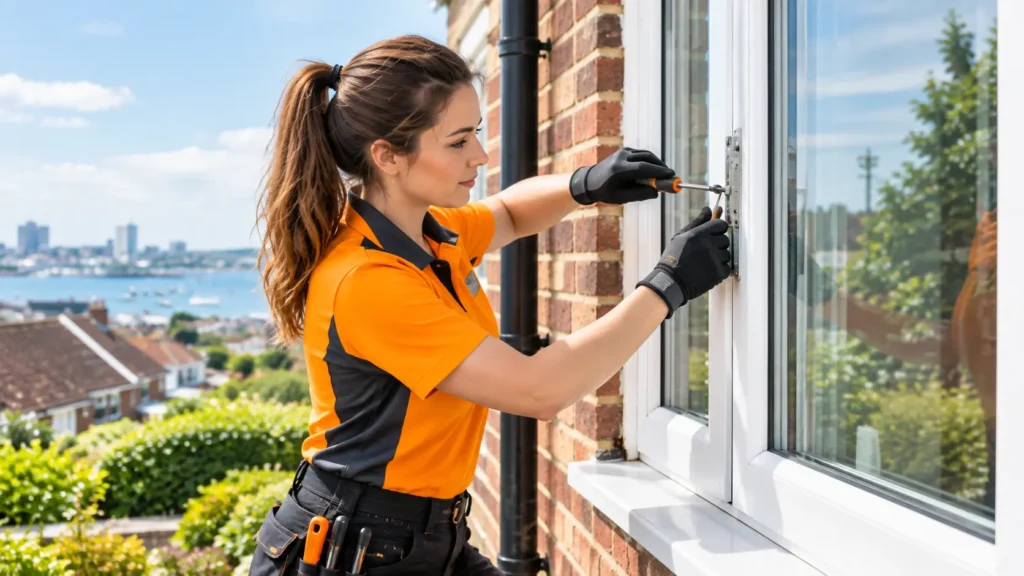
Hardware faults are usually the cheapest and quickest of all. A straightforward hinge adjustment often sits between £45 and £90, and most repairs of this kind fall somewhere between £55 and £250 depending on the part. Lock and handle repairs that make doors and windows secure again are typically completed in a single visit, because the common parts are carried on the van.
Cracked or Chipped Glass
A cracked pane looks bad and can worsen without warning. A small chip is a different matter, since it is often cosmetic, but a crack that runs across the glass should be dealt with before the property is marketed.
Glass replacements need the unit to be made to measure, so they take a little longer. Book early rather than late. A door panel unit is typically priced higher than a window unit, commonly between £150 and £320, partly because safety glass is often required.
Draughts and Worn Seals
A cold draught at the edge of a frame can often be traced to a worn gasket or a keep that has moved slightly. It is cheap to fix, and it makes the room feel better to stand in. It is also one of the things a viewer notices without being able to say what they noticed.
Repair It or Leave It for the Buyer? A Practical Rule
Sellers often ask whether it is smarter to leave faults and accept a lower offer. The honest answer depends on the fault, and a simple test helps.
Fix it first when the repair is cheap compared with how obvious the problem looks, when it affects security, or when it is something a buyer can see or feel without trying. Misted units, stiff locks, dropped doors and cracked panes all pass.
Leave it alone when the only fix is a full replacement that goes beyond what a sale needs. If the frames themselves have warped or failed, a repair will not hold, and the question becomes whether a planned upgrade makes sense. That is a larger decision, and it helps to understand whether a blown window needs replacing or can be repaired before you commit any money.
Where you choose not to repair something, be ready to say so openly. A seller who explains a known fault and its likely cost is far easier to deal with than one who hopes it will not be noticed. Your solicitor will advise on what you are required to disclose.
Timing the Work Around Photographs and Viewings
The order you do things in makes a real difference.
Sort the glass before the photographs are taken. A misted pane that appears in listing images stays in the buyer’s memory long after you have repaired it. Sealed units are made to measure, so allow a few working days for them to arrive, and longer for an unusual specification.
Do the hardware at the same time. Locks, handles and hinges are quick, and they are best finished before anyone walks through the door. Bundling them with a glass job means one callout rather than two.
Keep the paperwork. Hold on to the invoice for each repair, and to any guarantee on the glass and the workmanship. A buyer’s solicitor may ask what work has been done and what guarantees come with it, and a tidy folder saves a lot of back and forth.
Leave a little slack. Repairs that overrun are far less stressful when the listing date has not been announced yet.
Fareham Homes and What Tends to Fail
Fareham is not one housing type. Closer to the town centre you find older character properties with a mix of window styles, some original and some replaced over time. Locks Heath, Park Gate and Warsash are largely estate housing with windows that were fitted as a set, so one failing unit often means others are not far behind. Whiteley and the newer developments have more recently fitted glazing, where the typical complaint is a stiff or poorly adjusted hinge rather than failed glass.
Homes close to the water around Portchester and Warsash can see hardware wear a little faster than those further inland. None of this changes what you do. It simply means the right first step is to walk round the property, window by window, and note anything that sticks, rattles, mists or will not lock. That short list is what you send to a glazier.
When you describe the problem, include the number of units affected, the rough size, and a couple of photos. It lets the engineer judge the job and give you a realistic guide price before anyone visits.
What to Ask a Glazier Before You Book Pre Sale Repairs
A rushed sale is exactly when people make poor buying decisions, so a few questions are worth asking:
Will you put the units, sizes and specification in a written quote, and list labour and any callout separately?
What guarantee comes with the glass and with the workmanship?
Will you give me an invoice and guarantee I can hand to the buyer’s solicitor?
How long will the sealed units take to arrive?
Can you do the glass and the hardware in one visit?
If you spot another fault while you are here, will you tell me honestly whether it needs doing?
A genuine local glazier answers all of this without fuss and does not hurry you into a decision. If you are unsure who to trust, how to check a glazier is genuine before they start work covers the checks that matter, including written quotes and what to watch out for.
Mistakes Sellers Make With Windows and Doors
Leaving a misted unit until after the photographs, so it appears in the listing
Assuming a surveyor will not notice a stiff lock or a dropped door
Paying for full replacement when a sealed unit swap would have done
Skipping the invoice, then being unable to show a buyer what was done
Fixing the obvious faults but missing the draught that a viewer feels at the frame
Booking the glass too late, so the unit arrives after the viewings have started
Accepting a vague quote with no specification, then discovering the unit does not match the others
Questions Fareham Sellers Ask Before Booking
Do I need to repair misted windows before selling my house in Fareham?
You are not obliged to, but it is usually sensible. A misted unit is one of the most visible glazing faults and is easy for a buyer or surveyor to spot. Repairing it before you list removes a likely bargaining point, and most failed units can be swapped without replacing the frame.
Will a buyer’s survey flag double glazing faults?
Often, yes. Surveys normally cover windows and external doors, and a surveyor gives each part of the property a condition rating. A misted unit, a failed lock or a dropped door can all appear in the report. Whether a fault is rated as minor or serious depends on the surveyor’s inspection.
How much does it cost to fix a misted double glazing unit in Fareham?
A standard sealed unit in a small to medium window commonly costs between £60 and £150, while larger or upgraded units can reach £280. A unit in a door panel often falls between £150 and £320. Size, glass specification, safety glass and access all affect the final figure.
Should I replace all my windows before I sell?
Usually not. If the frames are straight and sound, repairing the failed units and hardware costs far less and does the job. Full replacement makes more sense when frames have warped or failed, or when many units are failing at once, but it rarely pays back inside a single sale.
How long does a pre sale glazing repair take?
Hardware repairs such as handles, hinges and many lock faults are often finished in a single visit. Sealed units have to be made to measure, so allow a few working days for them to arrive, then one fitting visit. Book before you arrange photographs.
Before You List
Selling a house is stressful enough without a window problem handing the buyer leverage. A short walk round the property, a few photographs and one well scoped callout will usually deal with everything a surveyor is likely to write down about your glazing.
Fix the glass before the photographs, finish the hardware in the same visit, and keep every invoice and guarantee. If something is unsafe or will not lock, deal with that straight away.
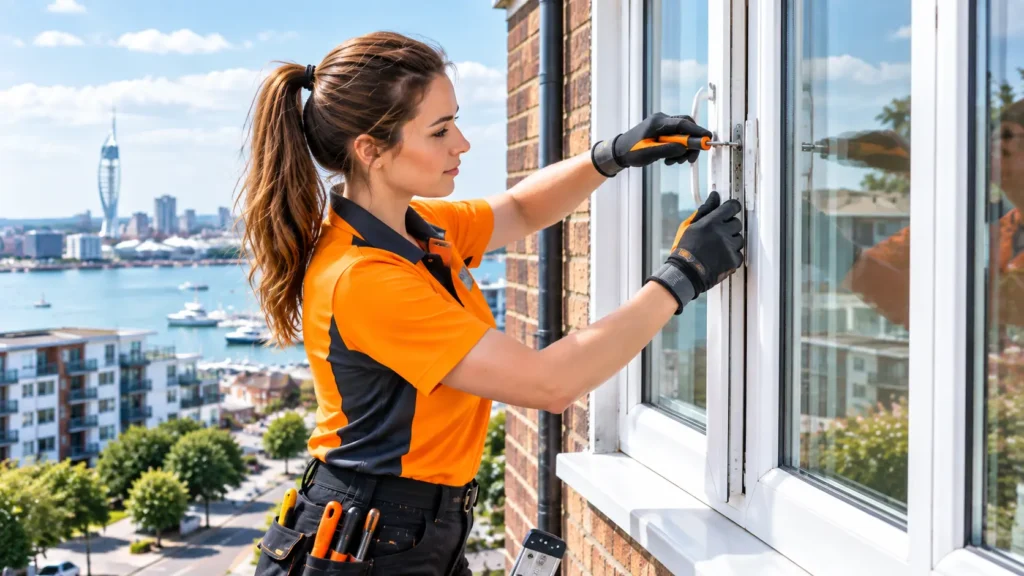
When you are ready, you can arrange a glazing repair visit in Fareham with Glaze Repair Southampton and send over your list of faults for a realistic guide price.