
New build window repair is usually the builder’s job during the first two years after you move in, because most developers and warranty schemes make the builder responsible for defects in that period, and a glazier steps in when the cover has ended, the builder is slow, or the fault is not a defect at all.
It tends to start the same way. You moved into a new home a few months ago, perhaps a waterside house in Woolston or an apartment near Ocean Village, and now one window has fogged between the panes, or a handle has gone loose, or a lock has started to stick. The first instinct is to ring a glazier. The first call should usually be to the developer.
That advice sounds backwards for a glazing website, but it saves people money. A repair paid for by you during the cover period is a repair you may not get back, and a fix by someone other than the builder can complicate a claim. This guide explains who is responsible for what, how to report a window fault so it actually gets dealt with, when it makes sense to call a glazier, and what repairs cost once the cover has ended. If your windows came with their own manufacturer guarantee, how to claim on a window guarantee is worth reading alongside this page, because the two can work separately.
Who Is Responsible for What
The answer depends on the fault and on the timing. In broad terms:
A defect in the first two years after completion: report it to the developer, who is normally responsible for putting it right
A fault after that period: your responsibility, with any window maker guarantee as the next place to look
Accidental damage, such as a ball through a pane: yours to repair, possibly through home insurance
A security fault, such as a door that will not lock: report it, but make the property safe first
A flat in a block: communal parts and frames often sit with the managing agent or management company, so ask who owns the window before anyone is called
Warranty details vary between schemes, so please treat this as general guidance and read your own paperwork. If you are unsure what you have, your solicitor’s completion pack and the developer’s welcome documents will name the warranty provider.
Why the First Two Years Are Different
New homes are usually sold with a structural warranty that runs for around ten years in total. The first two years are normally covered by the builder, who is responsible for defects that breach the warranty standards. After that, the warranty provider takes over for the remaining years, but in most schemes that later period is limited to major defects, not minor or functional ones.
Windows usually fall on the minor side of that line. That is why it matters so much to report a window fault inside the first two years, while the builder is still on the hook. Waiting until a seal has been misted for a long time, or a hinge has been loose for months, makes it harder to show that the fault is a defect and not wear.
Developers that sign up to the New Homes Quality Code are also expected to handle snagging and defects through that two year window. The guidance on snagging expects defects to be resolved within about 30 days, unless there is a good reason for delay, and for the developer to explain the next step promptly.
What Counts as a Window Defect in a New Home
Not every irritation is a defect, and it helps to know which ones usually qualify:
A sealed unit that mists between the panes soon after the home was built
A window that will not open, close or lock properly when the home is new
Handles, hinges or locks that fail early or were fitted badly
A cracked pane with no sign of impact
Draughts at a frame edge, or water getting in at a cill
A door that drags or will not seat properly
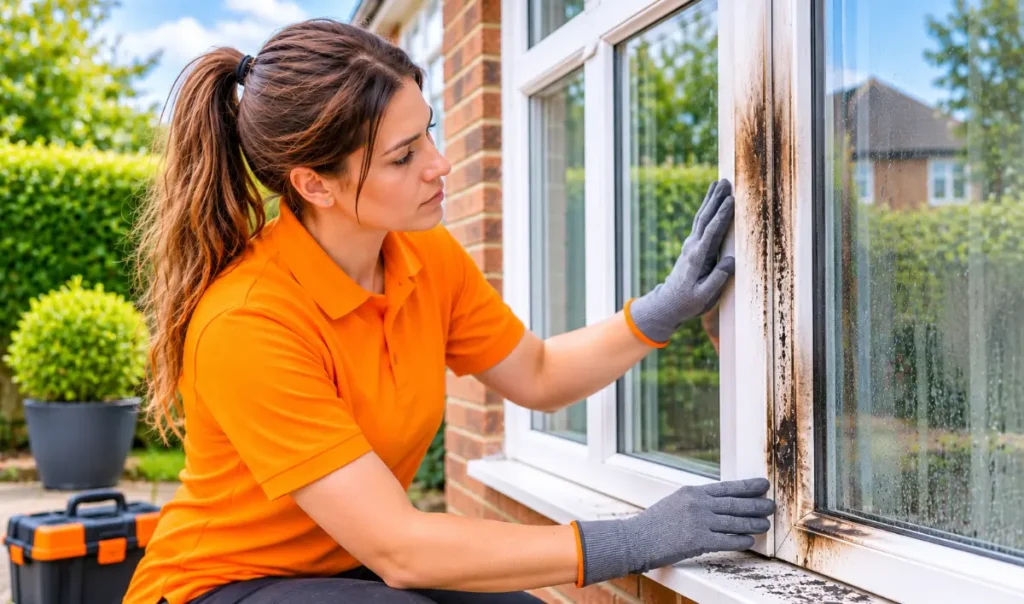
Condensation on the inside surface needs more care. A new home is often very airtight, so moisture on the inside of the glass is usually a ventilation matter, not a window fault. Moisture trapped between the two panes is different, because that means the seal has failed.
Photographs help in both cases. A foggy unit looks obviously different from a damp pane, and a clear picture saves a long argument.
How to Report a Window Fault So It Gets Fixed
The method matters more than most people expect.
Photograph the fault clearly, with the whole window in one picture and a close up in another.
Write down the date you noticed it, the date you moved in and what the window does or does not do.
Send a written report to the developer’s customer care team, not just a phone call, and keep a copy.
Ask for a timescale in writing, and note when you were told someone would attend.
Do not let anyone else repair the window before the builder has inspected it, unless it is an urgent security matter.
If the fault is not dealt with, escalate to the warranty provider, and if the developer is registered with the New Homes Quality Code, who can complain to the New Homes Ombudsman Service is the independent route for complaints that arise within the first two years.
If a window leaves the property unsafe, such as a broken pane or a door that will not lock, make it secure first. Take photographs before anything is boarded up and tell the developer exactly what you did and why.

When to Call a Glazier Instead
A glazier makes sense in four situations.
The first is when the cover has ended. After the first two years, the window is yours to maintain, and a misted unit in a newer home is a straightforward job. A misted unit in a newer home fixed after the builder’s cover ends usually means swapping one sealed unit and leaving the frame untouched.
The second is when the fault is not a defect. Accidental damage, wear from heavy use and damage caused by someone else all fall to you.
The third is when the builder cannot or will not attend and the fault is making the home unsafe or insecure. A glazier can make the opening safe and secure while the claim continues. Keep every photograph and every invoice.
The fourth is when you simply want an independent opinion. A glazier can look at the fault and tell you honestly what it is, which helps when you are writing to the developer.
Hardware wear is a good example. A stiff lock or loose handle that appears once the cover has ended is the kind of job covered by a stiff lock or handle that needs sorting once the builder’s two years are up, and most of these are quick repairs.
New Builds Across Southampton and What to Expect
New homes in Southampton come in a few forms, and the right first call depends on which one you have.
Waterside developments in Woolston, including larger schemes such as Centenary Quay, mix houses and apartments, so some owners deal with a developer directly and others deal with a managing agent. Apartments in and around Ocean Village and the city centre are usually in blocks, where the window frames can belong to the building and not to you. If that is your situation, who is responsible for windows in a flat is worth checking before you book anything.
On newer estates at the edges of the city, such as Hedge End, houses are usually the developer’s responsibility for defects during the first two years, then yours.
In every case, a few questions get you to the right answer quickly: Who owns this window? Who is the warranty provider? When did the cover start? And has the developer already been told?
What a Repair Costs Once the Cover Has Ended
For orientation, a standard sealed unit in a small to medium window often sits between £60 and £150. A larger window or one with an upgraded specification more commonly falls between £150 and £280, and a unit in a door panel between £150 and £320. Most hardware repairs fall somewhere between £55 and £250, depending on the part.
These are guide figures, not quotes. Size, glass specification, safety glass and access all change the final price. On an upper floor apartment, access can matter as much as the glass.
What a Glazier Can and Cannot Do While You Wait
If the developer has been told and you are waiting for a visit, a glazier can still be useful without touching the window. They can look at photographs, tell you whether the fault is a failed sealed unit, a worn hinge, a loose handle or something else, and give you a plain description you can quote in your report. That description helps because developers respond faster when a complaint names the actual part that has failed.
What a glazier should not do, unless the fault is urgent, is take the window apart or replace anything before the builder has had a chance to inspect it. If the opening is unsafe or the door will not lock, they can make it secure, photograph the work and give you an invoice that explains why it was needed.
It also helps to ask them to note anything else they spot on the same visit. A second window with early fogging, or a hinge that has already started to drop, can then be added to the same report, which keeps everything inside the cover period and saves a second round of complaints.
Mistakes That Cost New Build Owners Time or Money
Paying for a repair first and trying to claim it back afterwards
Reporting a fault by phone only, with nothing in writing
Leaving a misted unit until the cover has ended
Calling a window fault condensation when the fog is between the panes
Letting someone else take the window apart before the builder has inspected it
Assuming the window maker’s guarantee and the builder’s warranty are the same thing
Forgetting to ask who owns the frame in a flat
Questions Southampton New Build Owners Ask
Who is responsible for a misted window in a new build?
During the first two years, usually the developer, because a failed seal is normally treated as a defect. After that period the window is generally the owner’s responsibility, although a separate manufacturer guarantee may still apply.
How long does a builder have to fix a window defect?
Guidance under the New Homes Quality Code expects defects to be resolved within about 30 days, unless there is a good reason for delay. Your own paperwork sets the exact terms, so check the warranty and the developer’s customer care process.
Can I get a glazier to repair the window myself during the two years?
You can, but report it to the developer first and let them inspect it before anyone repairs it, unless the fault is urgent and affects security. A repair by someone else can complicate a claim, and the cost may not be recoverable.
What if the builder will not fix it?
Put your complaint in writing, keep the photographs and the dates, and escalate to the warranty provider. If the developer is registered with the New Homes Quality Code, a complaint that arose within the first two years can go to the New Homes Ombudsman Service.
Does the guarantee on my windows still apply after two years?
It can. The window maker or installer may offer a guarantee that runs separately from the builder’s warranty and lasts longer. Check your documents, since the guarantee often has its own conditions.
Before You Ring Anyone
A faulty window in a new home is irritating, but the order of calls matters. Take photographs, write down the dates, report it to the developer in writing and keep copies. If it is a security problem, make the property safe first and document what you did.
If the cover has ended, or the fault is not a defect, that is when a glazier is the right call. A misted unit, a worn lock or a loose handle in a newer home is a quick repair, and a few photos are enough for a realistic guide price.

When you are ready, you can arrange a window check with Glaze Repair Southampton and send over your photos.